
News
GHOST ESTATES OF THE ELITE: THE UNTOLD STORY OF NIGERIA’S UNOCCUPIED MANSIONS

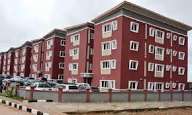
By Sam Agogo
Across the world today, housing has become one of the most defining social and economic conversations of our time. Cities like London, New York, Hong Kong, and Vancouver struggle under the weight of soaring rents and limited affordable homes, even as thousands of luxury apartments remain empty. In many rich countries, housing has quietly transformed from a necessity into a financial storage system — a way for the wealthy to secure and multiply capital rather than provide shelter. Africa faces a similar reality. In Nairobi, Johannesburg, Kigali, Accra, and Luanda, beautiful estates rise across skylines, yet large numbers of these properties never welcome residents. While millions struggle to secure decent accommodation, opulent homes stand locked, their windows dark at night, their compounds silent. The contradiction is clear and painful: homes exist, but people still lack housing.
Nigeria represents one of the most striking examples of this global phenomenon. With a housing deficit estimated at over 20 million units, the need for affordable, accessible housing is urgent. Yet in the midst of this crisis, the country’s biggest cities — Abuja, Lagos, Port Harcourt, Kano and beyond — are filled with estates and mansions owned by elites that remain uninhabited for years. Driving through Maitama, Asokoro, Guzape, Katampe Extension, or Wuse in Abuja reveals rows of magnificent structures whose gates rarely open. A recent conversation with a Bolt driver brought this issue to life more vividly than any statistic. As we passed through an estate in Abuja, he pointed at a cluster of beautifully built homes, all dark and silent, and said, “Oga, see these houses. Nobody dey stay for them. Some big men just build and lock them. Na money dem dey keep for here, not people.” His observation captures the paradox of Nigeria’s urban spaces: buildings without residents, and residents without buildings.
This reality is not limited to the capital. Lagos, Nigeria’s economic powerhouse, tells the same story in even louder tones. The glittering streets of Ikoyi, Banana Island, Eko Atlantic, Oniru, and Lekki Phase 1 are lined with expensive luxury apartments and mini-estates that remain largely empty. Developers continue to build more units targeted at wealthy investors, even as middle- and lower-income families are pushed further away from the city centre, deepening congestion, transportation stress, and inequality. In Port Harcourt, the oil-rich heart of the Niger Delta, entire estates in GRA Phase II, Trans Amadi, Peter Odili Road, and Elelenwo sit half-filled or completely deserted. Petroleum executives, politicians, and businessowners build massive homes they seldom occupy, often visiting only a few times a year. Meanwhile, thousands of workers in the same city struggle to find decent, affordable housing.
Kano, the northern commercial hub, mirrors the same pattern. Parts of Nassarawa GRA, Bompai, and Kano’s emerging private estates host grand homes whose owners live abroad or reside mostly in Abuja. Some structures have been locked for so long that trees have taken root along the fences while the houses themselves remain pristine inside. These properties have become symbols of wealth preservation rather than functioning homes. In every region of the country, from Enugu to Kaduna, Calabar to Jos, estates meant to house families have instead become galleries of silent, empty architecture.
The economic, social, and urban consequences of these ghost estates are significant. As more luxury homes are built and left vacant, demand for genuinely affordable housing increases, pushing rents higher across the board. Working-class and middle-class Nigerians are forced to live further away from their places of employment, stretching transportation systems and increasing daily hardship. Slums expand as formal housing becomes unaffordable, creating environments that strain public health, security, and social cohesion. The presence of empty estates also distorts urban planning projections, leading to underutilised infrastructure, misplaced public investment, and poorly aligned development priorities.
Around the world, cities facing similar circumstances have attempted to curb the trend. Vancouver introduced an Empty Homes Tax to compel owners to either live in their properties or rent them out. Barcelona fines owners who leave buildings unoccupied for too long. Singapore closely regulates investment-driven real estate purchases, while China’s “ghost cities” are being reimagined through population incentives and policy shifts. These efforts recognise a simple truth: houses must serve people first.
Nigeria has yet to confront this issue with the seriousness it deserves. Experts have long argued that the country needs a combination of fiscal policy, urban reform, and regulatory enforcement to address the swelling number of unoccupied elite properties. Options include taxation on long-term vacant homes, incentives for investors to rent out empty apartments, compulsory disclosure of ownership for high-value estates, reforms to housing finance, and stronger support for rental markets. Developers could also be guided to create more mixed-income communities rather than exclusively luxury-driven estates that remain empty. Proper mortgage systems, improved land administration, and targeted public-private partnerships could generate homes people can actually live in, not just admire from afar.
Private ownership is a right, and investment in real estate is neither illegal nor immoral. The issue is not whether people should be allowed to build mansions, but what happens when a society is filled with structures that serve more as bank vaults than homes. The Bolt driver’s lament reflects the frustration of millions: “This country get house. The only problem be say the houses no get people, and the people no get house.”
Beyond economics, the rise of ghost estates offers a deeper reflection on the kind of future Nigeria is shaping. A city is not defined by its buildings but by the people who live within them. Houses gain meaning not from marble floors or grand entrances, but from voices, families, lights at night, and the simple dignity of human presence. Estates without residents are like streets without footsteps — impressive, yet lifeless. When whole neighbourhoods remain empty, the heart of a city grows weaker, not stronger.
Nigeria has the opportunity to change this trajectory. With new approaches, clearer priorities, and a national understanding that homes are meant to be lived in, the country can transform silent estates into thriving communities. These steps are not about punishing wealth but about strengthening society. A lived-in home creates jobs, supports local economies, enhances security, fosters community life, and improves social cohesion. An empty home, no matter how beautiful, contributes little to the collective wellbeing of a nation.
If these ideas are embraced, then the quiet estates of Abuja, the locked mansions of Lagos, the deserted properties of Port Harcourt, and the unoccupied houses of Kano may one day become vibrant spaces filled with life and meaning. Perhaps then, the Bolt driver’s words will fade into history. Instead of people without houses and houses without people, Nigeria could build cities where every structure has purpose and every citizen finds a place to belong.
For comments, reflections and further conversation: email samuelagogo4one@yahoo.