
Business and Economy
2026 Budget: Senate Backs ₦140bn SEDC Plan, Seeks Accountability, Security Gains, Erosion Action

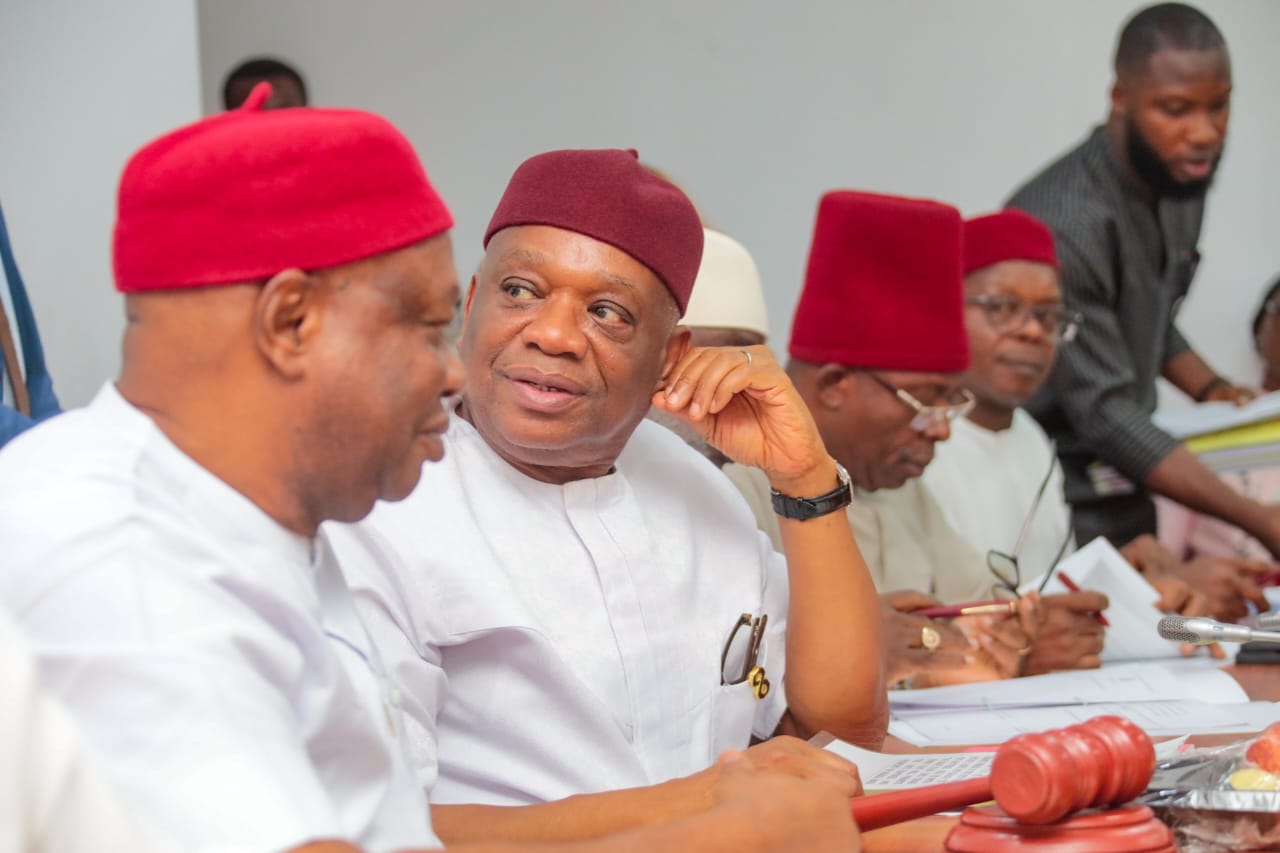
The Senate has approved the proposed ₦140 billion 2026 budget of the South East Development Commission (SEDC), while issuing firm directives on fiscal responsibility, measurable security improvements and urgent ecological intervention across the South East.
The budget proposal was presented by the Managing Director/Chief Executive Officer of SEDC, Mark Okoye, who detailed a development-focused financial framework built on infrastructure renewal, industrialisation, private sector-driven growth and regional integration.
Budget Breakdown
Out of the ₦140 billion proposal:
₦106.745 billion (76.25%) is earmarked for capital expenditure
₦25.955 billion (18.54%) for recurrent expenditure (excluding personnel)
₦7.3 billion (5.21%) for personnel costs
The Commission explained that the 2026 budget is anchored on five strategic pillars: infrastructure development, economic empowerment, environmental sustainability, social development, and security/peacebuilding.
Strategic Economic Vision
During his presentation, Okoye unveiled a long-term strategy aimed at building a $200 billion South East economy by 2035. A core component of this plan is the proposed South East Investment Corporation (SEIC), projected to generate a $150 billion capital base and position the region as a leading investment destination in Africa.
He revealed that the Commission is targeting a $1 billion regional investment benchmark and intends to structure large-scale infrastructure projects in a way that attracts international financing rather than relying solely on federal allocations.
Although no capital releases were made in the 2025 fiscal year, Okoye stated that the Commission utilised the period to prepare feasibility studies and “bankable documents” for major initiatives, including a proposed regional gas pipeline network estimated at between $1.5 billion and $2 billion.
Key Allocations in the 2026 Proposal
Major provisions in the budget include:
Community Social Development Programme – ₦3.3 billion
South East Venture Capital Fund – ₦3.5 billion
Youth Entrepreneurship Programme – ₦2.5 billion
Grassroots Recreation Infrastructure – ₦7 billion
Headquarters and Zonal Offices Setup – ₦2.9 billion
Operational Vehicles – ₦4.1 billion
Climate Sustainability and Green Economy – ₦500 million
Regional Security Programme – ₦2.5 billion
M.I. Okpara Fellowship (Leadership Development) – ₦660 million
Senate Flags Security, Erosion Issues
While lawmakers commended the clarity and ambition of the proposal, they expressed concerns regarding spending priorities and measurable impact.
Senator Tony Nwoye maintained that development would remain unattainable without improved security. He demanded specifics on how the ₦2.5 billion Regional Security Programme would deliver tangible improvements, particularly in communities heavily affected by insecurity. He also sought clarification on coordination with existing security agencies.
On the ₦3.5 billion South East Venture Capital Fund, Nwoye cautioned against political interference, stressing that it must operate strictly on merit to benefit genuine innovators in commercial hubs such as Onitsha, Aba and Nnewi.
Environmental sustainability also drew strong reactions, with lawmakers describing the ₦500 million allocation as grossly inadequate for a region grappling with thousands of erosion sites, often labelled Nigeria’s erosion epicentre. Senators urged the Commission to prioritise urgent ecological threats.
Demand for Fiscal Discipline
Senator Kenneth Eze advised the Commission to manage public funds with the prudence of a private enterprise. While commending the Managing Director’s presentation, he warned against dispersing limited resources across too many projects, noting that such an approach could result in abandoned initiatives.
He urged management to align projects strictly with available funding and focus on realistic, measurable outcomes rather than excessive stakeholder engagements and conferences.
Senator Ezenwa Onyewuchi raised concerns over personnel allocations and sought assurances that staff salaries were being paid promptly, cautioning that delayed remuneration could weaken morale and harm the Commission’s public image. He also called for transparency in recruitment.
Lawmakers Show Support, Call for Coordination
Senator Victor Umeh described the proposal as forward-looking and consistent with the South East’s historic economic revival model, expressing confidence in the management team once funds are released.
Senator Emmanuel Nwachukwu underscored the importance of inter-state collaboration, particularly in rail connectivity, gas pipelines and industrial park development, emphasising that gas infrastructure is vital to reviving struggling industries in the region.
Senator Anthony Ani observed that the flagship programmes collectively address critical sectors required for regional transformation, urging careful implementation to achieve tangible results.
Senator Osita Ngwu expressed “absolute confidence” in the Commission’s leadership, noting that establishing institutional foundations is often the most demanding stage.
Kalu: “Oversight Will Be Firm”
Chairman of the Senate Committee and former Abia State Governor, Orji Uzor Kalu, commended the management for presenting what he termed a “bankable document” capable of attracting global financial institutions.
He stressed that the Commission was created as a development institution, not a political platform, and noted that it was entrusted to the region by Bola Ahmed Tinubu.
“Our rules are simple — compliance, oversight and feedback. This Committee will be ruthless in oversight. We will not look at anybody’s face. This Commission must not become a channel for siphoning funds. It must restore hope and drive economic growth,” Kalu stated.
He encouraged transparency, collective leadership among executive directors and preparedness for oversight visits. He also defended the preparatory feasibility studies, describing them as necessary groundwork for attracting institutions such as the World Bank and African Export-Import Bank, as well as for integrating projects into national borrowing frameworks.
Path Forward
Despite losing a full fiscal year due to the non-release of capital funds, the Senate acknowledged that the Commission utilised the period to establish structural and strategic foundations.
With legislative approval now secured — alongside strong warnings on accountability, security performance and ecological urgency — the ₦140 billion 2026 budget proposal advances under close parliamentary scrutiny, as expectations grow for visible development outcomes across the South East.
Continue Reading