
Opinion
WE CANNOT DEVELOP A COUNTRY BY FORCING A PEOPLE WHO HAVE BEEN CONDITIONED TO CONSUME DECAY

By Adeniran Taiwo Olugbenga
Nigeria’s political class continues to behave like Nestlé in post-war Japan—trying to sell “coffee” to a people whose entire taste has been built around “tea.” Only that in our case, what they keep selling isn’t even nourishment; it’s packaged decay—bad policies, recycled incompetence, and elitist propaganda—force-fed to a weary populace under the guise of reform.
The problem isn’t that Nigerians resist change. It’s that our leaders have never taken time to cultivate a culture that embraces meaningful development. You can’t build smart cities in a country where rural mindsets have been weaponized for votes. You can’t talk about policy credibility in a landscape where emotional manipulation is more trusted than data, where loud political gimmicks are more audible than sound economic logic.

Policy communication in Nigeria has become a theatre of arrogance. Government officials do not speak to citizens; they speak at them. They weaponize press briefings, OAP events or programs, and podcasts to gaslight the poor, twist the truth, and insult public intelligence. Even worse, those who should be honest brokers—our spokespersons, our advisers, our so-called technocrats, public analysts—have reduced themselves to defenders of failure, turning every policy misstep into a battle of egos rather than a moment of accountability.
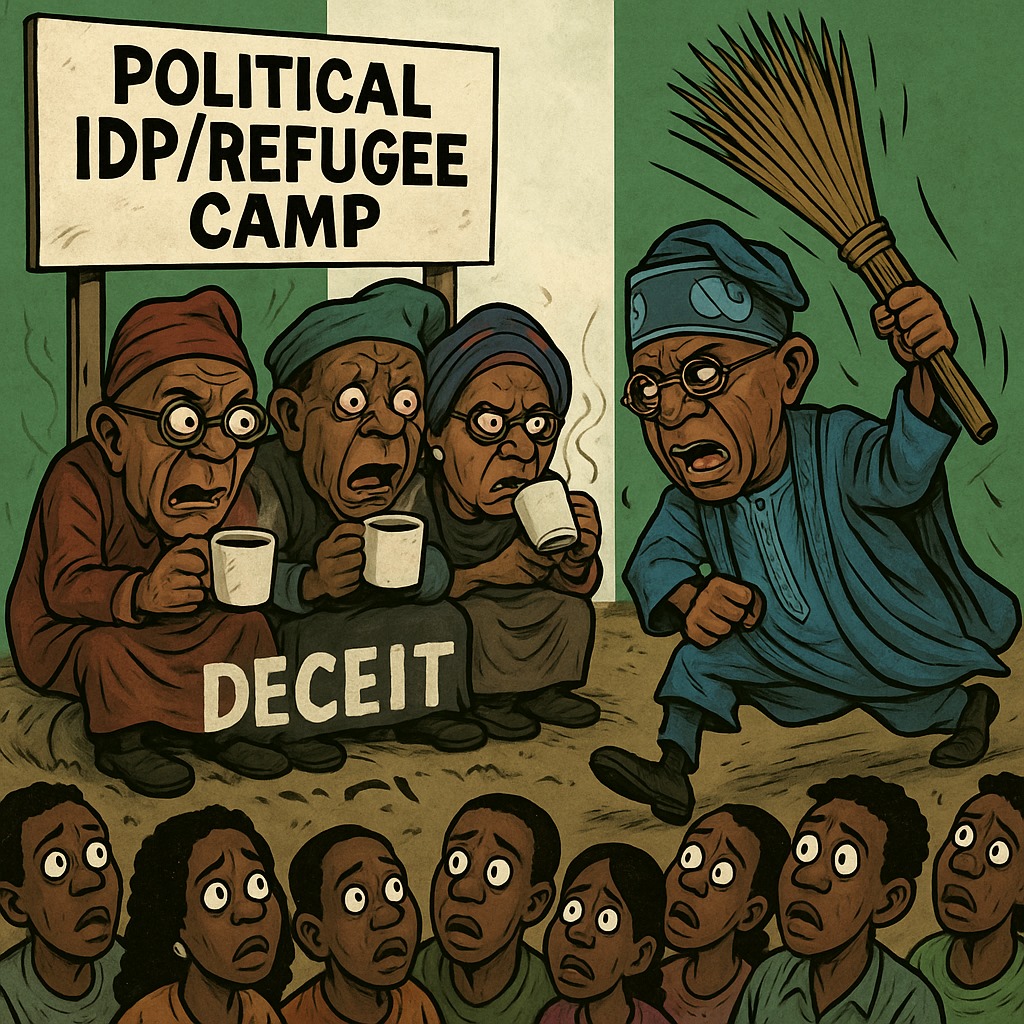
And now, as though Nigerians are incapable of memory, we are being asked to clap for a fresh political coalition — a self-proclaimed “rescue alliance” of tired political actors desperately seeking new robes to wear for old sins. They’ve started to gather again — in ADC, a party now becoming a political refugee camp for the disgruntled and discredited. They wave new party flags while carrying the same mindset that left this country on life support. These are not patriots. They are political transhumants, migrating from party to party in search of power, not purpose.
We see the Labour Party too — a platform that once carried public hope but is now entangled in its internal contradictions, lacking ideological direction and hemorrhaging credibility. The SDP trudges along, loud only during election seasons, with no sustained or strategic political engagement. The rest are splinter groups — parties too weak to win a ward, let alone govern a local government — but loud enough to serve as instruments of emotional blackmail against the conscience of the nation.
To be clear, some of these platforms — such as LP, SDP, ADC — may have had or still hold ideological promise, but their present internal contradictions and lack of strategic discipline make them more susceptible to being hijacked by political desperadoes than to serve as credible alternatives.
What unites many of them now is not vision or patriotism, but frustration — not love for country, but a desperation for relevance. They have realized that under the current administration, it is no longer business as usual. The backdoors are closing, and the days of unearned entitlement are fading. So they’ve chosen a new strategy: manipulate public emotion, weaponize suffering, and pretend to be the voice of the people. It is not a revolution — it is a repackaged power grab.
But here’s the truth, many may not want to hear: the pain we are feeling today is not because this current government is insensitive. “By contrast, this administration, despite its imperfections, has chosen to address the consequences of decades of deceit. President Bola Ahmed Tinubu’s government did not invent hardship. What it inherited is a system sabotaged by years of waste, complacency, and elite capture — a rot orchestrated in part by many of those now forming alliances and issuing moral sermons.
What we’re witnessing today is the natural pain of correction — the friction that always follows when a nation attempts to reverse-engineer its way back from the brink. These reforms are not comfortable, but they are courageous. They are unpopular, but necessary. And if we are serious about rescuing this country, then we must also be willing to endure the discipline of national recovery.
However, that recovery must not be blind. Nigerians must insist on visible signs of progress — fiscal discipline, reduced leakages, renewed investment in local production, transparent budgeting, and improved public sector integrity. These are the benchmarks of reform maturity. We do not deny that these reforms must also be better explained, implemented with empathy, and supported with real safety nets for the vulnerable. But scrapping them under pressure from those who wrecked the system would be national suicide.
And we must stop acting like change is the government’s responsibility alone. Nation-building is not a spectator sport. Citizens, too, must take responsibility — by resisting manipulation, demanding accountability without hysteria, and choosing leaders not by tribal familiarity or loud populism, but by track records and vision. Until Nigerians break the addiction to sensationalism and start investing emotionally in long-term thinking, we will remain easy prey for those who feed on our frustration.
So, before we talk about changing Nigeria, let’s be honest: you cannot repair a nation by recycling the same elite playbook. You cannot inspire a new Nigeria with old tricks. And no society will rise above the taste it has been trained to love. Until we start programming a new taste of responsibility, truth, sacrifice, and vision, we will keep spinning in this tragic loop of cosmetic reforms and recycled regress.
This is not about left or right, North or South, APC, PDP, ADC, LP, or SDP. This is about common sense and the common good. People who’ve been made to crave decay must first be reoriented to desire growth. And that responsibility belongs not just to the government, but to every voice that still believes Nigeria is worth more than survival.
Written by Adeniran Taiwo Olugbenga