
Business and Economy
FG introduces 1% presumptive tax for informal sector, outlaws cash tax collection

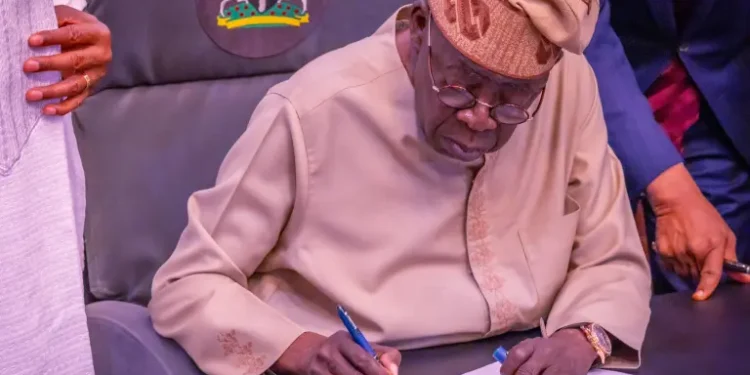
The Federal Government has prohibited the cash collection of taxes and the setting up of roadblocks for tax enforcement within the informal sector.
The directive is contained in the newly approved presumptive tax regulations and implementation guidelines unveiled on Tuesday in Abuja.
Speaking during the signing ceremony, Olusegun Adesokan, executive secretary of the Joint Revenue Board (JRB), said the new framework seeks to eliminate informal, coercive, and fragmented tax practices, particularly at subnational levels.
“It bans all forms of cash collection by tax authorities. It also bans the mounting of roadblocks for the collection of taxes,” he said.
Adesokan explained that the regulations are designed to promote transparency and fairness in tax administration, especially within the commerce and informal sectors.
Under the new framework, nano and small businesses with an annual turnover of N12 million and below are exempt from tax under the presumptive regime.
“The framework also introduces a tax rate of one per cent of turnover on all other categories of informal businesses, while encouraging the use of technology-driven payment platforms,” Adesokan added.
He noted that the guidelines establish a uniform structure for subnational governments to tax the commerce sector and integrate operators into the formal system through a tax identification platform.
System shifts from legislative approval to execution
On his part, Wale Edun, minister of finance and coordinating minister of the economy, said the signing signals the movement from legislative approval to full implementation of tax reforms passed in 2025 and early 2026.
“With the signing of these regulations, we are transitioning from regulation to structured implementation of the tax reforms,” Edun said.
He stated that the reforms are built on transparency, fairness, and economic inclusion, stressing that the objective is to widen the tax base rather than increase tax rates.
“We will expand the tax base, not raising taxes, but expanding so that each bears his rightful contribution to the common cause,” the minister said.
Edun added that the regulations were developed in collaboration with the JRB to ensure alignment across federal, state, and local governments. He assured that implementation would be closely monitored, with an ombudsman mechanism introduced to protect fairness.
Joseph Tegbe, chairman of the national tax policy implementation committee, described the signing as a shift from policy intention to practical execution.
He said the reforms aim to address distortions in the tax system and replace arbitrariness with transparency.
Tegbe observed that although the informal sector accounts for over 80 percent of Nigeria’s workforce, its contribution to structured public revenue has remained low due to systemic weaknesses.
He added that the committee would collaborate with tax authorities to ensure a disciplined and transparent rollout of the new framework.