
News
Nigeria’s Debt Profile: A Deep Dive Into Tinubu’s Borrowing Era

By Sam Agogo
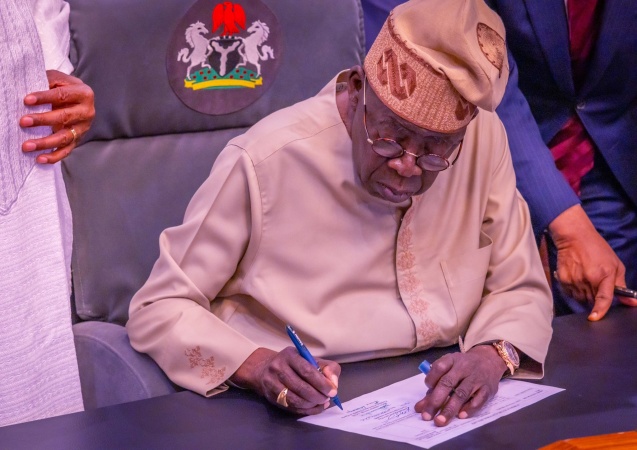
Since President Bola Ahmed Tinubu assumed office in May 2023, Nigeria’s debt profile has undergone a dramatic transformation. What began as a fiscal adjustment strategy following subsidy removal has quickly escalated into one of the most aggressive borrowing cycles in the country’s history.
By early 2026, Nigeria’s total public debt had surged to nearly ₦159 trillion, compared to ₦87 trillion in 2023. This represents an increase of more than ₦70 trillion in less than three years, a pace that has unsettled economists, civil society groups, and international observers. The sheer scale of borrowing has raised urgent questions about sustainability, transparency, and the long‑term impact on Nigeria’s economy.

On the external front, Nigeria has tapped billions of dollars from multilateral and bilateral partners. In 2023, the government secured $6.45 billion from institutions such as the World Bank to support reforms and social programmes. This was followed by a $24.14 billion framework (2024–2026) to finance infrastructure, energy, and social interventions. The National Assembly approved an additional $21 billion borrowing plan, while the government requested $516 million from Deutsche Bank for the Sokoto–Badagry Superhighway project. Other external facilities included $1 billion from UK Export Finance via Citibank London for Lagos Port rehabilitation and $5 billion from First Abu Dhabi Bank to finance deficits and refinancing obligations. By 2026, Nigeria had also tapped $902 million from UK Export Finance, $500 million from the World Bank for agriculture, and $400 million from the African Development Bank for agriculture and digital economy projects.
Domestically, borrowing has been even more aggressive, accounting for the bulk of Nigeria’s debt stock. In 2023, the government securitized ₦22.7 trillion in Ways and Means Advances from the Central Bank, instantly inflating the debt profile. That same year, a ₦9.62 trillion borrowing plan was initiated, with ₦5.05 trillion raised mid‑year. Subsequent years saw continued reliance on bonds and treasury bills: ₦7.81 trillion in 2024, ₦8.54 trillion in 2025, and ₦10.07 trillion in 2026. Other notable domestic borrowings included ₦1.15 trillion for budget deficit financing, a ₦757 billion pension bond, and ₦100 billion from the Unclaimed Funds Trust Fund integrated into the debt stock.
The consequence of this borrowing spree has been a mounting debt servicing burden. Nigeria spent ₦8.56 trillion on debt service in 2023, overshooting the ₦6.56 trillion budgeted. In 2024, actual debt service rose to ₦12.63 trillion, compared to ₦8.27 trillion budgeted. By 2025, ₦14.32 trillion was allocated, with ₦9.8 trillion spent in the first seven months alone. In 2026, debt servicing is projected at ₦15.8 trillion out of a ₦68.32 trillion budget. Analysts warn that debt service could exceed ₦91 trillion by 2028, outpacing capital expenditure and leaving little room for developmental spending.
This trajectory raises pressing concerns. New loans are increasingly used to service existing obligations rather than fund fresh development, creating a cycle of dependency. Debt servicing consumes nearly half of federal revenue, crowding out spending on education, healthcare, and security. With much of Nigeria’s debt denominated in foreign currencies, naira depreciation magnifies repayment costs. Rising debt also threatens Nigeria’s credit ratings, increases borrowing costs, and undermines investor confidence. Future generations risk inheriting obligations without corresponding prosperity if borrowed funds are not effectively managed.
Nigeria’s debt trajectory under Tinubu reflects a government betting heavily on infrastructure‑led growth financed by loans. While projects such as highways, ports, and energy investments are cited as justification, the sheer scale of borrowing—nearly ₦160 trillion in total debt stock—has sparked a defining national debate.
Is Nigeria laying the foundation for future prosperity, or entrenching obligations that may outlive the benefits they were meant to create?
For comments, reflections, and further conversation, email samuelagogo4one@yahoo.com