
News
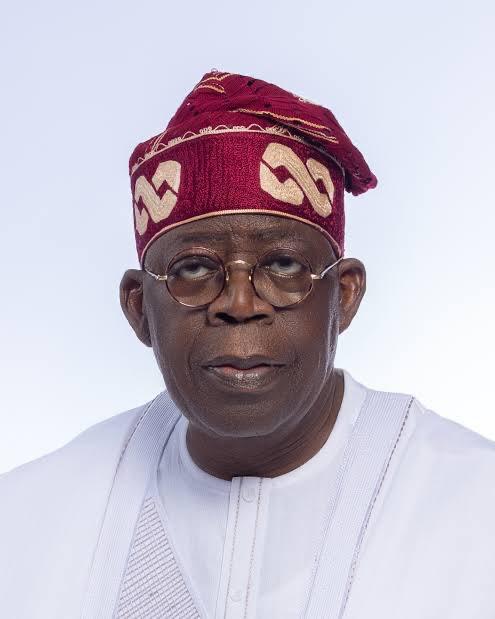
TINUBU’S SHADOW OVER THE BALLOT: How One Man’s Nod Is Replacing the Will of Millions

By Sam Agogo
Across Nigeria, a growing concern is emerging within the ruling All Progressives Congress (APC) ahead of the 2027 elections.
What is being described as “consensus” by party leaders is increasingly being viewed by critics as a centrally controlled process where candidates are allegedly imposed on states, lawmakers, and party members. From Lagos to Nasarawa, Ogun to Adamawa, and across both chambers of the National Assembly, several aspirants who had spent years building political support structures are reportedly being asked to step down, not through open democratic competition, but due to directives believed to have originated from the top hierarchy of the party.
This development has sparked a major question among political observers and stakeholders: Has President Bola Ahmed Tinubu become the deciding authority in APC candidate selection?
In Lagos State, President Tinubu reportedly endorsed Deputy Governor Obafemi Hamzat as the APC consensus governorship candidate during a meeting with members of the Lagos Governance Advisory Council at the Presidential Villa. Observers argue that this effectively determined the political direction of Lagos ahead of 2027 from Abuja rather than through open electoral processes.
Similarly, in Ogun State, reports indicated that several aspirants accepted the consensus arrangement reluctantly because it allegedly had the backing of the President. Critics insist that political participation under pressure cannot truly be described as democratic participation.
The situation in Oyo State further highlighted the growing controversy. A former senator claimed that President Tinubu supported Senator Sharafadeen Alli’s emergence, emphasizing that the President’s position as party leader should influence candidate selection. However, former Minister Adebayo Adelabu countered the claim, stating that he too had received Tinubu’s endorsement. The conflicting claims fueled public concerns over political influence and uncertainty within the party.
In Nasarawa State, the alleged endorsement of Aliyu Wadada faced opposition from former Inspector-General of Police Mohammed Abubakar Adamu, who criticized the process for lacking inclusiveness and transparency.
In Kwara State, Governor AbdulRahman AbdulRazaq is reportedly resisting the alleged presidential endorsement of Bashir Omolaja Bolarinwa, making him one of the few governors openly challenging such decisions.
Adamawa State Governor Ahmadu Fintiri strongly condemned the idea of imposing candidates on party members, describing it as more damaging than a military coup because it undermines democracy and breeds resentment within political parties.
Likewise, in Yobe State, Senator Bomai rejected what he described as attempts to undermine due process and force candidates on party members.
However, perhaps the most dramatic example emerged from Cross River State. Former Governor Senator Ben Ayade withdrew from the 2027 race for the Cross River North Senatorial seat, saying he did so based on a direct instruction from President Tinubu.
Ayade, who was one of the earliest APC governors in the South-South and actively campaigned for Tinubu’s presidential ambition, expressed disappointment over the development. He lamented that despite his loyalty to the party, he was being asked to step aside for Senator Jarigbe Agom Jarigbe, who only recently joined the APC from the opposition.
According to Ayade, he complied with the President’s request despite what he described as emotional pain and political injustice. He even characterized the experience as “a spiritual murder.”
Senator Jarigbe, however, dismissed Ayade’s claims and accused the former governor of misrepresenting facts.
The crisis has also spread into the National Assembly, where many lawmakers now reportedly feel betrayed after earlier expectations that loyal legislators would automatically secure return tickets.
President Tinubu had reportedly assured lawmakers that he would support their return to office. This encouraged many legislators to back executive bills and policies with the expectation that their loyalty would guarantee political protection during party primaries.
However, during a meeting between National Assembly members and the President at the Presidential Villa, Tinubu reportedly stated that state governors would still retain influence over candidate selection within their states.
Subsequently, reports emerged that the Presidency had quietly endorsed automatic return tickets for selected lawmakers considered strategic allies of the administration. Among those reportedly favored are Senate President Godswill Akpabio, Deputy Senate President Barau Jibrin, Senate Majority Leader Michael Opeyemi Bamidele, former Senate President Abdullahi Yari, Senator Fatai Buhari, Senator Mukhail Abiru, and Senator Aminu Wamakko.
Several House of Representatives members from Lagos were also said to enjoy similar backing.
Meanwhile, lawmakers perceived to be aligned with rival political camps are reportedly facing political uncertainty.
In Ogun State, Senator Gbenga Daniel is reportedly confronting efforts by Governor Dapo Abiodun to reclaim the Ogun East Senate seat. Reports indicated that Daniel was excluded from a stakeholders’ meeting concerning the senatorial district.
In Benue State, the power struggle between Secretary to the Government of the Federation George Akume and Governor Hyacinth Alia over APC control has reportedly placed ten of the state’s eleven federal lawmakers at political risk because they are believed to be aligned with Akume.
Reports also suggested that Tinubu’s decision to allow governors greater influence over party primaries may disadvantage lawmakers associated with rival factions.
Deputy House Spokesman Philip Agbese had already defected from the APC to the Labour Party after reportedly concluding that his chances of securing a return ticket within the APC had diminished.
Some affected lawmakers reportedly admitted privately that they would not have defected to the APC had they known automatic tickets would not be guaranteed. According to reports, many believed that supporting all presidential policies and bills would secure their political future within the party.
The situation has exposed what critics describe as a transactional political culture where loyalty is exchanged for political survival rather than genuine representation of constituents.
Observers have also pointed out contradictions in the President’s position. While Tinubu reportedly encouraged lawmakers during an interfaith dinner by expressing his desire to see them return to office, he simultaneously empowered governors who may work against those ambitions.
Supporters of the process argue that consensus arrangements are lawful under the Electoral Act. However, critics insist that legality does not automatically translate into legitimacy.
Under the Electoral Act, consensus candidacy is only valid when all cleared aspirants voluntarily agree in writing. If any aspirant refuses to step down, the party is expected to conduct direct primaries.
Critics argue that what is currently unfolding across several APC-controlled states resembles consensus achieved through pressure rather than genuine agreement.
Political analysts have warned that unresolved grievances from party primaries often resurface during elections and may weaken party unity.
Historical examples have also been cited. In 2014, the Peoples Democratic Party (PDP) cleared the way for President Goodluck Jonathan’s return ticket, but the party later lost power in the 2015 general election after sixteen years in government.
Some APC National Working Committee members are reportedly uncomfortable with the current trend, with one official allegedly warning that excessive centralization of power could weaken party structures and reduce the influence of party leadership.
As tensions continue to rise in states such as Lagos, Ogun, Oyo, Kwara, Nasarawa, Adamawa, Benue, Cross River, Gombe, and Yobe, many observers believe the outcome of these internal battles could significantly shape the APC’s future ahead of 2027.
Political stakeholders insist that ultimately, the final decision rests with Nigerian voters, who will determine whether these developments strengthen or weaken the ruling party in the next general election.