
General News
Flood Alert: NIHSA Places 17 States on High Watch

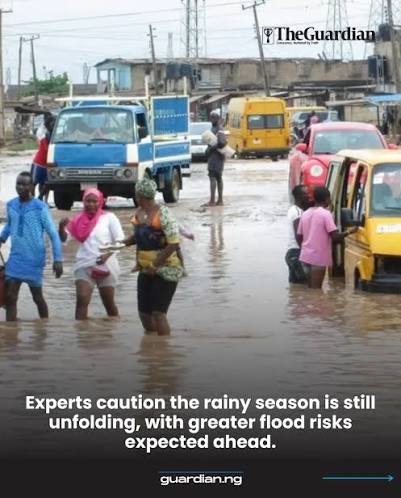
The Nigeria Hydrological Services Agency (NIHSA) has issued a seven-day flood advisory, warning that 17 states across the country could experience medium flood risk between July 21 and July 27 due to rising water levels in major rivers.
In the National Flood Advisory (Alert No. NFA-2026-200) released on Tuesday, NIHSA Director-General, Umar Mohammed, said the warning followed increased water levels recorded at key river monitoring stations, raising the likelihood of localised flooding along river channels and floodplains. The affected states are Adamawa, Bauchi, Benue, Borno, Edo, Gombe, Imo, Jigawa, Kaduna, Kano, Kebbi, Nasarawa, Niger, Plateau, Taraba, Yobe and Zamfara.
Mohammed explained that river levels at Saminaka on the Karam River, the Waya Dam site on the Waya River and Amber on the Amber River had exceeded watch and warning thresholds. He added that 16 gauging stations nationwide were recording elevated river levels, placing nearby communities at risk of localised flooding.
According to the agency, Bauchi has the highest exposure, with 1,841 communities, 145 schools, 101 health facilities and eight markets identified as vulnerable. Vulnerable communities and public facilities were also identified in Edo, Imo, Kaduna, Plateau and Benue states.
The NIHSA boss urged state governments, local authorities and residents of flood-prone communities to take immediate precautionary measures. He called on the National Emergency Management Agency (NEMA), State Emergency Management Agencies (SEMAs), local governments and community leaders to activate emergency response plans, relocate residents, livestock and valuables from floodplains, and pre-position food, medical supplies and water treatment materials in areas likely to be affected.
Mohammed also stressed the need for community mobilisation through early warning volunteers and local communication channels to ensure timely dissemination of flood alerts. He advised residents not to walk, drive or ride through flooded roads, bridges and fast-flowing waterways, while urging authorities to clear blocked drains, culverts and waterways to improve water flow and reduce flooding. He further encouraged the public and relevant agencies to monitor daily flood updates and advisories issued by NIHSA.