
Business and Economy
NADDC Urges States, Private Sector to Drive Nigeria’s Automotive Industry

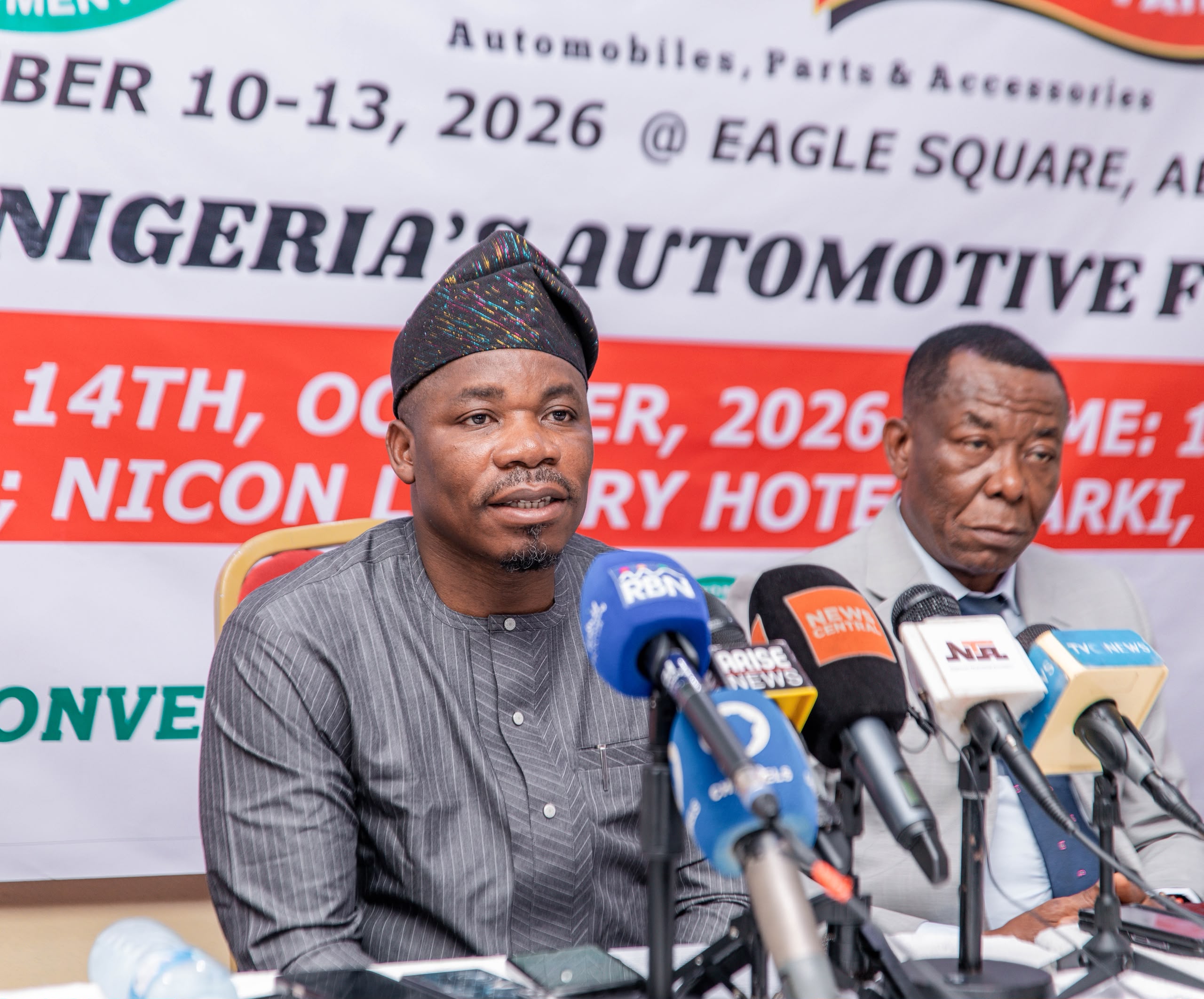
The National Automotive Design and Development Council (NADDC) has reaffirmed its commitment to strengthening collaboration with industry stakeholders to reposition Nigeria’s automotive industry and advance the transition to compressed natural gas (CNG) and electric mobility.
The Director-General of NADDC, Otunba Oluwemimo Osanipin, stated this while briefing newsmen ahead of the 26th Abuja International Motor Fair, scheduled to hold from November 10 to 13, 2026, at Eagle Square, Abuja, under the theme, “Driving Nigeria’s Automotive Future.”
Osanipin stressed the need for state governments to key into Federal Government initiatives aimed at developing Nigeria’s automotive mobility and value chains.
He said the briefing provided an opportunity to reaffirm the collective commitment to building a competitive, sustainable and globally relevant Nigerian automotive industry.
“It is my pleasure to welcome you to this joint press briefing ahead of the 26th Abuja International Motor Fair, scheduled to hold from 10th to 13th November 2026 at Eagle Square, Abuja, under the theme, ‘Driving Nigeria’s Automotive Future.’
“On behalf of the National Automotive Design and Development Council (NADDC), I commend BKG Exhibitions Limited for its continued partnership and commitment to advancing Nigeria’s automotive industry. I also appreciate the media for its vital role in promoting innovation, informing the public and highlighting opportunities for national development,” he said.
Strategic Importance of the Motor Fair
According to the NADDC Director-General, the automotive industry is a major driver of industrialisation, employment generation, technological advancement and economic growth.
He noted that the industry offers Nigeria significant opportunities to diversify its economy, conserve foreign exchange, create jobs and strengthen indigenous manufacturing capabilities.
“The Abuja International Motor Fair provides a strategic platform for automobile manufacturers, local assemblers, component producers, investors, technology providers and policymakers to connect, exchange ideas and explore business opportunities.
“As we prepare for this 26th edition, our ambition must go beyond displaying vehicles and automotive products. We must use the fair to promote local production, attract investment, encourage technology transfer and showcase Nigerian innovation,” Osanipin stated.
He explained that the future of Nigeria’s automotive industry must not be defined solely by imported vehicles but increasingly by what the country designs, manufactures, assembles and develops for domestic and international markets.
NADDC’s Commitment to Automotive Industrialisation
Osanipin said NADDC remained committed to developing a sustainable automotive industry that would contribute meaningfully to Nigeria’s industrialisation and economic prosperity.
He listed the council’s priorities to include strengthening local content development, supporting vehicle assembly and component manufacturing, promoting research and innovation, building technical capacity and encouraging investment in emerging automotive technologies.
According to him, a strong automotive industry cannot depend on vehicle assembly alone but must be supported by a robust ecosystem of local suppliers producing components, spare parts, accessories and other essential inputs.
“Nigeria possesses the human capital, entrepreneurial potential and market opportunities required to build this ecosystem, provided we continue to connect these advantages with investment, technology, skills and appropriate industrial policies,” he pointed out.
The Director-General further stated that NADDC was committed to preparing Nigeria for the transformation taking place in the global automotive sector, particularly in electric mobility, alternative fuels, battery technology, digital manufacturing and intelligent vehicle systems.
He explained that the council’s approach was to encourage the development of local solutions that reflect Nigeria’s environmental conditions, energy infrastructure and transportation needs.
“We must not only adopt global technologies but also develop the expertise to adapt, improve and eventually manufacture solutions that address our unique challenges.
“In this regard, compressed natural gas (CNG) and other alternative-fuel solutions remain important opportunities for affordable and efficient mobility, and their development must be supported by appropriate safety standards, technical training, quality assurance and public education,” he said.
Skills Development and Emerging Automotive Technologies
Osanipin emphasised that a sustainable automotive industry required a skilled workforce, noting that engineers, technicians, designers, researchers, software developers and entrepreneurs were essential to driving productivity and innovation.
He said NADDC continued to support the development of technical skills across the automotive value chain through capacity-building initiatives and partnerships with relevant institutions.
According to him, these efforts cover CNG conversion, automotive maintenance and emerging mobility technologies.
“Our young people must not remain spectators in the transformation of the global automotive industry,” he stressed.
The NADDC boss also noted that developing Nigeria’s automotive industry required sustained collaboration among government, the private sector, financial institutions, research institutions and international partners.
He explained that while government provides an enabling policy environment and promotes standards, the private sector contributes investment, technology, operational expertise and entrepreneurial drive.
Osanipin therefore encouraged manufacturers, assemblers, component producers, financial institutions and technology companies to participate actively in the fair and explore investment opportunities in vehicle assembly, component manufacturing, after-sales services and automotive technology.
He added that industry growth must be accompanied by quality, safety and consumer protection.
Expectations for the 26th Abuja International Motor Fair
The NADDC Director-General expressed optimism that the 26th edition of the Abuja International Motor Fair would strengthen engagement between local manufacturers and international brands, showcase Nigerian-made and assembled products, promote local content development, facilitate technology transfer and encourage research and innovation.
He also anticipated opportunities for small and medium-sized enterprises within the automotive value chain to expand their networks, access new markets and establish productive partnerships.
According to him, Nigeria has the potential to become a stronger automotive manufacturing and mobility hub in Africa, but achieving this ambition would require deliberate investment, sustained collaboration and a shared commitment to industrial development.
A Call to the Media
Osanipin described the media’s contribution to the development of Nigeria’s automotive industry as invaluable
He urged exhibitors and stakeholders to highlight the achievements of Nigerian manufacturers, assemblers, engineers and innovators while promoting informed conversations about local production, investment, road safety, alternative fuels and emerging mobility technologies.
He noted that responsible and constructive reporting would help strengthen public confidence, attract investors and communicate the opportunities available within Nigeria’s automotive industry
“The theme, ‘Driving Nigeria’s Automotive Future,’ reminds us that our industry’s success will depend on the decisions we make today, the investments we attract, the partnerships we build and the skills and innovations we nurture.
“At NADDC, we remain committed to working with all stakeholders to build an automotive industry that promotes local manufacturing, generates employment, advances technology and contributes meaningfully to national economic growth,” he said.
Osanipin invited automobile manufacturers, assemblers, investors, dealers, component producers, technology companies, members of the media and the general public to attend the fair at Eagle Square, Abuja, from November 10 to 13, 2026.
“Together, let us transform conversations into commitments, commitments into partnerships, and partnerships into measurable industrial progress,” the NADDC Director-General added.
Earlier, Chief Ifeanyi Agwu of BKG Exhibitions Limited commended the leadership qualities of the NADDC Director-General, Otunba Oluwemimo Osanipin, towards ensuring the development of Nigeria’s automotive industry.
Agwu, who highlighted various activities and programmes lined up for the Abuja International Motor Fair, solicited the support of all stakeholders to ensure the success of the event.