
Business and Economy
Kano Woos Indonesian Investors, Targets Gateway Role to African Markets

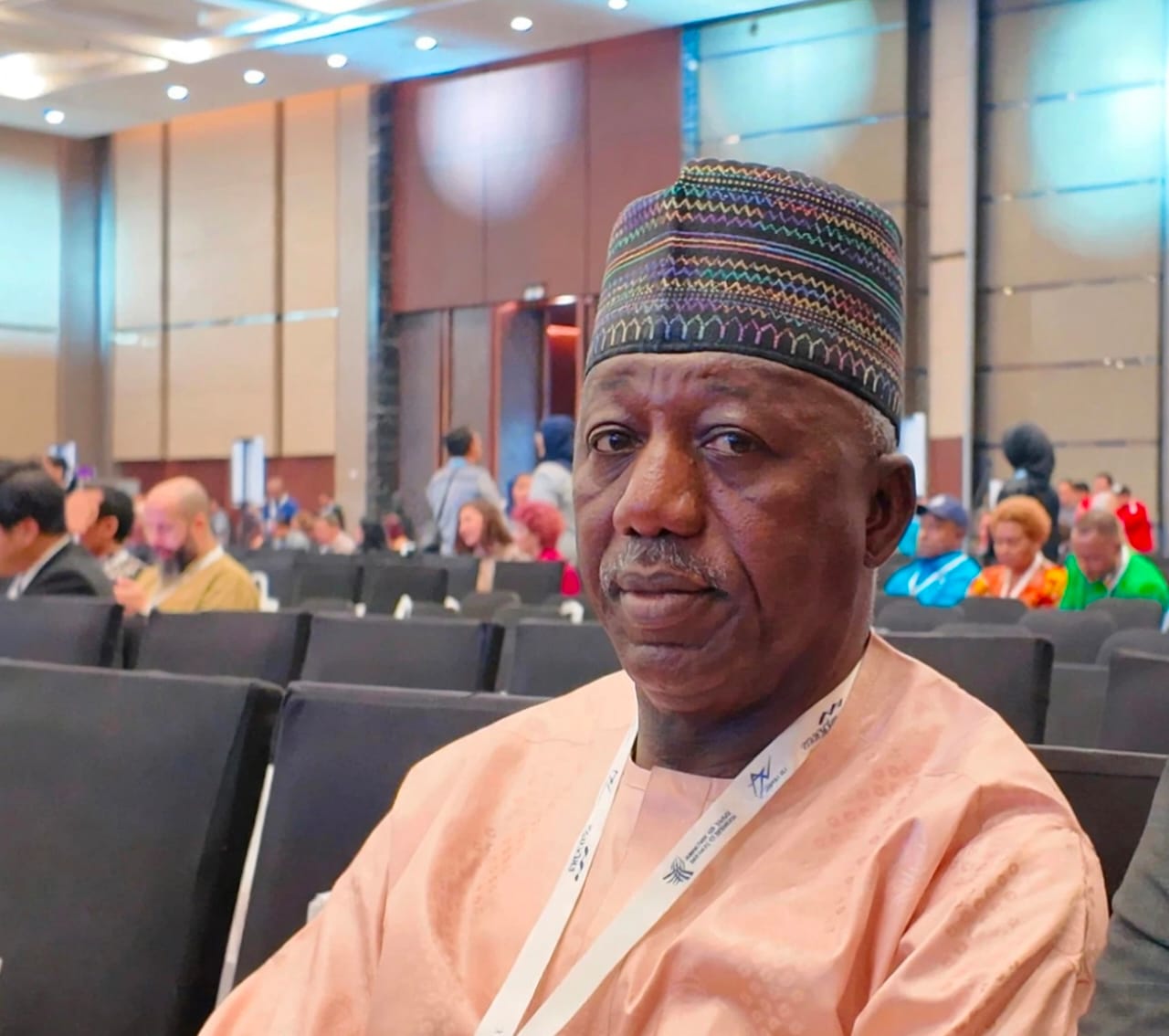
By Iyojo Ameh
Kano State is seeking to position itself as a major gateway for Indonesian businesses seeking access to African markets, with more than 100 business delegates from the state attending the 41st Trade Expo Indonesia (TEI) 2026.
President of the Kano Chamber of Commerce, Industry, Mines and Agriculture (KACCIMA), Amb. Usman Darma, said the delegation’s participation underscored the state’s commitment to strengthening economic ties with Indonesia and attracting foreign investment.

Darma spoke in an interview on the sidelines of the trade expo in BSD City, Tangerang, Indonesia, where he said the delegation comprised businesspeople from manufacturing, retail, pharmaceuticals and other sectors.
He disclosed that about 60 members of the delegation were already at the venue, while another 40 were expected to arrive shortly.
“This is not the first time we are coming, but this time we came with a very high delegation of over 100,” he said.

According to Darma, the primary objective is to encourage Indonesian companies to establish manufacturing and processing facilities in Kano, creating opportunities for investors while boosting local industrial development.
“Our main focus is how we can encourage indigenous Indonesian companies to come to Nigeria, especially Kano, to establish more industries because we believe it is an advantage for all of us,” he said.
He identified Nigeria’s large consumer market and labour availability as key attractions for Indonesian investors, arguing that businesses established in Kano could use the state as a base to reach markets across the continent.
“We have a market that reaches almost 26 out of 54 countries in the continent. And also we have the cheapest labour in the whole of Africa. Secondly, we are the most accommodating people in the continent,” Darma said.
On investment opportunities, the KACCIMA president said the chamber was promoting 13 priority areas, with particular emphasis on light manufacturing and agro-processing.
He noted that Kano’s agricultural output offered opportunities for Indonesian companies to establish processing plants, serve Nigeria’s domestic market and export finished products to other African countries and international markets.
“There is a lot of agricultural produce. It is good for them to come to Kano to process, sell locally and re-export to the continent and around the world,” he said.
Darma also identified pharmaceuticals as a promising area for cooperation, noting that some Indonesian pharmaceutical companies exhibiting at the trade expo had products in demand in Nigeria.
He said local assembly and production arrangements could benefit both countries by expanding market access, creating jobs and strengthening Nigeria’s domestic pharmaceutical industry.
The KACCIMA president also expressed satisfaction with the recent Indonesian Trade Expo held in Kano and organised by the Indonesian Embassy, describing the event as successful.
He said participating Indonesian companies recorded strong sales and established business connections, with some exhibitors selling out the samples they brought to the event.
“They saw the turnout of people. A lot of them who came with samples sold them out and got buyers. By next year, I think it will be greater than what they did before,” he said.
Darma expressed optimism that some Indonesian companies would establish operations in Nigeria before the next edition of the Kano trade expo, as discussions on investment and business partnerships progress.
The 41st Trade Expo Indonesia 2026 provides a platform for Indonesian businesses to connect with international buyers, explore new markets and expand trade partnerships.
Indonesian President Prabowo Subianto welcomed more than 8,092 foreign buyers from 134 countries to the event, with organisers setting a transaction target of $17.5 billion.
For Kano, the chamber’s participation is part of a broader effort to attract foreign capital, promote industrialisation and expand the state’s role in regional and international trade.