
General News
2027: Kalu Defends Tinubu’s Reforms, Predicts landside Victory, Reveals Obasanjo’s One-Term Agreement With IBB

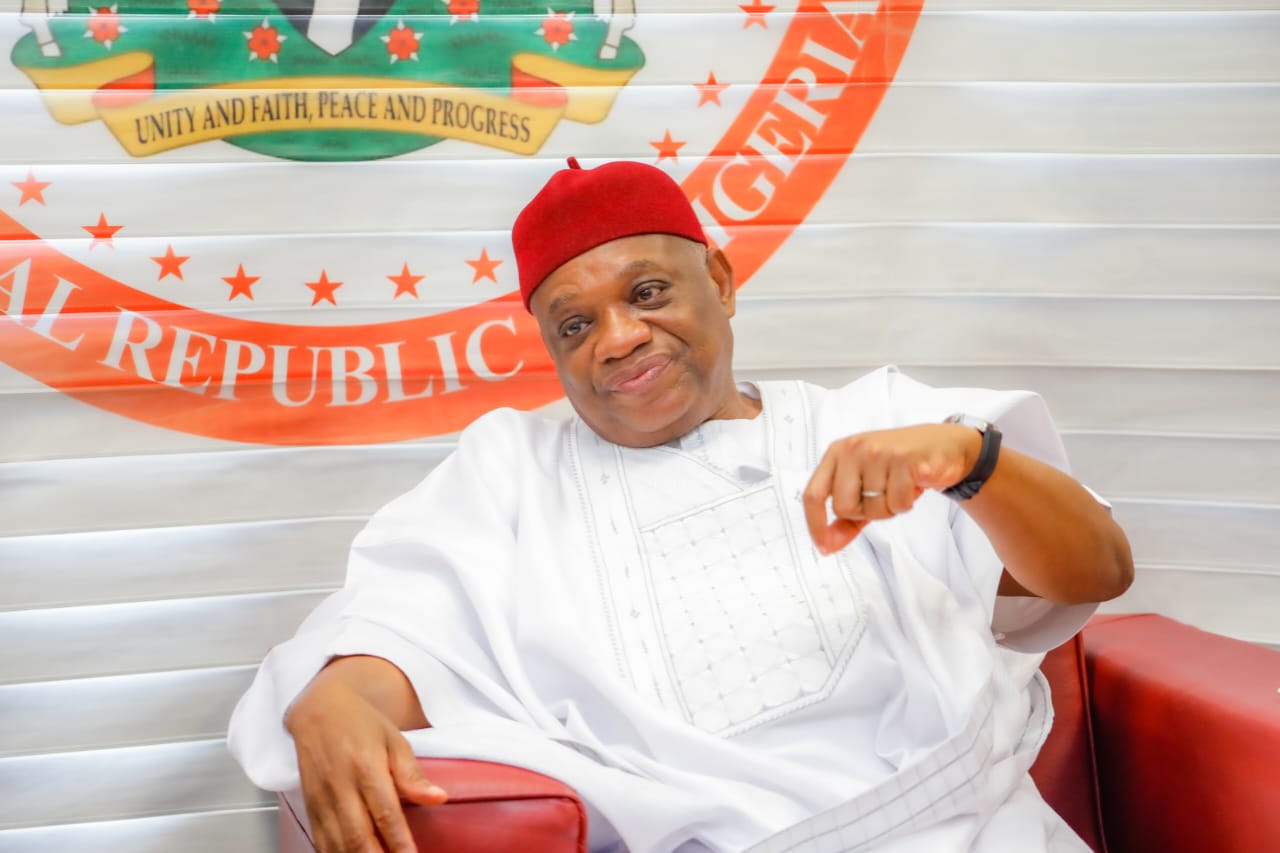
The former Abia governor Senator Orji uzor Kalu says party loyalty must take precedence over ethnic politics, insists Tinubu has stabilised Nigeria’s economy, discloses why his relationship with Obasanjo collapsed, and promises to groom younger Nigerians for leadership.

The Senator representing Abia North, Orji Uzor Kalu, has defended President Bola Ahmed Tinubu’s economic reforms, predicted an emphatic victory for the President in the 2027 general election and disclosed previously unreported details of the political understanding between former President Olusegun Obasanjo and former military Head of State, General Ibrahim Babangida, ahead of the 2003 presidential election.

The forbes rated Billionaire entrepreneur turned Politician made these revelations on Monday, November 9, 2026, during an exclusive appearance on Arise PrimeTime, the flagship evening current affairs programme of Arise News Television, anchored by senior journalist Charles Aniagolu.
The former Senate Chief Whip, who currently chairs the Senate Committee on the South East Development Commission (SEDC), also addressed questions surrounding his political relationship with the Igbo political establishment, his decision to remain in the All Progressives Congress (APC), his international business connections, his Forbes recognition, his ownership interests in the media industry and his political ambitions.
Speaking extensively on Nigeria’s political evolution, economic direction and his personal journey from business into public service, Kalu maintained that his political decisions were guided by his assessment of national development and party loyalty rather than ethnic sentiments.
Kalu defends Tinubu’s economic reforms, says Nigeria’s economy has stabilised
Defending the Tinubu administration against criticism over the economic hardship associated with its reforms, Kalu argued that the President had successfully stabilised Nigeria’s economy at the macroeconomic level, although more work remained to improve conditions at the household and business levels.
According to him, the immediate challenge before the administration is translating macroeconomic stability into tangible economic growth, increased manufacturing capacity, employment opportunities and improved living conditions.
“President Tinubu has been able to stabilise this economy on the macro level. What we’re battling now, they’ve stabilised economy on the macro level. What we are battling is the micro level,” he said.
He explained that the administration’s next priority should be restoring agricultural production, improving security and creating an environment in which manufacturers can access raw materials and operate at higher production capacity.
Kalu maintained that economic reforms inevitably come with temporary difficulties, drawing comparisons with Brazil’s experience under former President Luiz Inácio Lula da Silva.
“There is no reform on Earth. I went to first inauguration in 2002 or 2003 for President Lula da Silva of Brazil. By then, everything was down in Brazil. And he went into reform,” he recalled.
He argued that Nigerians should assess the administration’s economic policies against the long-term objective of rebuilding the economy rather than the immediate discomfort associated with the reforms.
“You can’t do reform without people suffering. You cannot, it’s not possible,” he declared.
Acknowledging the difficulties confronting ordinary Nigerians, Kalu, however, insisted that the country was beginning to experience greater economic predictability.
He cited the relative stabilisation of foreign exchange and fuel prices as important developments, arguing that businesses could now make more reliable financial projections.
“You can now sit down as a manufacturer, plan, ‘I’m going to buy dollar and so amount, I’m going to sell and so amount.’ You can now plan, ‘I’m going to do this, I’m going to do that.’ Before, you cannot plan. You can wake up one morning, they tell you that dollar is 2,500 naira. Those things are no longer there,” he said.
He also urged the administration to focus more attention on manufacturing, agricultural productivity and industrial expansion, insisting that economic growth must complement the ongoing reforms.
Kalu further credited Tinubu with improving Nigeria’s international economic relationships, arguing that the country was increasingly attracting the attention of international investors.
‘Tinubu has no competition’: Kalu predicts APC victory in 2027
On the political outlook ahead of the 2027 presidential election, Kalu expressed confidence that President Tinubu would secure another mandate, describing the opposition as politically disorganised.
Asked whether the President’s prediction of victory could go wrong, the Abia North senator dismissed the possibility.
“President Tinubu will win. President Tinubu have no competition,” he declared.
According to him, the APC’s electoral strength goes beyond the personality of the President, insisting that the ruling party enjoys a broad political structure and substantial grassroots support across the country.
“What we are seeing as social media, we are not seeing something on ground. Our party is very huge. Supporters of that party, they are large and we have huge people supporting this party,” he said.
He added that APC legislators and other political stakeholders were already working towards consolidating the party’s electoral strength in their respective constituencies to ensure Tinubu’s re-election.
Kalu also made a passionate appeal for political stability, drawing a comparison with the eight-year tenure of former President Muhammadu Buhari.
“The unity of this country is very important. Let’s not question the unity. We allow President Buhari to do his eight years and go, and we must allow Tinubu to do his eight years and go,” he said.
Kalu reveals Obasanjo’s agreement to serve one term before handing over to the North
One of the most significant revelations during the interview was Kalu’s account of an alleged political understanding involving former President Olusegun Obasanjo and former military President Ibrahim Babangida ahead of the 2003 presidential election.
Responding to questions about why his once cordial relationship with Obasanjo eventually collapsed, Kalu disclosed that their disagreement was rooted partly in what he described as an agreement that Obasanjo would serve only one four-year term before power returned to the North.
According to him, the understanding was reached during a meeting involving himself, Obasanjo and Babangida at Obasanjo’s residence in Ota, Ogun State.
Kalu explained that the arrangement was intended to accommodate the political circumstances surrounding the emergence of Obasanjo in 1999, following the annulment of the June 12, 1993 presidential election.
He maintained that the agreement was for Obasanjo to complete one term and hand over to another political leader from the North, allowing the country’s power rotation arrangement to continue.
Asked specifically about reports that Babangida was expected to succeed Obasanjo in 2003, with Kalu potentially becoming his running mate, the senator said he could not confirm the vice-presidential arrangement but stood by the agreement concerning Obasanjo’s tenure.
“Well, I cannot be certain about the vice presidency, but I can tell you, yes, this was our discussion in Ota. That he would leave, he would leave four years and give back to the North,” he disclosed.
Providing further details, Kalu identified an individual he described as Obasanjo’s aide from Benue State, named Adobeye in the interview, as being present during the discussion.
He said:
“What we discussed and agreed there were people there, there were people there, like His Boy, Obasanjo’s Boy, Adobeye from Benue State, he was sitting down there where we sat, me, Ibrahim Babangida and President Obasanjo. Where we agreed, we agreed.”
Kalu said the disagreement over the alleged arrangement was among the issues that eventually damaged his relationship with the former President.
He also accused Obasanjo of using state institutions, particularly the Economic and Financial Crimes Commission (EFCC), to pursue political opponents and remove elected governors through what he considered unconstitutional means.
The senator maintained that his opposition to Obasanjo was not driven by personal ambition but by his disagreement with what he considered a departure from their political understanding and constitutional principles.
‘Party loyalty is number one’: Kalu responds to accusations of betraying Igbo interests
Addressing criticisms from sections of the Igbo political establishment over his political affiliations, Kalu strongly defended his decision to remain in the APC, dismissing accusations that his political choices amounted to a betrayal of regional interests.
The former Abia governor, who has previously belonged to the Peoples Democratic Party (PDP) and founded the Progressive Peoples Alliance (PPA), said his political journey should be understood within the context of party membership and democratic competition.
He argued that it was unreasonable to expect him to abandon his political party to support candidates contesting on other platforms simply because they were of Igbo extraction.
“I’m an Igbo man by birth. I have saved Igbos and fought for the Igbos,” he declared.
He further alleged that his political disagreement with Obasanjo came at a significant cost to his businesses, claiming that several of his business interests, including banks and an airline, were affected during the period.
Explaining his political philosophy, Kalu insisted that national interest and party loyalty should take precedence over ethnic considerations in the conduct of national politics.
“I support Tinubu. I’m in APC. If any Igbo wants to support any other Igbo who is running, that is his business. It’s not my business there. My business is to support in the party where I am. Party loyalty is number one,” he said.
He further explained that although ethnic identity remained important to him, it should not become the overriding consideration in national political engagements.
“I’m a Nigerian, and we must behave like Nigerians. But when I’m in my village, I’m an Igbo man. When I’m in Igbere, ethnic loyalty in Igbere, yes. When I’m in Abia, ethnic loyalty in Abia. When I come to Lagos, I will remove ethnic loyalty to be a Nigerian so I can fit in with other Nigerians,” he explained.
The senator maintained that his political ideology was rooted in national integration, insisting that Nigerians should be able to work together across ethnic, religious and regional boundaries.
Kalu promises to groom younger generation, opens up on Senate presidency ambition
The former Senate Chief Whip also spoke about his political future, including speculations that he was interested in becoming the next President of the Senate.
Although he did not rule out accepting the position if offered, Kalu insisted that he was not lobbying for the office and remained comfortable with his current responsibilities in the Senate.
He identified God and the leadership of the APC, particularly President Tinubu, as his primary considerations.
“For me, I want to do what I’m doing. Going further, remaining first. The first primary thing is God. The second primary thing is the leadership of our party, the leader of the party, which is President Ahmed Bola Tinubu. And thirdly, I have no ambition. If anything is given to me, I will take,” he said.
When pressed on whether he would accept the Senate presidency if President Tinubu offered it to him, Kalu answered in the affirmative.
“If I’m given, if I’m given in my house, I will take. That is the truth,” he said.
He, however, insisted that he had never approached the President to request the position and would not do so.
Beyond his immediate political ambitions, Kalu disclosed that he was already considering how to prepare younger Nigerians to assume leadership responsibilities.
“If you allow me in the near future, I will groom younger people to take over from us,” he promised.
He maintained that political leadership should not be regarded as a permanent entitlement, adding that anyone could occupy any position if God so permitted.
Kalu said his immediate priority remained lawmaking and contributing to national development through his legislative responsibilities.
Reveals how Dangote reacted when he announced his intention to become governor
Recounting his transition from business into politics, Kalu revealed that some of his closest associates initially considered his decision to contest the governorship of Abia State an unwise move.
He specifically recalled the reaction of Africa’s foremost industrialist, Aliko Dangote, when he informed him of his intention to enter politics.
According to Kalu, the conversation took place at his residence in the presence of other associates, including Chat Sahi and the late Mohammed Wazgiri.
He said Dangote was surprised by his decision, considering the business empire he had built and the risks associated with entering Nigerian politics.
“The day I told him I was going to run for governor, he felt I was a fool,” Kalu recalled.
Recounting Dangote’s reaction, he said:
“He said you must be very strong to think about that. He said you will not do that.”
Kalu explained that his decision was influenced partly by the encouragement of politicians who approached him to participate in the formation of a political movement capable of ending military rule.
He recalled that he became actively involved in financing meetings, providing aircraft and supporting the logistics required to establish the PDP ahead of the return to democratic governance in 1999.
Recalls financing PDP’s formation, says party members turned against him
Kalu also provided an account of his financial contributions to the formation of the PDP during the transition from military to civilian rule.
He dismissed suggestions that he was the only wealthy individual involved in the party’s formation, acknowledging the contributions of prominent figures, including former Vice-President Atiku Abubakar, Yomi Edu and General Theophilus Danjuma.
However, he maintained that he played a significant role in financing the early meetings and logistical arrangements that facilitated the formation of the party.
“I was the one funding the meetings, aircraft, paying honorariums to people that came for cooking food and all the rest of them. That is the truth,” he said.
He explained that his motivation was to ensure the emergence of a formidable political platform capable of ending military rule.
“So for me, it was just a joyful thing to make sure that we had a strong party to drive away the military,” he added.
Kalu, however, expressed disappointment with how some of the party’s members treated him after he had invested considerable resources in its formation.
“I became a fool before the PDP because after bringing all the money, they turned against me,” he said.
He further claimed that he had supported Obasanjo financially after the former President’s release from prison, including funding his movements and providing aircraft for his political engagements.
Kalu explains his relationship with IBB, international figures
The Abia North senator also discussed his longstanding relationships with influential political figures within and outside Nigeria, attributing much of his approach to relationship-building to lessons from three individuals.
He identified former military President Ibrahim Babangida, the late Professor Jibril Aminu and businessman Gilbert Chagoury as the people who taught him the importance of maintaining relationships across different social and political backgrounds.
“Three men taught me how to cultivate this. One, still alive, his present Ibrahim Babangida. Two, was Professor Jubril Aminu. And the third one was Mr. Gilbert Chagoury,” he said.
According to Kalu, their advice was that maintaining relationships required humility, accessibility and the willingness to interact with people regardless of their social standing.
“They told me that it’s always good to keep people, eat with people. And I maintained that, and this is what I maintained on my life,” he said.
He explained that he deliberately maintains relationships with people from different social classes and makes efforts to return missed calls and respond to messages.
“I welcome people of no status. I welcome people with status. I welcome people of the same below and above. I keep relationship,” he stated.
Kalu also acknowledged that his relationship with Babangida opened doors for him to meet influential international figures, which he subsequently leveraged to expand his business and diplomatic networks.
He recalled his friendship with the late South African President Nelson Mandela, who, according to him, introduced him to other influential South African leaders, including Thabo Mbeki and Jacob Zuma.
He also confirmed that he had maintained relationships with influential individuals in the United States, including people associated with the Democratic Party, while clarifying that his relationships with international intelligence officials did not make him an agent of any foreign government.
Asked about allegations linking him to the CIA and Israel’s Mossad intelligence agency, Kalu categorically denied working for either organisation.
“I’m not an agent,” he said.
Kalu also addressed his previous recognition by Forbes magazine as one of Africa’s wealthiest individuals, explaining why he had not featured prominently in more recent wealth rankings.
He attributed the difference to his current involvement in politics, arguing that his business profile would become more prominent if he returned fully to the private sector.
“Any day I drop out of politics, I’m sure Forbes, if have anything to rank, they’ll rank me,” he said.
He further made a notable claim about his previous recognition by the international financial publication.
“Because in the history of Forbes, I’m the only person active in politics ever they have ranked,” he declared.
Kalu explained that he was away from active politics between 2007 and 2019, a period during which he was more directly involved in his business interests.
Kalu denies interfering in Sun, Telegraph editorial decisions
Addressing questions about his ownership interests in the media industry and the independence of journalists working in his organisations, Kalu insisted that he had never interfered with editorial decisions at The Sun and Telegraph newspapers.
He maintained that journalists working in his media organisations enjoyed editorial independence and were never instructed to publish stories in support of or against any individual.
According to him, his position was demonstrated by the fact that journalists had previously published critical reports about influential personalities, including Babangida, without facing editorial interference from him.
He specifically mentioned several prominent journalists and editors, including Louis Odion, Tony Anyimah, Femi Adesina and Aminu, as individuals who could attest to his position.
He also recalled an occasion when Babangida contacted him after The Sun published critical reports about the former military President.
Kalu said he informed the newspaper’s management about the former President’s concerns but did not instruct the journalists to withdraw or change their editorial position.
He specifically recalled contacting veteran journalist Mike Awoyinfa over the matter.
“I have never asked any journalist to write for or against anybody. I’ve never asked any journalist to put this story for me,” he insisted.
He further challenged any journalist who had worked in his media organisations to come forward with evidence that he had ever directed them to publish a particular story.
“Let that journalist come out and say it, whether it’s a reporter, whether it’s an editor. I don’t even know the editors. That is the truth,” he said.
The discussion also brought attention to the institutional history of The Sun newspaper, particularly the contributions of its founding editorial leadership, including the late Dimba Igwe, its pioneer Deputy Managing Director, and Mike Awoyinfa, a veteran journalist and biographer.
Kalu maintained that his position as a media proprietor had never translated into control over the editorial decisions of journalists.
Says six months in prison made him more humble
Reflecting on his legal battles and the Supreme Court’s eventual decision setting aside his conviction in the EFCC case, Kalu said his experience in prison had fundamentally changed his perspective on life.
The senator, who spent six months in prison, described the experience as an opportunity for personal reflection and spiritual growth.
“I was very happy to God, and I learned a lot being there for six months,” he said.
Asked what the experience taught him, he responded:
“Oh, I learned, it make me more humble. It made me to realise that life is not the same thing I used to think about.”
Although he maintained that his conviction was unjustified, he said he had no personal grievance against the judge who delivered the initial judgment.
Kalu argued that Nigerians should respect judicial decisions while taking advantage of the appellate process whenever they believe a court has reached an incorrect conclusion.
He expressed confidence in the Nigerian judiciary, describing it as one of the strongest in sub-Saharan Africa and insisting that higher courts could correct errors made by lower courts.
According to him, his own experience demonstrated the importance of pursuing justice through the judicial hierarchy.
Kalu gives update on Senate investigation into Safe Schools Initiative
As Chairman of the Senate Committee investigating the Safe Schools Initiative, Kalu also provided an update on the committee’s work, particularly its investigation into the programme’s funding, implementation and accountability.
The initiative, which was conceived following the Chibok schoolgirls’ abduction, was established to improve security in Nigerian schools and protect students from attacks and abductions.
Responding to questions about the committee’s findings and when Nigerians should expect its report, Kalu said the investigation was progressing but declined to disclose its findings before formally presenting them to the Senate.
“Well, we are making progress, and I cannot come here and give you the report until we present it to the Senate of Nigeria and present it to the Senate President who gave us the mandate to do this job,” he explained.
He added that the committee would submit its report as soon as it concluded the outstanding aspects of its assignment and the Senate resumed its activities.
Kalu says determination and God’s grace shaped his journey
Earlier in the interview, Kalu reflected on his formative years, his education at Government College Umuahia and the University of Maiduguri, and his emergence as a successful businessman before entering politics.
He attributed his achievements to determination, hard work and God’s grace.
“What drives me in life is just determination,” he said.
Correcting the interviewer’s recollection of his secondary school responsibilities, Kalu explained that he was the labour captain at Government College Umuahia, rather than the dining hall captain.
He said the responsibility taught him the importance of discipline, environmental cleanliness and personal responsibility.
He also recalled starting his business journey at a young age and eventually building interests across several sectors, including shipping, banking, oil trading, manufacturing and the media.
Kalu’s account of his political emergence also highlighted how his business success attracted the attention of politicians who encouraged him to participate in the struggle for democratic governance.
‘I have no ambition now’ Kalu reiterates commitment to legislative duties
Concluding the interview, Kalu reiterated that his immediate priority was to continue serving his constituents and contributing to national development through legislation.
He maintained that although he would accept higher political responsibilities if offered, he was not preoccupied with occupying any particular office.
His remarks throughout the interview reinforced his position that political leadership should be guided by institutional loyalty, national development and the willingness to prepare younger generations for the future.