
General News
Disinformation: Correct whatever information you can correct, CDD tells Benue journalists at Fact-Checking, Ethical Reporting training

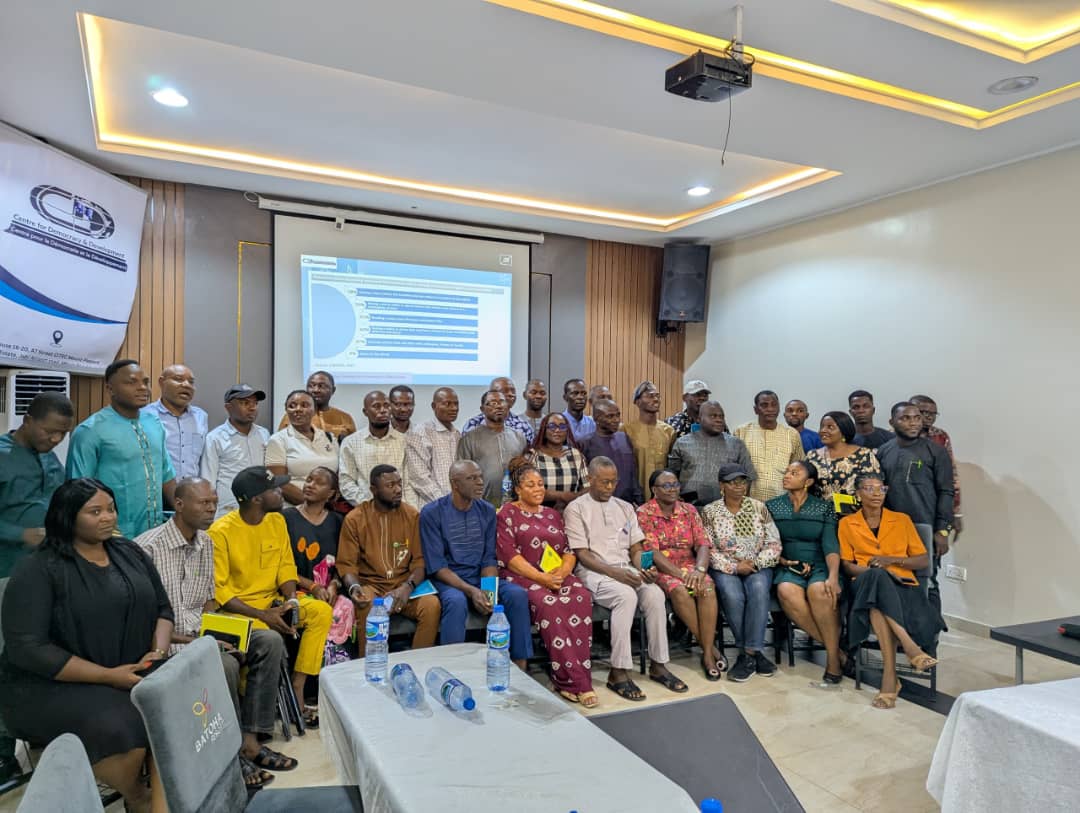
From Dooshima Terkura, Makurdi
Journalists in Benue State have been urged to prioritise fact-checking, verification and ethical reporting to enable them correct any form of disinformation at their disposal.
A programme staff of the Centre for Democracy and Development (CDD West Africa), Mr Raji Olatunji, gave this charge during a two-day capacity-building training for journalists in Benue state organized by his organization in Makurdi.
The training was on “Fact Checking, Ethical Reporting and Verification Techniques, themed “Strengthening Information Literacy and Social Cohesion.”
Olatunji, who facilitated the sesssions said the training was to equip journalists with fact checking skills as a critical safeguard tool and panacea against the spread of misinformation, disinformation and malingormation capable of causing violence and social unrest.
The facilitator said the training was going on in four states including Benue, Kaduna, Katsina and Plateau adding that the intervention aimed at strengthening information literacy and promoting social cohesion in the states.
He said journalists were deliberately prioritised because of their central role in shaping the information ecosystem, particularly in an era marked by disinformation.
According to Olatunji, the project was designed against the backdrop of recurring crises in Northern Nigeria, where false information has often been weaponised to incite violence and chaos. He noted that strengthening journalists’ capacity in fact-checking and ethical reporting was essential, given their influence as key stakeholders in information dissemination.
He further disclosed that before the training, CDD conducted a community baseline assessment in Obi, Otukpo and Gwer West local government areas of Benue State to understand the grassroots information ecosystem. The findings, he said, revealed that the media remained one of the most trusted sources of information for the people, underscoring the need to continually build journalists’ professional competence.
Olatunji stressed that the expectation from the training was for journalists to exercise greater caution in their work by verifying all claims before publication, to avoid being exploited by disinformation actors to destabilise society.
During the sessions, participants were taken through practical tools and techniques for verifying images, videos, locations and documents. The training examined the concept of information manipulation and disorder, including misinformation, disinformation and malinformation, as well as the principles and processes of fact-checking.
Journalists were also introduced to essential verification tools such as Google Reverse Image Search, TinEye, InVID, YouTube DataViewer, WHOIS Lookup and various fact-checking platforms including CDD FactCheck, Africa Check, Dubawa and FactCheckHub. Ethical reporting standards, warning signs of false information, and strategies for balancing speed with accuracy in news reporting were also discussed.
Some of the participants, Mr Kene Kenneth of Nasarawa Broadcasting Service (NBS) and Tor Vande Acka of Daily Independent appreciated CDD for the training an do pledged to utilize the knowledge acquired in their work.
Mr Acka acknowledged that spreading false information without verifying it could escalate tensions in the society and appealed to the organisation to extend the training to other journalists who were not part of the current exercise.