
General News
Don Harps On Tackling Hunger And Advancing Economic Justice Through Inclusive Policy Reforms in Nigeria

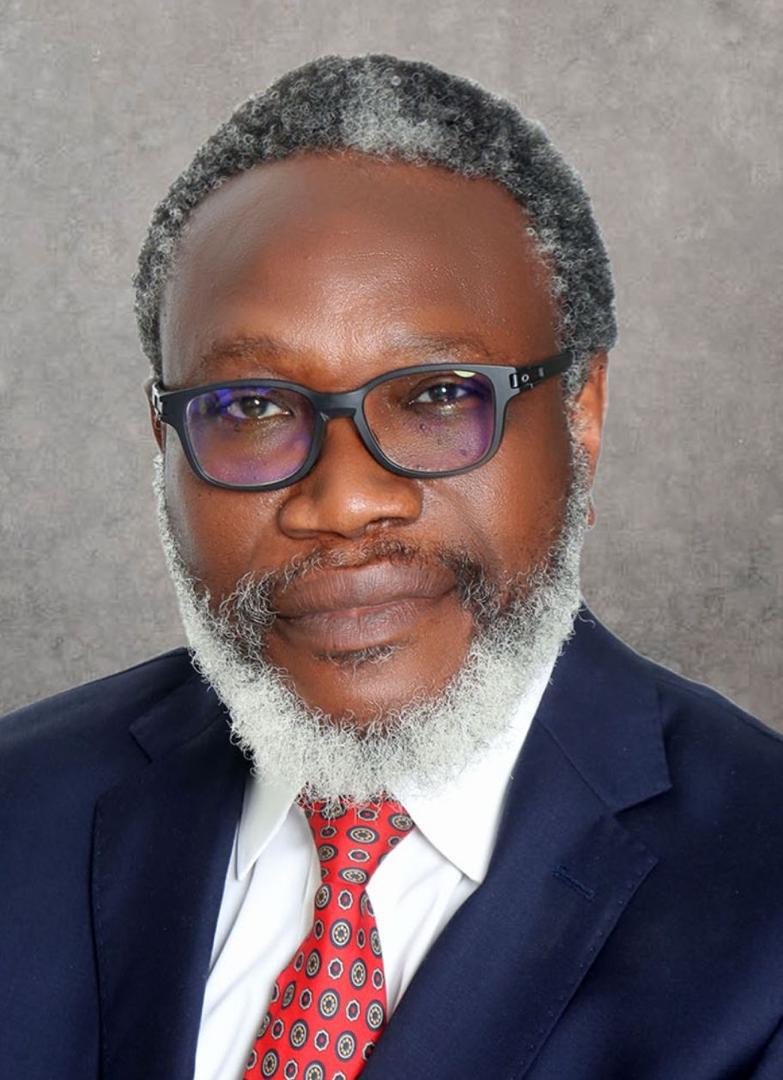
Adjunct Professor of Gemology, Yakubu Gowon University, Adesoji Adesugba has called for inclusive policy reforms that will combat hunger and advance economic justice in Nigeria.
He made the call in his paper presentation during a Stakeholders’ Forum with the theme “Thriving Beyond Hardship: Unlocking Nigeria’s Resources for Financial Stability and Economic Growth ” held in Abuja.
Professor Adesoji Adesugba who is also the 1st Deputy President, Abuja Chamber of Commerce and Industry, ACCI and| National Vice President, NACCIMA, said the call became necessary due to high rate of hunger despite the abundant natural and human resources in the country.
“We are gathered here today not merely to deliberate on the persistent issue of hunger, its impacts, or its long-term implications for our society, but to engage in a deeper, more urgent conversation—one that confronts the glaring contradictions that define our national reality and we inhabit a country endowed with extraordinary natural resources, rich biodiversity, and a youthful, energetic population full of promise. Nigeria boasts over 84 million hectares of arable land, yet more than 60% of this remains uncultivated” He stated
According to him, the nation’s agricultural potential is staggering, and Nigeria’s markets—both domestic and regional—are expansive. And still, paradoxically, millions go to bed hungry each night.and we are a nation of promise, yet we are restrained by poverty, food insecurity, and unfulfilled potential.
In his words “With youth unemployment hovering near 40%, our greatest asset—our people—remains underutilized and often disillusioned. The disconnect between what we have and what we achieve is not just a failure of productivity; it is a policy and systems failure. It challenges us to move beyond diagnosis and into action. We must ask ourselves: How do we transform latent potential into tangible prosperity? How do we build inclusive systems that do not just feed the privileged few but nourish the entire nation—economically, socially, and nutritionally?”.
“This paper seeks to explore these questions. It argues that tackling hunger in a land of plenty is not just a matter of increasing production, but of reforming the policies, structures, and institutional frameworks that continue to exclude, marginalize, and underperform. It is a call to reimagine governance and economic participation—to design inclusive policies that advance Nigeria’s Economy
Population and the Hunger Crisis
“Nigeria’s population, now over 220 million, is expected to hit 377 million by 2050, making us the third most populous country globally. Yet food production growth is not keeping pace. The World Food Programme (2023) estimates that 25 million Nigerians face food insecurity, with over 2 million children acutely malnourished and without inclusive policy reform and the right skills, this trajectory leads to instability, mass urban migration, and deepening inequality”. The Don stressed.
He further stated that”To truly convert potential into prosperity, we must recognize that economic transformation in Nigeria hinges not only on harnessing natural resources but, more critically, on unlocking the productive power of our people. Whether in agriculture, manufacturing, technology, creative industries, or services, the common denominator for sustainable progress is the availability of relevant, market-driven skills. Across the country, millions of young people are entering a labor market that is rapidly evolving—yet our education and training systems remain largely disconnected from the real economy. This disconnect results in widespread underemployment, reduced productivity, and a cycle of dependency that stifles innovation and growth.
“Addressing this challenge demands a national commitment to skills development as a cornerstone of inclusive policy reform. Empowering individuals with practical, adaptable skills—be it in digital innovation, technical trades, entrepreneurship, green economy sectors, or public service—opens doors to job creation, self-reliance, and upward mobility. It equips citizens to participate meaningfully in the economy, contribute to national development, and chart their own paths out of poverty. In essence, skills are not just tools for employment—they are catalysts for economic freedom and national resilience in a multipolar world”Professor Adesugba emphasized
He noted that in addressing Skills shortage, the *Dual Vocational Strategy*, which is a model that blends theory with practice, allows young Nigerians to gain relevant skills while embedded in real workplace environments and this is a model that is being adopted by the Business Entreprenurship Skills and Technology (BEST) Centre of the Abuja Chamber of Commerce.
” With over 4,000 trained by the BEST Centre across trades such as digital skills, tailoring, agriculture, Fashion and beauty, Office Administration, Facility Maintenance among others, this centre proves that you don’t need a billion-dollar budget to create jobs — you need vision, partnerships, and execution”.
“Nigeria is one of the world’s richest sources of untapped gemstones. But we export raw stones and import jewellery, forfeiting value and jobs and to reverse this, we established the *Gemological Institute of Nigeria*, complemented by a historic MOU with the *Yakubu Gowon University of Abuja*— the *first in Africa to offer a formal curriculum in Gemology and Jewellery Design*. Our goal is to build a workforce of skilled gemologists, jewellers, and gemstone entrepreneurs who add value locally and export globally”.
“In the 21st century, data is food. Technology is fertilizer. Blockchain is irrigation and blockchain offers transformative potential to tackle hunger, disease, and economic exclusion. Here’s how:
• Transparent Agricultural Supply Chains: Using blockchain, farmers can track produce from farm to market, reducing waste, preventing fraud, and ensuring fair pricing.
• Decentralized Food Aid: Smart contracts can deliver aid directly to verified recipients, bypassing corruption and middlemen.
• Health Access and Disease Management: Blockchain allows secure medical data sharing, improving healthcare delivery in rural areas and during pandemics.
• Digital Land Registry: Clear, immutable records of land ownership protect farmers from displacement and unlock access to credit”.
“Nigeria ranks 6th globally in blockchain adoption (Chainalysis, 2023), with millions using crypto for savings and remittances. Yet our regulatory environment remains hesitant. We risk losing our digital future to nations moving faster and compare this with the United States. In 2020, President Donald Trump issued Executive Order 13772, pushing for a review of emerging financial technologies, including blockchain. That initiative laid the groundwork for federal blockchain strategy, followed up by the Biden administration’s Executive Order 14067, calling for responsible development of digital assets. This is not a political issue — it is a strategic one”.
“If blockchain is being explored to power welfare disbursement, trade logistics, and disease surveillance in the U.S., why not in Nigeria?
If we are to tackle hunger and advance inclusive economic prosperity in Nigeria, we must embrace a broader understanding of what drives development.
“Nigeria’s transformation will not come from top-down directives alone. It will come from the grassroots, from people who take initiative, innovate within constraints, and solve problems that affect their communities. We must stop waiting for Abuja to save us. The future belongs to those who can blend resilience with resourcefulness—those who can plant cassava by day and code smart contracts by night; those who can sell shea butter globally with the help of e-commerce, or build climate-resilient solutions from indigenous knowledge and modern science and this is not a romantic ideal—it is a practical necessity. Across Nigeria, we are seeing sparks of this movement already: tech hubs in Yaba and Kaduna, fashion entrepreneurs in Aba and Kano, agro-processors in Benue and Nasarawa, young artisans, renewable energy startups, and digital creatives carving out opportunity in the absence of perfect conditions. But these sparks must be nurtured, scaled, and supported through inclusive policies that do not stifle initiative but enable it.
“What we need is a fusion of forces: let us marry entrepreneurship with equity, agriculture with AI, and tradition with technology. Let us center people—especially youth and women—not as beneficiaries, but as co-creators of the nation’s future. The true power of a country lies not just in its institutions but in the imagination, drive, and determination of its people. When policies align with people’s potential, and when initiative is celebrated, not punished, we build a Nigeria where no one is left behind”.
“Our message today is simple but urgent:
• Train the youth — through dual vocational education and digital upskilling.
• Mine our minerals — and add value through gemology and trade.
• Code the future — through blockchain-powered inclusion.
• Feed our people — by empowering them to feed themselves and we must move from scarcity to scale, from talk to tech, and from policy promises to people-powered progress.