
Education
Education Reform: FG to Replace Common Entrance Exams with Learner ID System

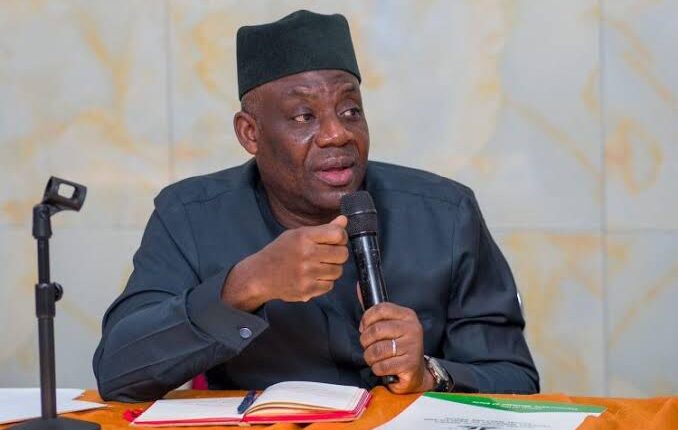
The Federal Government has unveiled plans to phase out the common entrance examination and introduce a nationwide Learner Identification Number (LIN) to monitor students’ academic progress from primary through secondary education.
The Minister of Education, Morufu-Tunji Alausa, made this known during an interactive session with journalists in Lagos, describing the initiative as part of broader reforms aimed at strengthening Nigeria’s education system.
Alausa explained that the proposed LIN would assign a unique number to every pupil at the primary level, allowing authorities to track their progression and identify gaps in school enrolment and retention.
According to him, the system is expected to address the significant drop-off between primary and junior secondary school levels. He noted that out of over 23 million pupils in more than 50,000 public primary schools nationwide, only about three million proceed to public junior secondary schools.
“This raises a critical question about the whereabouts of millions of children who are no longer in the public education system,” he said, attributing the gap largely to limited access and inadequate school infrastructure.
To address the challenge, the minister said the government is engaging state authorities to expand school capacity, including discussions with the Nigerian Governors’ Forum to build more schools.
He added that the Learner Identification Number would remain with each student regardless of school transfers, making it easier to track attendance, progression, and reasons for dropping out.
In a major policy shift, Alausa also announced that the common entrance examination would be replaced with a Continuous Assessment (CA) system. The new approach, he said, would assess pupils based on their academic performance from primary one, ensuring a more holistic and consistent evaluation process.
“The continuous assessment will follow the child throughout their schooling, even when they move between schools,” he added.
The minister further revealed plans to revive the school feeding programme, noting that it would be moved from the Ministry of Humanitarian Affairs to the Federal Ministry of Education to enhance monitoring and implementation.
He said the reforms are aimed at increasing enrolment, improving retention, and ensuring that more Nigerian children complete basic education.
Continue Reading