General News
FG Justifies 2024–2026 External Borrowing Plan

By Iyojo Ameh
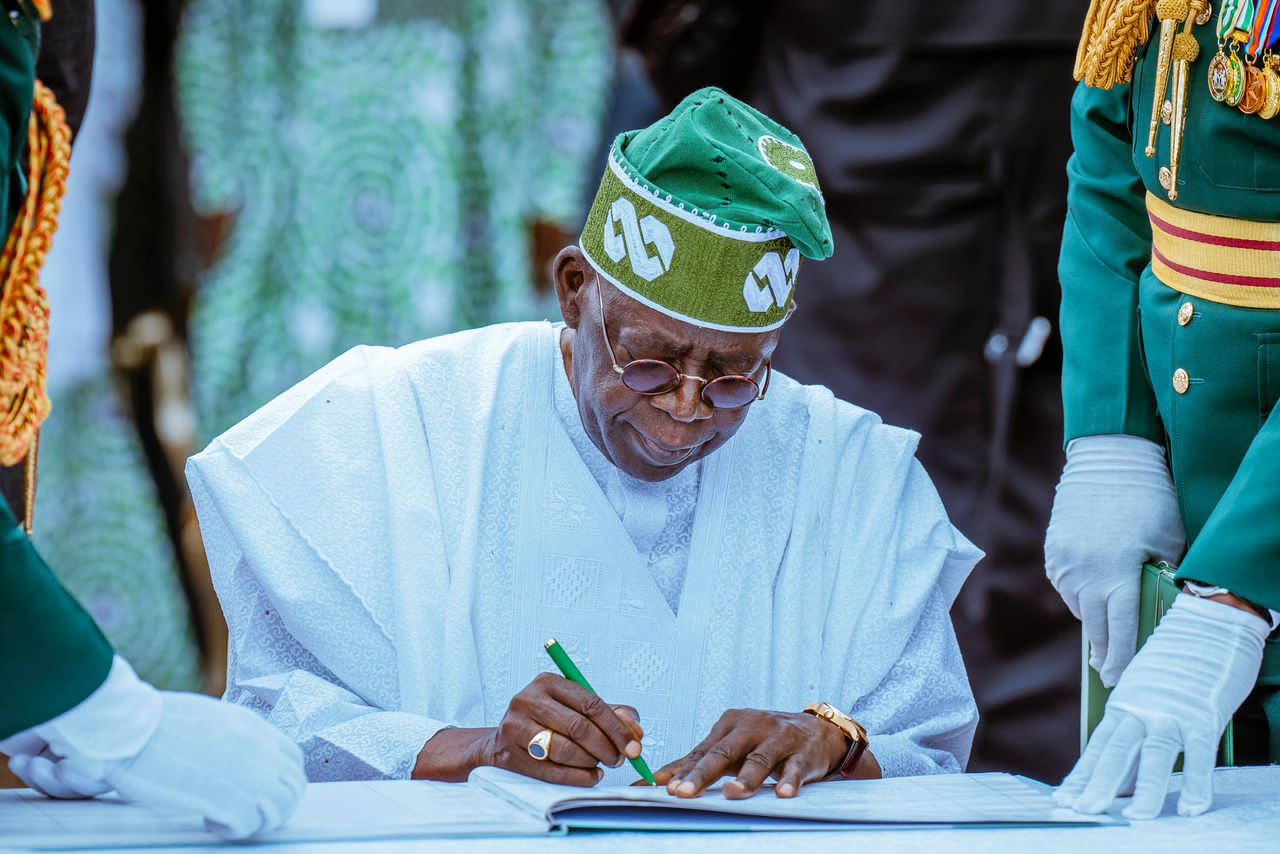
The Federal Ministry of Finance has provided clarification on the Federal Government’s 2024–2026 External Borrowing Rolling Plan, which was formally presented to the National Assembly by President Bola Ahmed Tinubu on May 27, 2025.
In a statement signed by Mohammed Manga, FCAI, Director of Information and Public Relations, the Ministry explained that the borrowing plan is a structured financing framework designed to support national development objectives while maintaining fiscal responsibility.
The proposed plan, a component of the Medium-Term Expenditure Framework (MTEF), is anchored in the Fiscal Responsibility Act of 2007 and the Debt Management Office (DMO) Act of 2003. It outlines the borrowing strategy for both federal and state governments over a three-year period and includes detailed appendices on project allocations, loan terms, implementation schedules, and conditions.
The Ministry emphasized that inclusion in the rolling plan does not translate into immediate borrowing. Instead, actual borrowing figures are contained in the annual budget. For 2025, the external borrowing component is $1.23 billion, which has yet to be drawn and is projected for the second half of the year.
The plan includes funding for key projects across several states, including Abia, Bauchi, Borno, Gombe, Kaduna, Lagos, Niger, Oyo, Sokoto, and Yobe.
“This structured, forward-looking approach allows for proper planning and avoids the pitfalls of ad hoc or emergency borrowing,” the statement read.
According to the statement, a large share of the loans in the 2024–2026 plan will be disbursed over 5 to 7 years, tied directly to development projects. These projects span critical sectors such as: Power transmission infrastructure, Irrigation and food security enhancement, National fibre optics expansion, security acquisition, including fighter jets and Road and rail transportation development.
The loans will primarily be sourced from development partners, including the World Bank, African Development Bank, French Development Agency, European Investment Bank, JICA, China EximBank, and the Islamic Development Bank. These loans are concessional, with favorable interest rates and long repayment periods.
The Ministry reassured the public that Nigeria’s debt service-to-revenue ratio, which peaked at over 90% in 2023, is now on a downward trend. The government has ended reliance on inflationary central bank overdrafts, known as “ways and means,” and expects improved revenue inflows from the Nigerian National Petroleum Corporation (NNPC) as well as enhanced collection efforts from government-owned enterprises and MDAs.
Having achieved a measure of macroeconomic stability, the Federal Government is now focused on transitioning to a phase of rapid and inclusive economic growth. This requires robust investment in infrastructure, agriculture, energy, and transport—areas where borrowing will be concentrated.
“Our debt strategy is driven not just by how much we borrow, but by what we borrow for,” the Ministry stated. “The priority is to ensure that borrowed funds are directed to productive, growth-enabling projects.”
The government reaffirmed its commitment to keeping borrowing within sustainable and manageable limits, in line with the DMO’s Debt Sustainability Framework. It also highlighted ongoing tax reforms and other revenue initiatives aimed at strengthening public finances.
“The Federal Government remains committed to fiscal discipline, transparency, and accountability,” the statement concluded, noting that legislative oversight and public engagement are key to building long-term economic resilience and national prosperity.