General News
NiMet, Tomorrow.io Launch Workshop to Strengthen Climate Advisory for Farmers

By Iyojo Ameh
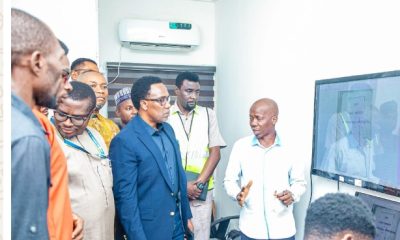
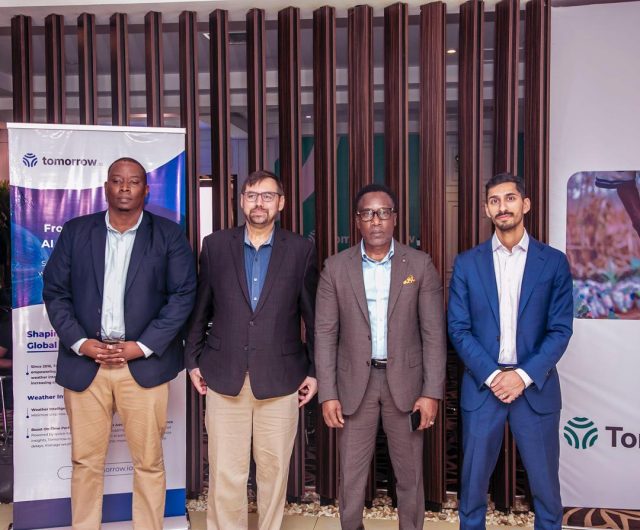
The Nigerian Meteorological Agency (NiMet), in partnership with global weather intelligence firm Tomorrow.io, has begun a five-day co-design workshop aimed at strengthening climate advisory services for farmers through improved decision-support tools.
The workshop, which runs from February 12 to 16, 2026, focuses on refining the Digital Climate Advisory Service (DCAS) Decision Tree — a framework designed to provide farmers with localized, practical, and easy-to-understand weather guidance for agricultural planning.
According to NiMet, the initiative is part of efforts to integrate direct feedback from farmers alongside expert technical input to ensure that advisories generated are relevant to real-life farming conditions across Nigeria.
Participants include representatives from the Federal Ministry of Agriculture and Food Security, the Federal Ministry of Livestock Development, farmer development organisations, and technical experts.
The collaboration is expected to synchronize NiMet’s localized 2026 Seasonal Climate Prediction (SCP) with farm-level activities nationwide. The goal is to ensure that climate forecasts translate into clear recommendations on when farmers should plant, irrigate, or harvest.
A key component of the workshop is the development of a Crop Decision Tree system that will generate automated advisories for various climate scenarios, including delayed rainfall, early rains, and prolonged dry spells.
Officials say the system is designed to reduce agricultural risks associated with unpredictable weather and improve productivity.
Brian Miranda, representing Tomorrow.io’s leadership, commended NiMet’s Director-General, Prof. Charles Anosike, for what he described as strategic leadership in advancing Nigeria’s hydrometeorological services.
He noted that NiMet’s adoption of artificial intelligence technology would strengthen early warning systems for extreme weather and enhance the agency’s ability to safeguard communities.
In his remarks, Prof. Anosike described the initiative as a potential game changer for Nigerian farmers, stressing that the service would deliver simplified, actionable weather-based guidance to support daily agricultural decision-making.
The workshop will continue with technical sessions where stakeholders will jointly develop and fine-tune the DCAS Decision Tree, combining scientific expertise with field experience to address real challenges faced by farmers.
Stakeholders say the project is expected to improve farm-level decision-making, boost agricultural productivity, and contribute to Nigeria’s broader goals of food security and climate resilience.