
Crime
Repentant Terrorists Allegedly Leaking Security Information — Senior Officers Raise Alarm

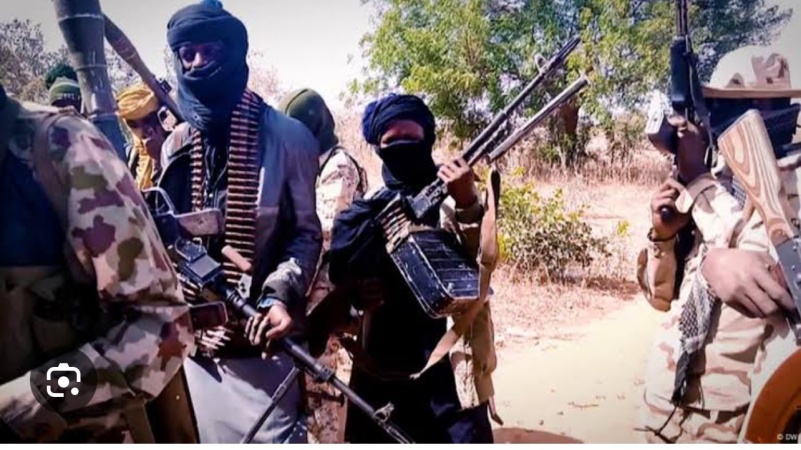
Amid Nigeria’s prolonged battle against terrorism and banditry, a troubling question continues to surface. It echoes after mass burials of villagers killed in midnight attacks, in deserted communities where farms lie abandoned and schools remain closed, and in the quiet prayers of parents who send their children to school hoping they return safely.

The question many Nigerians are asking is simple yet disturbing: if authorities know who the terrorists are and where they operate, why do they still move freely?
What makes the issue more unsettling is that these claims are not coming from unknown sources. Individuals close to the corridors of power have repeatedly suggested that intelligence about terrorist identities and hideouts already exists.
Despite this, violent attacks persist, widening the gap between what is reportedly known and what actions are taken. This paradox has led many citizens to wonder whether the country is truly losing the war against terror or failing to confront it with the urgency required.
The claims
The debate intensified after Islamic cleric Sheikh Abubakar Gumi, who has long positioned himself as an intermediary between authorities and armed groups, made a striking claim during an interview on DRTV.
Gumi stated that the Nigerian government is aware of the identities and locations of terrorists operating across the country. He also revealed that he had previously visited bandit camps in forest areas under official supervision and accompanied by security agents.
For many observers, his statement raised a critical question: if a cleric can enter bandit hideouts with official escorts, why can’t security forces move in to dismantle them?
Zamfara governor, El-Rufai weigh in
Adding to the controversy, Zamfara State Governor Dauda Lawal previously expressed frustration over the security situation in the state. In a video that circulated widely in September 2025, the governor insisted that intelligence on bandit leaders exists.
“I swear to Almighty Allah, wherever a bandit leader is in Zamfara State, I know it. If he moves, I know. With my phone, I can show you where they are today,” he said.
However, he noted that operational control of security agencies lies with the federal government, leaving state authorities with limited influence over security decisions.
Former Kaduna State governor Nasir El-Rufai also stirred debate months earlier when he alleged during a television interview that the government had secretly paid bandits to discourage them from attacking communities, though critics demanded evidence to support the claim.
The implication
If these claims are accurate, analysts say the implications are deeply troubling. It would mean that the state already has intelligence capable of dismantling criminal networks terrorising communities.
Yet questions remain: why are soldiers still dying in battle if the enemy’s location is known? Why are police officers, vigilantes and hunters still falling into ambushes? And why do families continue to bury loved ones in uniform if intelligence is already available?
Security experts speak
Security analysts and military veterans say the crisis may stem from deeper structural challenges within the country’s security architecture.
In a joint interview on Channels Television, intelligence consultant Yahuza Getzo and United States Army veteran Capt. Bishop Johnson (retd.) highlighted several underlying issues.
Getzo pointed to regional factors contributing to insecurity, including Nigeria’s porous borders with neighbouring countries such as Niger, Benin, Cameroon and Chad, as well as trans-Saharan trade routes.
According to him, while security agencies may possess equipment and intelligence tools, accountability in their use remains a major concern.
He also warned that some insurgent groups are increasingly targeting government institutions, noting that the Lakurawa group has reportedly focused on attacks against customs, police and immigration facilities.
Getzo suggested that the problem might not be a lack of information but a failure to act decisively.
Johnson, on his part, argued that Nigeria’s approach to counter-terrorism has largely been reactive.
“We are ill-equipped and unprepared. We have not really taken the time to fully understand what is happening,” he said.
He also linked the surge in banditry to illegal mining activities and the lucrative ransom economy created by kidnappings.
“When people enter Nigeria and realise they can kidnap victims and receive ransom, their lives change. In many cases, kidnappings may serve as distractions while illegal mining of valuable resources continues,” he said.
Johnson further suggested that authorities could utilise information from controversial figures like Sheikh Gumi rather than dismissing them outright.
“Intelligence agencies sometimes recruit individuals with questionable backgrounds to gather information against larger criminal networks,” he added.
Why terror thrives — Ofoyetan
Dr. Tony Ofoyetan, Director-General of the International Institute of Professional Security, believes Nigeria’s problem goes beyond simply identifying where terrorists hide.
According to him, the country initially underestimated the threat of terrorism.
“Terrorism is like cancer. It is easier to eliminate in its early stages, but once it spreads, it becomes far more difficult to control,” he said.
Ofoyetan explained that many attacks are carried out by “sleeper cells” — individuals who blend into communities while secretly gathering intelligence for terrorist networks.
These operatives may appear as ordinary citizens running small businesses or engaging in everyday activities while monitoring communities over long periods.
By the time an attack occurs, he said, the groundwork has already been laid and success is almost guaranteed.
He also warned that some influential individuals may indirectly protect terrorist networks, sometimes due to political alliances or past support.
According to him, such relationships can even influence public debates about military operations and counter-terrorism strategies.
Troubling battlefield reality
Retired Rear Admiral Dickson Olisemelor also questioned why bandit movements sometimes appear to occur openly without immediate intervention.
He cited instances where large numbers of armed men reportedly moved through communities on motorcycles without being intercepted, only for kidnappings to occur shortly afterwards.
He also expressed concern over recent attacks in Borno State that reportedly resulted in the deaths of several senior military officers and the destruction of their units.
Concerns within the ranks
Some serving senior officers, who spoke anonymously, also expressed worries about the integration of former bandits into security structures.
One officer alleged that some soldiers recruited under “repentant bandit” programmes may still maintain links with their former associates.
According to the officer, such connections could lead to intelligence leaks that undermine military operations.
The officer further claimed that past counter-terrorism policies could have long-term consequences for national security.
Another source suggested that political interests might sometimes complicate security operations, alleging that some powerful figures may indirectly benefit from the activities of armed groups.
The unanswered question
Across Nigeria’s northern highways, travellers still fear abduction. In rural communities, farmers work their fields cautiously while families live under the constant threat of attacks.
Children head to school with silent prayers, and communities brace for tragedy that could strike without warning.
Yet one question continues to linger: if authorities know who the criminals are and where they operate, why does the violence continue?
Until that question is answered, many Nigerians fear that hope will remain fragile while insecurity persists.
Continue Reading