International
The Story of Our Freedom Is Incomplete Without Nigeria – SADC Chairman


By Iyojo Ameh
The Southern African Development Community (SADC) has expressed profound gratitude to Nigeria for its pivotal role in the liberation struggles of Southern Africa, describing the West African giant as a “brotherly ally whose sacrifices will never be forgotten.”
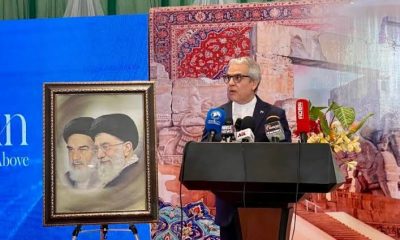
Speaking in Abuja during the 2025 SADC Day celebration, the SADC Chairman in Nigeria and Zimbabwe’s Ambassador to Nigeria, His Excellency Maxwell Ranga, praised Nigeria’s unwavering support during the fight against apartheid and colonial rule.


According to him, Nigeria provided “significant diplomatic, financial, military and humanitarian support” to liberation movements such as the African National Congress (ANC) of South Africa, SWAPO in Namibia, and ZANU in Zimbabwe.
He recalled that Nigeria established the Southern African Relief Fund (SARF) in 1976, contributed millions of dollars, mobilized nationwide public donations, trained freedom fighters, offered scholarships to Southern African students, and used its oil resources to pressure apartheid South Africa by refusing trade and championing global sanctions.
“SADC will always be grateful to Nigeria and its people for sacrificing themselves to liberate their brothers and sisters. This legacy continues to shape Nigeria’s foreign policy and its relationship with SADC, as an advocate for African self-determination,” Ranga said.
The commemoration also showed SADC’s current trajectory as on 17 August 2025, the 45th Ordinary Summit of SADC Heads of State and Government took place in Madagascar, where Zimbabwe’s President Emmerson Mnangagwa handed over the Chairmanship to Madagascar’s President Andry Rajoelina, who will steer the bloc until August 2026.
Nigeria was represented at the Abuja celebration by Ambassador Nonyelum A. Afoekelu, Head of SADC Desk at the Ministry of Foreign Affairs, who conveyed the goodwill of the Minister of Foreign Affairs. She applauded SADC’s strides in trade, infrastructure, peacekeeping, and education, noting that its progress aligns with the African Union’s Agenda 2063.
Afoekelu reaffirmed Nigeria’s readiness to deepen cooperation with SADC countries, citing ongoing Joint Commissions with South Africa, Namibia, Angola, Zimbabwe, and Botswana.
“Nigeria has always maintained brotherly and friendly relations with SADC countries from the period of the struggle for independence to this era of development. We will continue to work together in line with our foreign policy to strengthen peace, prosperity, and integration across Africa,” she said.
SADC, which currently has 16 member states including South Africa, Angola, Zimbabwe, Zambia, Namibia, and Tanzania, has expanded its objectives beyond political liberation to include industrialisation, regional integration, food security, climate resilience, and socio-economic development.
The Abuja event concluded with a reaffirmation of solidarity between Nigeria and SADC as both sides pledged to harness their historical bonds in addressing Africa’s shared challenges of peace, climate change, and economic transformation.