
International
After 500 Years, First Female Archbishop of Canterbury Named — To Lead Worldwide Anglican Communion

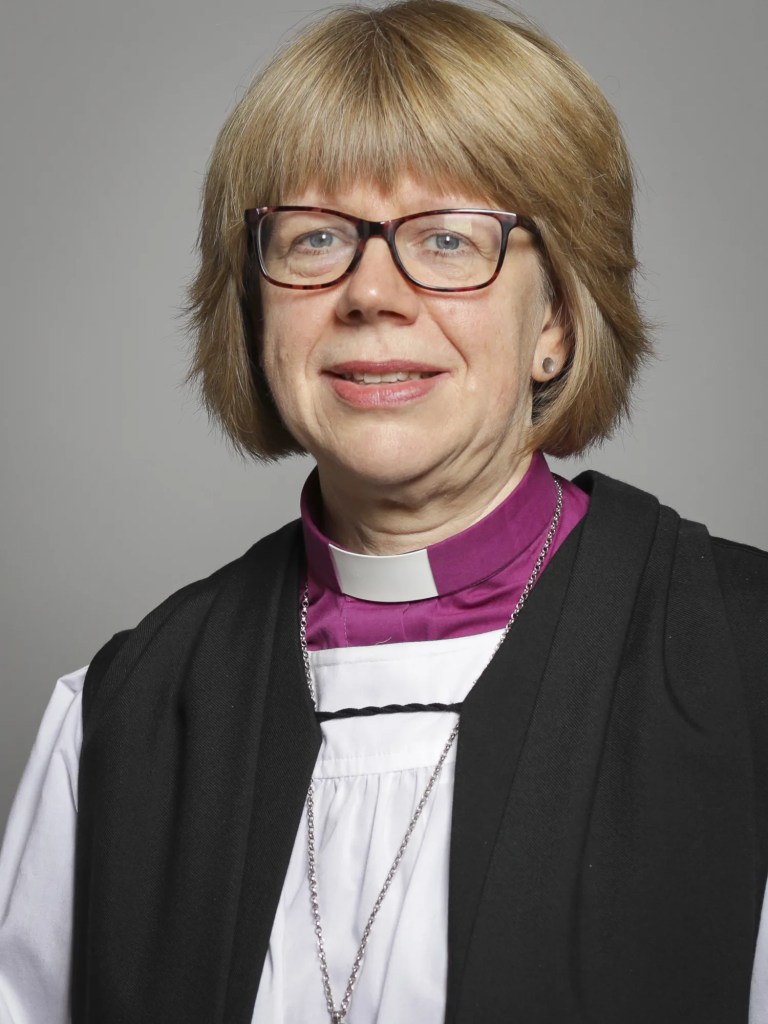
Dame Sarah Mullally has been announced as the Archbishop of Canterbury-designate, becoming the first woman in nearly five centuries to hold the role.
A former NHS chief nurse, the 63-year-old entered the priesthood in 2006 and later made history in 2018 as the first female Bishop of London, the third most senior clerical position in the Church of England. Her appointment marks the first time in almost 500 years that a woman has been chosen to lead the Church.
In her first public statement on Friday, she condemned the “horrific violence” of Thursday’s deadly attack on a Manchester synagogue, declaring that “hatred and racism cannot tear us apart.”

The Church has been without a permanent Archbishop for nearly a year, following Justin Welby’s resignation after a safeguarding scandal. A damning report found that he failed to report the abuse of boys and young men by John Smyth in 2013. In the interim, Archbishop of York Stephen Cottrell assumed many responsibilities, though he too has faced criticism over his handling of abuse cases.
Women were first ordained as priests in the Church in 1994, while the consecration of female bishops began in 2014. Following tradition, Dame Sarah’s name was submitted to Prime Minister Sir Keir Starmer and then presented to the King.
Sir Keir welcomed her appointment, wishing her “every success” and expressing eagerness to work with her. While King Charles III serves as the official head of the Church of England, the Archbishop of Canterbury is the spiritual leader of the Church and the wider Anglican Communion. In a statement, Buckingham Palace confirmed the King’s congratulations on her “role of such importance in the UK and across the global Anglican Communion.”

However, the Global Fellowship of Confessing Anglicans, representing conservative views, criticised the appointment, arguing that the majority of the Anglican Communion still holds to a male-only episcopacy.
Dame Sarah’s position will be formalised after a confirmation of election in January, followed by an enthronement service at which homage is paid to the King.
Speaking at Canterbury Cathedral, she said Anglicanism provides “something quieter but stronger” in an age “that craves certainty and tribalism.” She also pledged to address safeguarding failures that have caused “deep harm and mistrust,” insisting the Church must allow “light to shine on our actions, regardless of role.”
On the Manchester synagogue attack, she reaffirmed the Church’s duty to stand with the Jewish community, declaring that “antisemitism in all its forms” must be opposed.
Married with two children, Dame Sarah spent over 35 years in the NHS and became England’s youngest-ever chief nursing officer in 1999. Already volunteering in the Church at the time, she pursued ordination a few years later and was tasked with helping reform safeguarding policies. She became canon treasurer at Salisbury Cathedral in 2012, Bishop of Crediton in 2015, and Bishop of London three years later, where she applied her experience as a health administrator to modernise the diocese.
Reflecting on her new role, she told the BBC: “I’ve had experiences as a nurse leading complex organisations, as the government’s chief nursing officer, and as bishop in a diverse diocese like London. These have prepared me in part, but I know I cannot do this alone. I need to do it with colleagues.”
Acknowledging the historic nature of her appointment, she said young girls often take inspiration when they see women in Church leadership. “They may not want to be Archbishop of Canterbury, but it shows them that their dreams are possible,” she said.
Among her immediate challenges are tackling safeguarding, rebuilding trust, and addressing declining church attendance, though London has bucked the trend somewhat. She has also spoken strongly against assisted dying, calling it “unworkable, unsafe, and a risk to the most vulnerable,” while welcoming the Church’s 2023 decision to allow blessings for same-sex couples as “a moment of hope.”
Former Archbishop Rowan Williams described the demands of her new role as akin to having “a newspaper in one hand and a Bible in the other,” adding that the weight of expectation to comment on everything is “quite heavy.”