
General News
North-West Citizens Applaud President Tinubu’s Achievements in Oil and Gas Sector Urge Sustained Reforms, Increased Oil Output to Meet National Needs

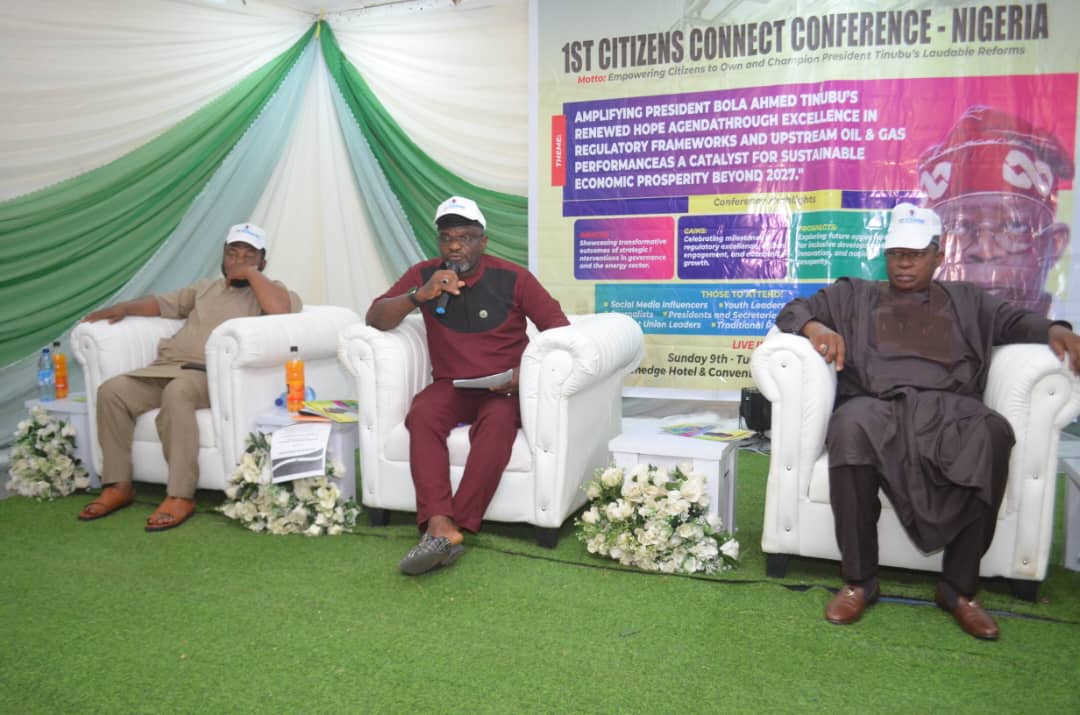
Stakeholders across the seven states of Nigeria’s North-West region have commended President Bola Ahmed Tinubu’s administration for its transformative reforms in the oil and gas sector, describing them as bold and visionary steps toward economic revival and national cohesion.


Speaking at the ongoing three-day 1st Citizens Engagement Conference in Kaduna, participants urged the Federal Government to consolidate the current progress by further increasing oil production to cushion citizens against the effects of ongoing economic adjustments.
The landmark civic forum, which drew participants from Kaduna, Kano, Katsina, Jigawa, Kebbi, Sokoto, and Zamfara states, brought together traditional rulers, academics, policymakers, civil society leaders, and entrepreneurs under the theme: “The Positive Impacts of Oil and Gas Reforms by the Asiwaju Administration.”
The event, part of a nationwide series covering Nigeria’s six geopolitical zones, spotlighted the Petroleum Industry Act (PIA) 2021 as a critical driver of regulatory clarity and operational efficiency in the sector.
Co-Convener Mallam Nasir Abdulquadri described the PIA as a watershed in Nigeria’s energy landscape, crediting it with restoring transparency and investor confidence. He praised President Tinubu’s “uncommon courage” in implementing deregulation and removing fuel subsidies — tough but necessary decisions that, he said, are attracting private investments, reviving refineries, and unlocking Nigeria’s gas potential for industrial growth.
“These reforms come with temporary discomforts, but every genuine reform carries the pain of transition,” Abdulquadri stated, while warning against internal distractions and external interference that could derail the process.
In his presentation titled “Amplifying President Bola Ahmed Tinubu’s Renewed Hope Agenda Through Regulatory Excellence and Upstream Oil and Gas Performance: Catalyst for Sustainable Economic Prosperity Beyond 2027,” Professor Usman Muhammed of Kaduna State University’s Department of Political Science and International Studies underscored the economic impact of these reforms.
Citing empirical data, Prof. Muhammed revealed a strong correlation (r=0.74) between oil output and GDP growth, noting that regulatory quality significantly influences economic performance (β=0.517). He commended the administration’s strides in transparency and community inclusion through the Host Community Development Trusts (HCDTs), which have enhanced local participation and economic diversification.
He further advocated for deeper digital integration, renewable energy adoption, and full enforcement of the PIA to strengthen institutions and ensure long-term sustainability.
“Regulatory excellence is the bedrock of national prosperity,” the professor concluded. “By sustaining institutional reforms, fostering innovation, and ensuring transparency, the Renewed Hope Agenda can outlive 2027 — delivering jobs, affordable energy, and equitable growth for all Nigerians.”
In their collective resolution, North-West citizens urged the Federal Government to sustain and expand the gains in the oil and gas sector by prioritizing institutional accountability, deploying advanced technology to combat oil theft, and aggressively boosting upstream production. They emphasized that doing so would stabilize fuel prices, generate millions of jobs, meet domestic energy needs, and ensure that the dividends of reform directly enhance citizens’ living standards.