
Business and Economy
Fuel Price Competition Will Benefit Nigerians — NNPC CEO

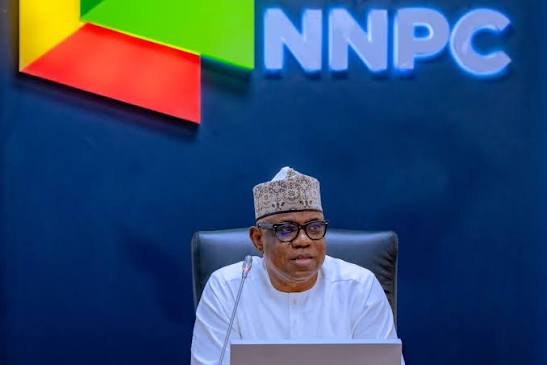
The Group Chief Executive Officer of the Nigerian National Petroleum Company Limited (NNPCL), Bayo Ojulari, has assured Nigerians that the ongoing price competition in the downstream petroleum sector will ultimately work in favour of consumers.
Ojulari described the current market tensions as a natural outcome of Nigeria’s transition from heavy dependence on fuel imports to increased domestic refining capacity.
According to him, healthy competition naturally favours buyers and will, over time, lead to market stability.
“Where there is healthy competition, the buyers are the ultimate beneficiaries. We need to understand that the market will stabilise,” he said.
Speaking to journalists after briefing President Bola Tinubu in Lagos, Ojulari explained that the country is undergoing a major shift in its petroleum supply structure, which has temporarily created price pressures.
“After a while, there will be some tension because we are going through a major transition,” he noted.
His comments come amid intense price competition in the sector, which has seen petrol prices fall sharply from over ₦1,200 per litre in November 2024 to as low as ₦739 per litre at some retail outlets in December 2025. This reduction has been largely driven by competition among the Dangote Refinery, NNPCL, and independent petroleum marketers.
“At the end of the day, I can tell you that Nigerians on the street will be the real beneficiaries,” Ojulari stated.
Clarifying NNPCL’s position in the deregulated petroleum market, the company’s chief executive stressed that NNPCL no longer controls product pricing or regulation under the Petroleum Industry Act (PIA).
“The first thing Nigerians need to understand is that the PIA brought about a fundamental change. Before the PIA in 2021, which fully took effect in 2022, everything—including some regulatory functions—was under NNPC. The PIA separated regulation from business operations,” he explained.
Ojulari further stated that the Nigerian Midstream and Downstream Petroleum Regulatory Authority (NMDPRA) is responsible for midstream and downstream regulation, while the Nigerian Upstream Petroleum Regulatory Commission (NUPRC) oversees upstream activities.
“It is very important for Nigerians to understand that after the PIA, we at NNPC are no longer regulators,” he emphasised.
He explained that the PIA repositioned NNPCL as a fully commercial entity required to operate profitably and competitively like any other business.
The NNPCL boss also disclosed that the company no longer receives allocations from the federation account and must independently raise funds to sustain its operations.
According to him, NNPCL now operates as the “supplier of last resort” and works closely with all major downstream stakeholders, including the Dangote Refinery—where the company holds an equity interest—to ensure adequate product availability nationwide.
“For us at NNPC, our focus is on increasing production. As production grows, there will be more crude available to supply refineries and stabilise the market,” he said.
Ojulari reassured Nigerians that sustained domestic production and competition would continue to drive efficiency, availability, and better pricing in the petroleum sector.