Opinion
From Self-Crowned Landlord to Tenant: Court Ruling Redefines Political Ownership Narrative

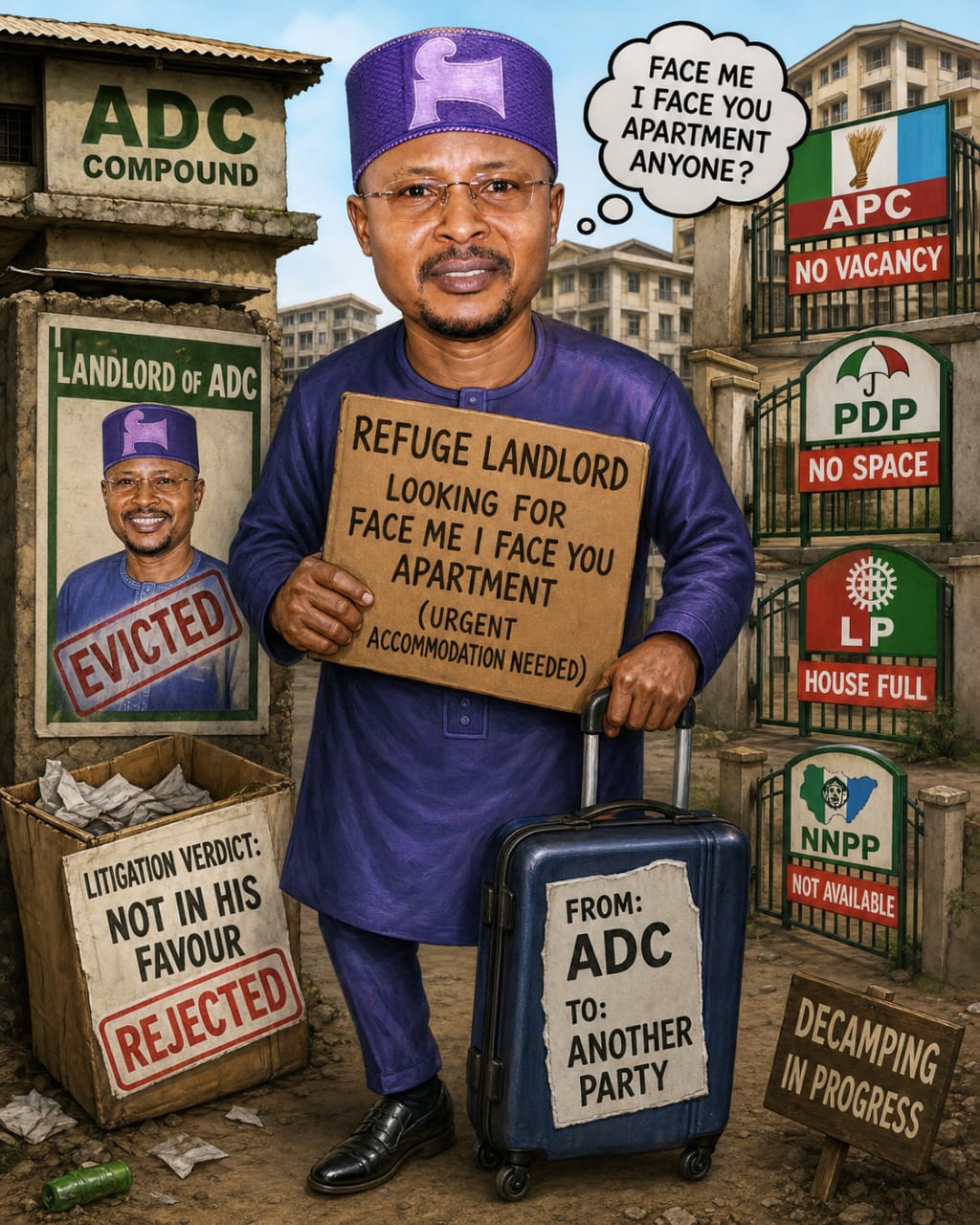
By Clara Innocent
A recent court decision has sparked reflection in political circles after a figure once described as a “self-crowned landlord” was effectively stripped of claims to a property he had long presented as his own.
The individual, who previously projected confidence and authority over what he referred to as his “house,” is now said to be grappling with the consequences of the ruling.

According to accounts circulating in political commentary spaces, he had once spoken with certainty, presenting himself as the undisputed owner.
However, the court’s determination altered that perception, clarifying that the claimed ownership did not stand legal scrutiny.
Observers say the development has left him in a contrasting position, moving from confidence to uncertainty, now seeking alternatives after the loss of what he believed was his political and personal stronghold.

In a reflective narrative capturing the situation, the words associated with the episode were stated as follows:
“He once called himself a landlord, owner of a house he didn’t really build. He spoke with confidence, as if the keys were his forever.
Then the court looked at everything and said, simply: this house is not yours.
Now the former self-crowned landlord is moving around with his bag, knocking on doors. ‘Any space? Even face-me-I-face-you will do,’ he says.
That is politics. Today you act like the owner. Tomorrow you are searching for where to stay. Power is a borrowed house, one day, the real owner will ask you to leave.”
The episode has since been widely interpreted as a metaphor for the fluid nature of political power, where authority is often temporary and subject to institutional checks.
Analysts note that the development underscores a recurring reality in political transitions: influence and control can shift rapidly, leaving once-powerful actors in search of new relevance or footing.