
Opinion
A New Dawn in Nigeria’s Foreign Service: A Masterstroke Within A Masterstroke

By Raphael Oni
After weeks of speculation that followed the resignation of former Minister Yusuf Tuggar to pursue a governorship bid, the fog has lifted. As of today, President Bola Ahmed Tinubu has not only filled the vacuum but has reshaped the architecture of Nigeria’s external engagement.
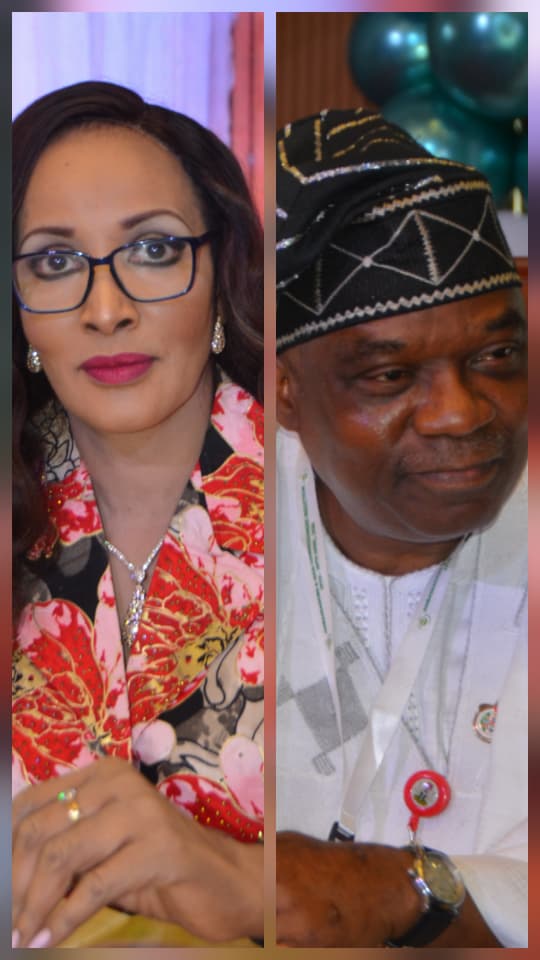
In a decisive move, Ambassador Bianca Odumegwu-Ojukwu has been appointed as the substantive Minister of Foreign Affairs, while Ambassador Sola Enikanolaiye takes his place as the Minister of State for Foreign Affairs…

As of today, the uncertainty that has lingered over the Ministry of Foreign Affairs since the resignation of former Minister Yusuf Tuggar has been decisively laid to rest. President Bola Ahmed Tinubu has appointed Ambassador Bianca Odumegwu-Ojukwu as the substantive Minister of Foreign Affairs and Ambassador Enikanolaiye as the Minister of State for Foreign Affairs.
This is not a routine announcement. This is a new dawn for Nigeria’s foreign service.
The Hybrid Leadership Takes Full Shape
For weeks, Ambassador Ojukwu—a trained diplomat and lawyer, former Ambassador to Spain and Ghana, and holder of a Master’s degree in International Relations—had been overseeing the ministry in an acting capacity.
Many argued that formalising her leadership would ensure policy continuity while avoiding the turbulence of a prolonged search for a political heavyweight. The President has done more than that. He has constructed a tandem.
By elevating Ambassador Ojukwu to substantive Minister, Mr. President has rewarded competence and sent a clear signal that gender and regional representation matter at the highest level of foreign policy. By appointing Ambassador Sola Enikanolaiye as Minister of State, President Tinubu has reached deep into the professional spine of the foreign service.
With this now, the administration will score higher grades in foreign policy and command more respect in the international arena.
The Critical Role of Ambassador Enikanolaiye
Here is what makes this appointment a masterstroke within a masterstroke. Ambassador Sola Enikanolaiye is not merely a career diplomat. He has previously served as Permanent Secretary of the Ministry of Foreign Affairs.
He knows every corridor, every protocol, every dormant file, and every living negotiator. He has sat in the permanent secretary’s chair and steered the ministry’s bureaucracy through turbulent times.
To have a former Permanent Secretary now return as Minister of State, a political office with constitutional authority is unprecedented in recent Nigerian history. It means the second-in-command does not need months to learn how the ministry works. He already built it.
While Ambassador Ojukwu provides the political weight, the global networks, and the strategic vision to advocate for Nigeria’s interests on the world stage, Ambassador Enikanolaiye provides the institutional memory, the technical expertise in complex negotiations, and the administrative mastery to ensure that every policy is executed with precision. This directly addresses a long-standing tension in Nigeria’s foreign policy: balancing political considerations with professional diplomatic expertise.
The 2013 Precedent—Refined and Elevated
In 2013, following the departure of Ambassador Olugbenga Ashiru, Prof. Viola Onwuliri was appointed as Supervising Minister. She led the ministry and represented Nigeria at key events like the UN Security Council, but she was never confirmed as substantive minister. It was a functional holding pattern.
The announcement from Villa yesterday is different. It is not a stopgap. It is a deliberate design. The current transition, triggered by a minister’s resignation to pursue electoral office, has been transformed into an opportunity to restructure leadership. By confirming Ojukwu substantively and pairing her with a former Permanent Secretary as Minister of State, the President has created a leadership dynamic that is both politically astute and diplomatically formidable.
The Civil Society Voice and the Corridor View
As a diplomatic reporter on this corridor for close to two decades, I am tapping into ongoing advocacy. The Civil Society Organisation has specifically called for deepening Nigeria’s diplomatic capacity by appointing more career diplomats to strategic roles to ensure continuity and consistency in foreign policy. That call has now been answered—not with a token, but with a former Permanent Secretary.
The world Nigeria faces today is not the world of 1999, nor even of 2015. It is multipolar, transactional, and brutally competitive. Influence is no longer won by communiqués alone, but by trade corridors, tech partnerships, diaspora capital, and cultural power.
This is where hybrid leadership proves its worth, and why the President’s choice matters. Ambassador Bianca Odumegwu-Ojukwu brings political weight and public-facing diplomacy — the ability to speak for the President, to rally domestic consensus, to negotiate at the level of heads of government.
Based on recent appointments and recognised expertise, several distinguished career diplomats could have excelled in this role. I am not in a position to suggest names for Mr. President, but I can say categorically that in choosing Ambassador Enikanolaiye, he has chosen someone who has already sat in the Permanent Secretary’s chair and knows the Ministry from its foundations to its roof. That institutional memory is priceless. He understands where the files are, how missions run, and which levers to pull in Addis Ababa, Brussels, or Beijing. There will be no learning curve, no costly trial and error. Nigeria gets a Foreign Service that can hit the ground running.
What This Means for Nigerian Diplomacy
This hybrid leadership structure will yield significant benefits. A team led by Ambassador Ojukwu will have the political weight to build relationships and advocate for Nigeria’s interests on the global stage. Her deputy, a former Permanent Secretary, will ensure that the technical and administrative backbone of the ministry is not merely solid but seamless.
This dual-track approach sends a powerful message to the international community that Nigeria values both strategic leadership and professional excellence in its foreign engagements. It restores faith in the professional core of the Foreign Service. It tells every young foreign service officer that the path to the top is not blocked by political godfathers. And it tells Nigeria’s competitors—from South Africa to Kenya to Rwanda—that future negotiations will be met with both political authority and technical mastery.
Aspect Historical Precedent (2013) Current Situation (2026)
In 2013, there was a cabinet reshuffle. The late Ambassador Olugbenga Ashiru was dropped, creating a vacuum. Today, Ambassador Yusuf Tuggar resigned to pursue a governorship bid. To fill the vacuum then, Ashiru handed over to Onwuliri, who became Supervising Minister for a defined period but was never confirmed. Ojukwu was the overseeing officer following Tuggar’s resignation she has now been confirmed substantively.
The then Minister of State for Foreign Affairs, Prof. Viola Onwuliri, was appointed as Supervising Minister. She led the ministry and represented Nigeria at key events but never received the substantive title. Today, Ambassador Enikanolaiye a former Permanent Secretary of this same ministry has been appointed as Minister of State, a constitutional office with real authority.
The historical precedent offered a clear operational model: a Senior Minister of State steps in as the acting head of the ministry. The current situation has gone further: a substantive minister with political and diplomatic credentials now works alongside a former Permanent Secretary turned Minister of State. That is not a precedent repeated. It is a precedent perfected.
Elevating Ambassador Ojukwu and pairing her with Ambassador Enikanolaiye, a former Permanent Secretary of the Ministry of Foreign Affairs is a masterstroke. It creates a leadership dynamic that is politically astute, diplomatically formidable, and bureaucratically unshakeable. This perfectly positions Nigeria to meet its regional and global ambitions.
When the history of Nigeria’s diplomatic titans is written, the names Ojukwu and Enikanolaiye will not stand alone. They will stand together as the team that finally bridged the gap between political direction and professional execution.
In Conclusion, the search for a new Minister of State for Foreign Affairs has ended and with it, a new dawn breaks over Nigeria’s diplomatic architecture. Dear reader, this series ends here. We began by asking who would fill the vacuum. We continued by examining what Nigeria needed, not just who. And we conclude today with the quiet satisfaction of witnessing a President make not the easy choice, but the right choice.
President Tinubu has not merely appointed two individuals. He has inaugurated a philosophy, that Nigeria’s foreign policy must be led by those who understand both the art of the political and the craft of the diplomatic. In Ambassador Bianca Odumegwu-Ojukwu and Ambassador Enikanolaiye, that philosophy now has human faces.
A new dawn has indeed broken. The work of this new team now begins.