
News
Economic Hardship Redefines the Road: No Car Too Big for Taxi

By Sam Agogo
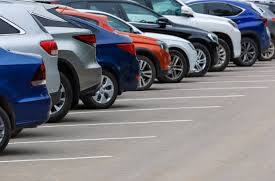
Nigeria’s economic reality has become brutal, stripping away pride and erasing social boundaries. Across Abuja, Lagos, Port Harcourt, and other cities, the sight of a luxury SUV or executive sedan slowing down at a bus stop is no longer a display of prestige. It is desperation in motion. Drivers wave at commuters, pointing toward their destination, not out of generosity but out of sheer necessity. The fuel crisis has forced citizens to convert their private vehicles into taxis, and in this new order, no car is too big for taxi work.
Petrol prices now hover between ₦1,300 and ₦1,400 per litre in some places, a crushing reality that has turned fuel into the sharpest weapon of hardship. Families are forced to choose between filling their tanks or feeding their children. Many have surrendered, parking their cars indefinitely. Others, humbled but determined, carry passengers to claw back the cost of fuel. Even the elite are not spared. Inside one taxi, a deputy director of a major Abuja organisation admitted he could not fuel his car, and that was why he had to join public transportation. His confession stunned fellow commuters, exposing how deeply the crisis has cut across every layer of society.
In Lagos, the transformation is striking. Big cars from Ikoyi, Victoria Island, and Surulere now ply taxi routes, their owners desperate to offset fuel costs. SUVs once reserved for executives now ferry passengers alongside battered sedans and commercial buses. Civil servants supplement stagnant salaries by driving taxis after office hours. Women, once shielded by family cars, now take the wheel to earn extra income. Parents juggle school fees, rent, and food costs with taxi earnings. Commuters, while grateful for quicker rides, see in every wave of a hand the harsh reminder of a nation under siege by economic hardship.
Survival has taken many forms beyond the taxi trade. Families rent out spare rooms to ease the burden of rent. Young graduates scramble for multiple jobs—teaching, freelancing, delivery services—just to stay afloat. Traders line the roadside with food items and clothing, hoping for a few sales to keep hunger at bay. Others embrace ride‑sharing apps, offering their cars for hire in more structured ways. The ingenuity of Nigerians is undeniable, but so too is the desperation that fuels it.
The crisis has made survival the only status symbol. Luxury SUVs, executive sedans, and family cars alike are pressed into service. What matters is not the badge on the bonnet, but the ability to keep fuel in the tank. Analysts warn that Nigeria’s fuel crisis is a symptom of deeper structural failures. Revamping refineries to reduce dependence on imported fuel, diversifying energy sources, strengthening public transport, and tackling corruption and subsidy mismanagement are urgent steps. Formalising informal taxi drivers through ride‑sharing cooperatives could improve safety and pricing.

The sight of a big car waving for passengers is no longer unusual. It is a symbol of resilience, but also of a nation gasping for relief. Nigerians are adapting with courage, but the question remains: how long can citizens continue to endure a crisis that has turned luxury into necessity?
For comments, reflections, and further conversation, email samuelagogo4one@yahoo.com or call +2348055847364.