
News
The Weaponisation of Identity: How Politicians Exploit Religion, Ethnicity and Regionalism to Escape Accountability in Nigeria

_By Sam Agogo_
There is an old saying that a hungry man has no tribe. Yet, in the theatre of Nigerian politics, tribalism, religion, regionalism, and outright bigotry remain the most potent weapons in the arsenal of ambitious politicians — weapons wielded not in the interest of the people, but in the ruthless pursuit of power.

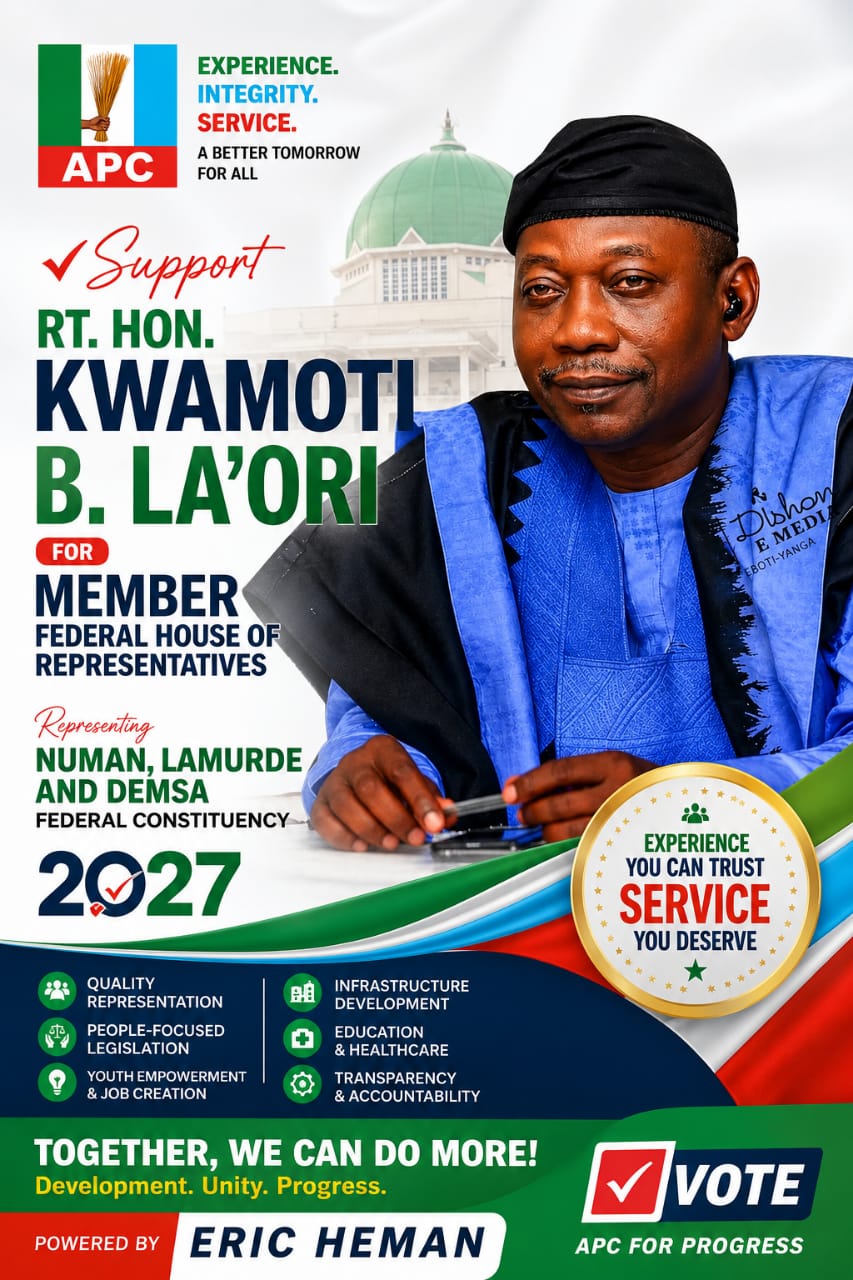
The 2023 election was one of the most contested in Nigeria’s democratic history since 1999, with the political atmosphere intensified by identity politics and religious propaganda among citizens. What should have been a season of ideas became a season of accusations. What should have been a contest of competence became a war of sentiments.
Among the most viral allegations to circulate during the campaigns was a claim that one of the leading presidential candidates — during his tenure as a state governor — had compelled northerners living in his state to carry identity cards, framed as a discriminatory and tribally motivated policy. The allegation spread rapidly across social media, WhatsApp groups, market squares, and television screens, packaged as evidence that the candidate was a bigot unfit for the nation’s highest office.
There was only one problem: it was false.
Investigations found no credible report, government document, or archived statement linking the candidate to any such policy. The identity card proposal had in fact originated from a completely different administration in a neighbouring state, under an initiative tagged “Know Your Neighbour.” The candidate being attacked had absolutely nothing to do with it. He noted firmly that the stories were peddled by people whose sole motive was to divide and rule — adding that his closest security aide was himself a northerner, making the allegation not only false but deeply ironic.
But denials rarely travel as fast as accusations. The damage was done. And Nigeria paid the price — not just at the presidential level, but down the entire ladder of governance.
This conversation must not be limited to the presidency alone. This disease of identity politics infects every rung of Nigeria’s political structure — from the race for state governors, to Senate seats, to the House of Representatives, to State Houses of Assembly, and all the way down to the local government councillor who cannot fix the gutter in front of your house but won your vote because he shares your tribe, your faith, or your tongue. From Aso Rock to the ward councillor’s office, the same weapon is deployed, the same lies are told, and the same ordinary Nigerians are left to suffer the consequences.
The manipulation of identities — ethnicity, religion, regionalism, and even gender — in political contests by various competing forces fundamentally undermines the development that representative democracy was designed to deliver. The lack of a coherent national identity in Nigeria, and the overarching reliance on ethnicity, religion, and regionalism for political mobilisation, has historically accounted for electoral violence and the atmosphere of insecurity that greets every election cycle. This is not a new problem. It is an old wound that politicians tear open every election season — deliberately, calculatedly, and without remorse.
Perhaps the most chilling admission in recent political memory came from a former Governor of Ekiti State, who confessed publicly that when a former president sought to implement fuel subsidy reforms, politicians of his ilk mobilised against it, fought it, and ensured it failed. Then came the words that should be inscribed on the walls of every Nigerian household: “It was all politics.” Not policy. Not the welfare of millions of Nigerians queuing at petrol stations and running generators at crippling costs. Just politics. A game. A move on a chessboard where the pawns are the people.
How many times has good governance been sacrificed on the altar of political expediency? How many transformative policies have been killed — not because they were wrong — but because they threatened the wrong person’s power? And how many Nigerians, blinded by sentiment, cheered the destruction of the very reforms that could have eased their suffering?
Religion became the most aggressively deployed weapon of the 2023 campaign season. Voters were told that casting a ballot for a candidate of a different faith was a betrayal of God. Pulpits were mobilised. Religious gatherings became campaign venues. Ethnicity and regionalism followed: “He is not one of us.” “It is our turn.” Votes were demanded not on the basis of manifesto or track record, but on blood, tongue, and geography.
The geographic distribution of votes in 2023 pointed to the increasing dominance of ethno-religious identity in Nigerian political behaviour, with voters heavily concentrated in the home communities of leading candidates. These patterns heightened tensions in more diverse states where no single community holds a natural majority — tensions that in some places spilled into open intimidation, suppression, and violence. A presidential election that should have been a national conversation about infrastructure, security, education, and healthcare became a referendum on identity. Nigeria voted its fears instead of its future.
To those who campaigned with religion, ethnicity, and bigotry as their tools, here is a firm reminder: when it is time to buy fuel, will you take your religion to the filling station? Bad governance does not discriminate. It afflicts the Yoruba man and the Igbo man with equal cruelty. It visits the Hausa man and the Tiv man with the same contempt. It humbles the Idoma, the Igala, and the Ijaw with the same ruthless indifference. It swallows the savings of the Christian and the Muslim alike. Poverty knows no geopolitical zone. The hardship that follows poor leadership falls on every head — from Lagos Island to Maiduguri, from Calabar to Sokoto, from Makurdi to Warri.
Those who used ethnicity, religion, and regionalism to campaign against opponents — have they consistently applied that same energy to every failure of governance? Or does their outrage only awaken during election season, when it can be directed at a political target? If bigotry is not raised when roads collapse, when hospitals lack drugs, when students go months without teachers, when council halls sit empty and ward funds vanish — then it was never about principle. It was always, and only, about power.
Then there is the matter of money. The cold, hard cash that changes hands outside polling units across this country on every election day. According to official statistics, 22 per cent of Nigerian citizens reported being personally offered money in exchange for their vote before or during the 2023 general elections — a significant increase from 17 per cent recorded in 2019. In some zones of the country, more than half of all citizens reported being offered money or material favours in exchange for their votes. Party operatives were seen outside polling stations handing out cash — amounts that, in the cold light of morning, cannot fill a tank of petrol, pay a hospital bill, or keep a child in school for a week.
This phenomenon has been described by political scholars as prebendal democracy — a system in which a self-serving elite uses state power to accumulate resources, reducing ordinary citizens to willing participants in the very arrangement that oppresses them. Vote buying thrives in Nigeria because politics is treated as an investment. The premium placed on state power is extraordinarily high, poverty and unemployment make people susceptible to material inducement, and the enforcement of electoral laws remains weak and inconsistent.
For every voter who collected that money, one question lingers: did it solve all your problems? Did it pay school fees for the full year? Did it fix the roof? Did it settle the hospital bill? Money collected on election day is the most expensive transaction a poor man can ever make — because what is exchanged is not cash for goods, but the next several years of your life and your children’s future for a few thousand naira.
But the heaviest truth of all is this: for every Nigerian whose chosen candidate has since failed in office, the mirror must be faced squarely.
You are part of the reason they failed. Because you aided them in failing.
When you handed your vote to a man not because he was capable but because he shared your faith or your bloodline, you handed him a mandate he did not earn. When you spread lies about his opponent — lies about identity cards that were never issued, deportations that never happened, sins that belonged to someone else entirely — you helped clear the path for incompetence to walk freely into power. When you collected money and surrendered your conscience, you became a willing participant in your own suffering.
Studies have shown that Nigeria has grown more ethnically divided and disintegrated — particularly among its youth — as a direct result of identity-driven elections. The very generation that holds the future of this country in its hands is being fractured along lines drawn not by destiny, but by politicians who profit from division.
Democracy is not a spectator sport. It is a contract — and when citizens sign it carelessly, corruptly, or emotionally, they must accept their share of what follows.
Nigerians who hoped that the bitter lessons of 2023 would serve as a turning point may find themselves deeply disappointed. With the 2026 off-cycle governorship elections in Ekiti and Osun states already on the horizon, and the 2027 general elections gathering in the distance, the old playbook is already being dusted off.
Reports are emerging that some politicians, undeterred by the embarrassment of 2023’s debunked narratives, have returned to familiar tactics — once again introducing membership and identity cards as mobilisation tools, using them to organise, identify, and reward loyalists along ethnic, religious, and regional lines. The strategy is as old as it is dangerous. Dress division in the language of belonging. Call manipulation, mobilisation. Call bigotry, solidarity. The cards change hands. The wallets open. The sentiments are stirred. And the same communities that were exploited in 2023 are being lined up for exploitation again — before the wounds of the last election have even fully healed.
It is a cycle that will not break itself. Only an informed, courageous, and conscience-driven electorate can break it.
From the presidency to the state house, from the National Assembly to the humblest ward councillor — the same standard must apply. Demand governance, not sentiment. Ask what they have built, what they have fixed, and what they did the last time power was placed in their hands. There is a growing and encouraging trend, particularly among younger Nigerians, of voters willing to set aside party labels and ethnic affiliations to judge candidates on their track record and capacity to deliver. That instinct must be nurtured, protected, and amplified — because it represents Nigeria’s greatest democratic hope.
A younger, more connected, and less patient generation is beginning to understand the game — and growing tired of being the pawns. Let them rise. Let them vote with their eyes open. Let them demand from every candidate — at every level — not a tribal credential or a religious affiliation, but a record of service and a credible vision for the future.
The filling station does not care about your politics. The hospital does not care about your tribe. The classroom does not care about your religion.
Neither should your vote.
For comments, reflections and further conversation:
Email: samuelagogo4one@yahoo.com
Phone: +2348055847364
Continue Reading