
Business and Economy
President Tinubu Gives Insights On How Nigeria’ll Spend $11.6bn On Debt Servicing In 2026

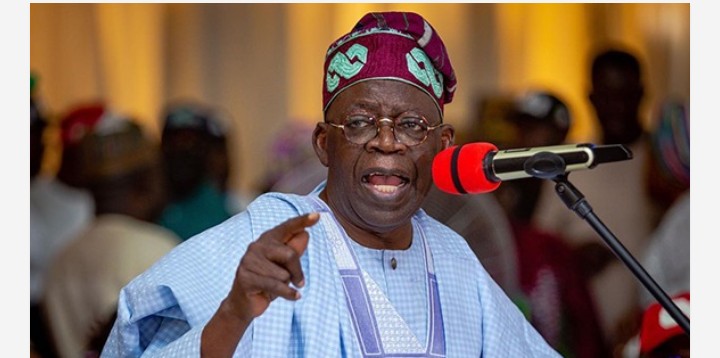
President Bola Ahmed Tinubu has disclosed that Nigeria will spend about $11.6 billion on debt servicing in 2026, representing nearly half of the country’s projected revenue for the year.
The President made this known on Tuesday while speaking at the Africa Forward Summit held at the Kenyatta International Convention Centre in Nairobi, Kenya.
According to a statement issued by his Special Adviser on Information and Strategy, Bayo Onanuga, President Tinubu said the global financial system remains largely unfair to African nations, limiting the continent’s development opportunities and industrial growth.
He explained that the huge debt servicing obligations continue to deprive Nigeria of resources needed to develop critical sectors of the economy.
“Every single dollar that leaves our treasury to pay punitive interest rates is a dollar that did not go into our steel sector, our textile mills, our agro-processing plants, or our digital industries,” Tinubu stated.
He noted that Africa’s continued export of raw materials and importation of finished products at high costs was not accidental but a consequence of an international financial structure that restricts affordable capital access and encourages illicit financial flows.
The summit, jointly hosted by Kenyan President William Ruto and French President Emmanuel Macron, attracted leaders and senior officials from more than 30 African countries. United Nations Secretary-General António Guterres and African Union Commission Chairman Mahamoud Ali Youssouf were among those who delivered opening remarks.
President Tinubu lamented that despite decades of political independence, Africa still accounts for less than two per cent of global manufacturing value.
He stressed that Nigeria had implemented difficult but necessary economic reforms through sovereign decisions rather than external pressure. The reforms, according to him, include fuel subsidy removal, exchange rate unification, banking sector recapitalisation exceeding $3.4 billion, and Nigeria’s removal from the Financial Action Task Force grey list.
Tinubu said the reforms had contributed to a projected debt-to-GDP ratio decline to 32.3 per cent in 2026, stronger external reserves estimated at $45.5 billion, and renewed investor confidence.
Despite these measures, he maintained that African economies still struggle under an unfair global financial system.
“How can an African manufacturer compete with a competitor in Europe, Asia, or North America when the cost of borrowing in our nations is five to ten times higher?” the President asked.
He further questioned how African nations could effectively build industrial value chains under the African Continental Free Trade Area when infrastructure financing gaps remain unresolved.
Describing the present financial system as “an instrument of industrial disarmament for Africa,” Tinubu said Nigeria was not seeking charity but a system that would support Africa’s industrialisation efforts.
“We are demanding a financial system that intentionally enables Africa to industrialise; to process its own minerals, refine its own crude oil, manufacture its own pharmaceuticals, and compete fairly in global markets,” he said.
The President also called for stronger regional cooperation in maritime security and blue economy development, stressing that ocean governance would play a vital role in Africa’s future prosperity.
He pledged that Nigeria would strengthen regional coordination by making its Deep Blue Project maritime intelligence infrastructure available as a shared data hub for interested Gulf of Guinea countries.
According to him, harmonised laws, interoperable systems, and seamless joint enforcement are necessary across the region.
“Maritime sovereignty does not repel investment; it attracts it. Secure sea lanes, predictable regulation, and functional courts are the preconditions that unlock private capital,” Tinubu added.
He further disclosed that Nigeria would continue pursuing climate-aligned port modernisation and digital transformation in the maritime sector.
On migration, the President advocated expanded legal and orderly migration pathways while urging global partners to address the economic challenges driving irregular migration.
He said Nigeria had incorporated migration management into its broader economic reform agenda through investments in infrastructure, agriculture, and banking reforms aimed at improving enterprise growth and rural livelihoods.
Tinubu urged development partners to allocate part of Official Development Assistance to programmes capable of reducing illegal migration pressures.
“People who have jobs, security, and hope at home do not typically risk their lives in the back of a smuggler’s truck,” he said.
He also called on African countries to collaborate in building a stronger global migration governance framework, while reaffirming Nigeria’s support for the African Union Migration Policy Framework and the Khartoum Process.
On the sidelines of the summit, President Tinubu held bilateral talks with Madagascar’s President Michael Randrianirina and also met with Confederation of African Football President Patrice Motsepe, during which Nigeria expressed readiness to host the 2026 CAF Awards.
Members of the Nigerian delegation included Minister of Foreign Affairs Bianca Odumegwu-Ojukwu, Minister of Agriculture and Food Security Abubakar Kyari, Minister of Marine and Blue Economy Adegboyega Oyetola, Minister of Communications, Innovation and Digital Economy Bosun Tijani, and several other top government officials.
Business leaders at the summit included Aliko Dangote, Abdulsamad Rabiu, Tony Elumelu, and Aigboje Aig-Imoukhuede.
The summit discussions focused on entrepreneurship, youth engagement, digitalisation, artificial intelligence, healthcare, climate change, investment opportunities, agro-industrial development, and strategies for accelerating Africa’s industrialisation.