
Health
WHO declared an international health emergency after an Ebola outbreak in DR Congo killed more than 80 people.

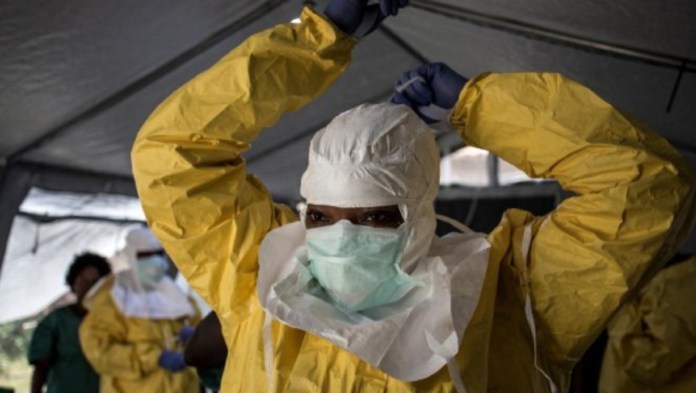
The World Health Organisation (WHO) has declared an international health emergency following an Ebola outbreak in the Democratic Republic of Congo (DRC) that has claimed more than 80 lives.
According to an update released on Saturday by the Africa Centres for Disease Control and Prevention (CDC Africa), at least 88 people have died while 336 suspected cases of the highly infectious haemorrhagic disease have been recorded.
In a statement issued early Sunday, the Geneva-based WHO said the outbreak, linked to the Bundibugyo strain of Ebola, now qualifies as a “public health emergency of international concern,” the second-highest alert level under international health regulations.
Although the organisation stopped short of declaring a pandemic emergency — the highest alert category introduced in 2024 — it warned that the actual scale of infections and transmission remains uncertain.
Medical humanitarian organisation Doctors Without Borders (MSF) announced that it was preparing a large-scale intervention, describing the speed of the outbreak’s spread as “extremely concerning.”
DR Congo’s Health Minister, Samuel-Roger Kamba, disclosed that there is currently no vaccine or specific treatment for the Bundibugyo strain.
“The Bundibugyo strain has no vaccine, no specific treatment,” Kamba said, noting that the strain can have a fatality rate of up to 50 per cent.
The Bundibugyo strain was first identified in 2007. Officials also confirmed that the outbreak has spread beyond the DRC, with a Congolese national dying from the disease in neighbouring Uganda.
Existing vaccines only target the Zaire strain of Ebola, first identified in 1976, which has a higher mortality rate ranging between 60 and 90 per cent.
Health authorities officially confirmed the latest outbreak on Friday in Ituri province, northeastern DRC, close to the borders with Uganda and South Sudan.
Residents in affected communities say the situation has worsened over the past two weeks.
“We’ve been seeing people die for the past two weeks,” said Isaac Nyakulinda, a local civil society representative.
“There is nowhere to isolate the sick. They are dying at home, and their bodies are being handled by their family members.”
Kamba explained that the outbreak’s index case was a nurse who visited a health facility in Bunia, the capital of Ituri province, on April 24 with symptoms associated with Ebola.
Common symptoms of Ebola include fever, vomiting and haemorrhaging.
MSF Emergency Programme Manager, Trish Newport, said the growing number of infections and fatalities within a short period, combined with reports of spread across several health zones and international borders, raises serious concerns.
Efforts to transport medical supplies and personnel are being hindered by the DRC’s poor transport and communication infrastructure despite the country’s large population of over 100 million people.
WHO warned that there are still “significant uncertainties” surrounding the true number of infections and the extent of geographic spread.
However, it noted that the high positivity rate from tested samples, confirmed cases in two countries and increasing reports of suspected infections indicate that the outbreak could be much larger than currently known, posing major local and regional risks.
The DRC has now experienced 17 Ebola outbreaks. Authorities continue to warn about the high risk of further spread.
The country’s previous Ebola outbreak occurred in the central region last August, killing at least 34 people before it was declared over in December.
Between 2018 and 2020, the deadliest Ebola outbreak in the DRC killed nearly 2,300 people.
Ebola, believed to originate from bats, causes severe bleeding and organ failure. Over the last five decades, outbreaks across Africa have recorded mortality rates ranging from 25 to 90 per cent, according to WHO.
The virus spreads through direct contact with bodily fluids or blood from infected persons, who only become contagious after symptoms appear. The incubation period can last up to 21 days.
AFP