
General News
World Environment Day: Global Coalition Demands Tobacco Industry Pay for Health, Environmental Damage

By Iyojo Ameh
As the world gets set to mark World Environment Day, a global coalition of health and environmental advocates has intensified calls for tobacco companies to be held financially accountable for the enormous health and ecological damage caused by their products.
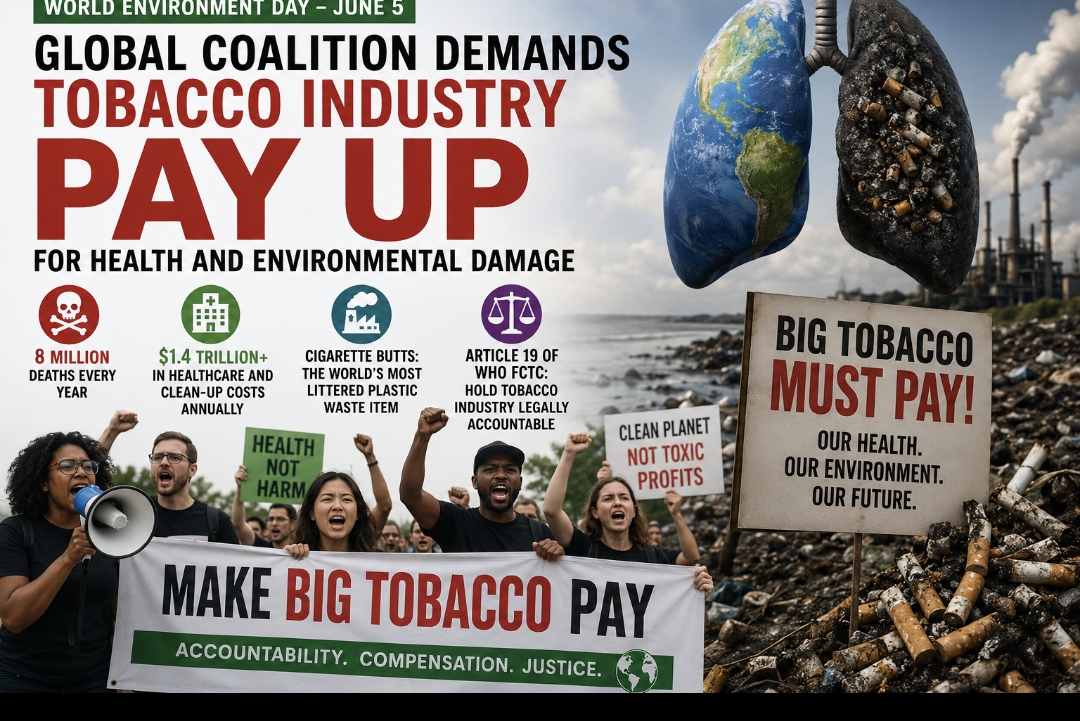
The demand comes as campaigners launched the Global Week of Action to Make Big Tobacco Pay, urging governments across the world to enforce stronger accountability measures against the tobacco industry under Article 19 of the World Health Organization’s Framework Convention on Tobacco Control (WHO FCTC).

Advocates argue that while governments and communities continue to shoulder the burden of treating tobacco-related illnesses and cleaning up environmental pollution, tobacco corporations generate nearly one trillion dollars in annual revenue from products known to cause serious harm.

According to campaign organisers, tobacco use claims an estimated eight million lives globally every year and is linked to a wide range of non-communicable diseases, including cancer, heart disease, stroke, diabetes and tuberculosis.

Beyond its devastating impact on public health, the tobacco industry is also blamed for significant environmental degradation. Campaigners estimate that tobacco-related healthcare expenses and environmental clean-up costs exceed 1.4 trillion dollars annually worldwide.

Speaking at the launch of the week-long campaign, health justice advocates stressed that cigarette butts remain the most littered plastic waste item globally, while discarded electronic cigarettes continue to contaminate soil and water bodies with toxic chemicals and hazardous materials.
The coalition is calling on the 183 countries that have ratified the WHO Framework Convention on Tobacco Control to fully implement Article 19, which provides a legal basis for holding tobacco companies liable for the health, social and environmental consequences of their products.
Campaigners highlighted ongoing legal efforts in Brazil, where authorities are pursuing litigation against major tobacco manufacturers in a bid to recover public healthcare expenditures associated with smoking-related diseases.
They urged governments worldwide to explore the use of litigation, environmental regulations, sanctions and other legal mechanisms to compel tobacco companies to compensate affected communities, fund environmental remediation efforts and reimburse healthcare costs incurred as a result of tobacco consumption.
In Nigeria and several other countries, civil society organisations are participating in both physical and virtual activities throughout the Global Week of Action while mobilising support for a worldwide petition that has already garnered close to 40,000 signatures.
The campaign is being coordinated by Corporate Accountability in collaboration with international public health and environmental organisations.
Stakeholders insist that meaningful accountability must extend beyond public awareness campaigns and include concrete financial responsibility for the industry’s role in fueling disease, environmental pollution and mounting healthcare costs.
The renewed push comes amid growing global concern over the environmental footprint of tobacco production and consumption, with advocates warning that the industry’s impact extends far beyond smoking-related illnesses to include deforestation, plastic pollution, toxic waste generation and climate-related consequences.
Campaigners say governments have a unique opportunity to use existing international legal frameworks to ensure that tobacco companies, rather than taxpayers, bear the true cost of the damage caused by their products.