General News
NSITF, South Africa’s Rand Mutual Forge Partnership to Strengthen Workers’ Compensation Across Africa

By Iyojo Ameh
The Managing Director and Chief Executive Officer of the Nigeria Social Insurance Trust Fund (NSITF), Barrister Oluwaseun Faleye, has said a strategic partnership between the Fund and South Africa’s Rand Mutual Assurance (RMA) will contribute significantly to strengthening social protection systems across Africa.

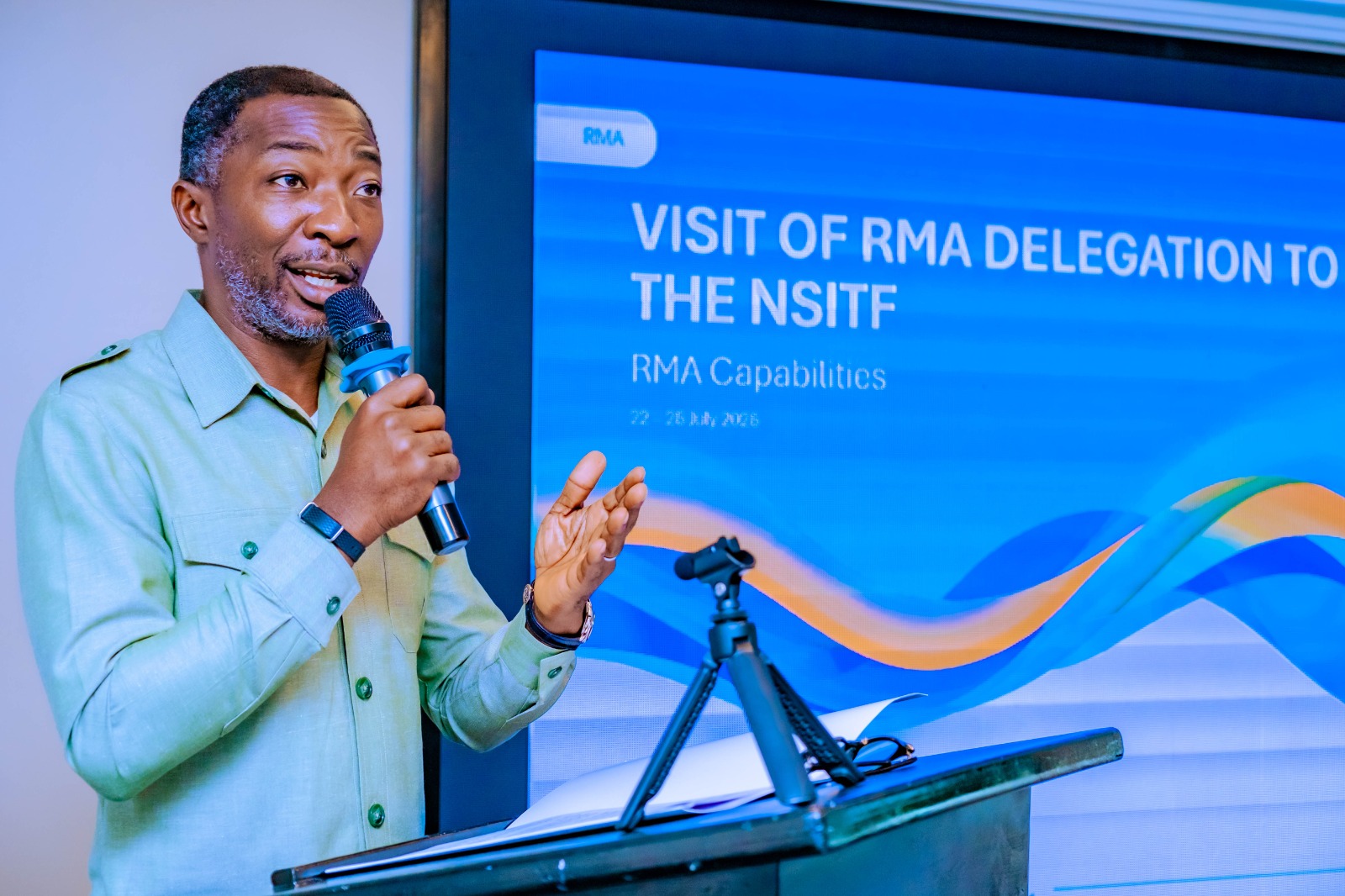
Faleye made the remarks on Tuesday while hosting a high-level delegation from Rand Mutual Assurance, led by its Group Chief Executive Officer, Bilal Adam, at the NSITF headquarters in Abuja.

The NSITF boss described the visit as the beginning of what could become a transformative partnership between two of Africa’s foremost social insurance institutions, united by a common goal of advancing workers’ compensation, occupational safety, health, and social security administration on the continent.
“Your visit marks the beginning of what we hope will evolve into a mutually beneficial and enduring relationship between our two organizations and highlights our shared commitment to advancing workers’ compensation, occupational safety and health, and social security administration on the African continent,” Faleye said.
He commended Rand Mutual Assurance for its over 130-year history and evolution into one of Africa’s leading workers’ compensation and social insurance institutions.

“Established in 1894, Rand Mutual Assurance has built an enviable reputation over more than a century as one of Africa’s foremost workers’ compensation and social insurance institutions.
“Your evolution from a specialised compensation scheme for the mining industry into a modern, purpose-driven social insurer with a strong emphasis on prevention, rehabilitation, care and shared value creation is both admirable and inspiring,” he added.
Faleye stressed that collaboration, innovation, and knowledge-sharing remain critical to the future of social protection systems, particularly as changing workplace realities and emerging occupational risks continue to reshape labour environments across the continent.
According to him, the partnership presents an opportunity for both institutions to exchange ideas, compare experiences, and explore innovative solutions to challenges confronting the world of work.
“At NSITF, we recognize that the future of social protection lies in collaboration, innovation and the exchange of experiences. Consequently, we view this visit not merely as a courtesy engagement but as the beginning of a strategic partnership capable of transforming workers’ compensation and occupational injury insurance administration across our respective jurisdictions,” he stated.
The NSITF chief identified key areas of potential collaboration to include digital transformation, claims administration, occupational health and safety, rehabilitation and return-to-work programmes, capacity building, research, and policy development.
He noted that both Nigeria and South Africa, as Africa’s largest economies, have a responsibility to champion best practices that will strengthen social protection frameworks across the continent.
NSITF Reaffirms Commitment to Employees’ Compensation Scheme
Faleye also reaffirmed NSITF’s commitment to strengthening the Employees’ Compensation Scheme (ECS), describing it as one of Nigeria’s most important social protection mechanisms.
The scheme provides compensation, medical care, rehabilitation services, and support to workers who suffer workplace injuries, occupational diseases, disabilities, or death arising from their employment.
“The Employees’ Compensation Scheme remains one of the most important social security interventions in Nigeria, providing medical care, rehabilitation services, compensation benefits and support to employees and their dependants in cases of work-related injury, disability or death,” he said.
He emphasized that continuous improvement, innovation, and adoption of global best practices are essential to ensuring effective implementation of the scheme and enhancing service delivery.
According to him, the Fund is focused on advancing digital systems, improving claims processing, promoting occupational safety and health standards, strengthening rehabilitation programmes, and expanding capacity-building initiatives.
“These areas are essential to building a modern and responsive compensation system that protects workers while supporting employers and contributing to national productivity,” Faleye said.
He further noted that the ECS provides employers with an organized and sustainable framework for managing workplace liabilities while guaranteeing compensation and welfare support for affected workers and their families.
MoU to Deepen Cooperation
The NSITF Managing Director expressed optimism that a Memorandum of Understanding (MoU), expected to be drafted and ratified by the NSITF Management Board, would formalise the partnership and pave the way for long-term cooperation between both organisations.
He said the agreement would strengthen institutional ties and create opportunities for joint initiatives aimed at improving workplace safety and expanding social protection coverage across Africa.
“Together, let us continue to build stronger institutions, safer workplaces and a more inclusive and resilient social protection system for the benefit of workers across Africa,” Faleye said.
As part of the visit, officials of both organisations are expected to participate in a series of technical sessions and engagement meetings aimed at sharing experiences, identifying best practices, and developing frameworks for future collaboration.
The proposed partnership is expected to enhance workers’ compensation administration, promote occupational safety standards, and strengthen social insurance systems in both countries while contributing to broader efforts to improve worker welfare across the African continent.