
Opinion
Money, Muscle, Security: Osun Voters Still Chose Their Will

By Sam Agogo
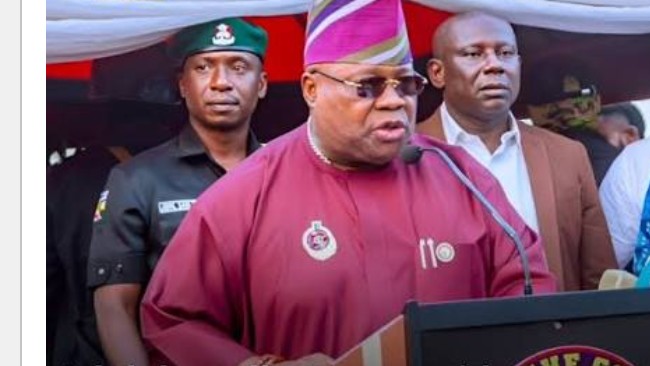
The Osun governorship election of 2026 was not merely another contest between two candidates. Governor Ademola Adeleke’s re-election, secured with 511,067 votes against Bola Oyebamiji’s 444,815, was more than a tally of ballots. It was a profound statement that democratic consent cannot be purchased, coerced, or manufactured—it must be earned.
The ruling party threw everything at Osun. Nine governors stormed Osogbo, while the Senate President stood in for the Commander-in-Chief. Ministers, lawmakers, and party executives also descended in large numbers. Beyond the political convoys came the full weight of Nigeria’s security architecture: 30 Commissioners of Police deployed across the local governments, thousands of Mobile Police units, a Deputy Inspector-General coordinating operations, and more than 10,000 NSCDC personnel, including SWAT, K9, Strike Force and female squads. There were also detachments of the Nigerian Army, DSS operatives, Immigration officers, Correctional Service personnel, and 2,500 FRSC officers with 50 patrol vehicles. Altogether, more than 25,000 security operatives were mobilised for one state.
This was not campaigning. It was a siege. Sensitive election materials were guarded like military assets, helicopters and drones patrolled the skies, and movement was restricted statewide. The ruling party sought to bury one state under the weight of federal power, as though legitimacy could be manufactured by sheer presence. Yet, despite this unprecedented show of force, the people of Osun refused to yield.
Cash politics was equally corrosive. Reports documented payments of ₦10,000–₦50,000 at polling units, with voters allegedly asked to surrender bank details for promised transfers. Both APC and Accord were implicated. Yet, even where APC allegedly outspent its rivals, it still lost. Money bought queues, not conviction. It purchased attendance, not allegiance.
Intimidation also fared no better. Allegations of thuggery, arrests, and security manipulation filled the air. But Osun’s electorate showed extraordinary patriotism. Citizens challenged thugs at polling units, confronted politicians who came to buy votes, and sacrificed their nights to guard collation centres and protect their ballots. Their courage was a rebuke to those who believed fear could substitute for legitimacy.
The lesson is structural, not tactical. Elections are not sieges to be won by attrition. They are conversations with citizens who remember promises, betrayals, and lived realities. Osun voters had already defended Adeleke’s mandate once in 2022 when the Supreme Court restored it after a tribunal’s reversal. In 2026, they again refused to undo a choice they had already fought to protect.
Nigeria’s political history is littered with attempts to impose federal will on states. From the annulment of June 12, 1993, to the heavy-handed interventions of the Fourth Republic, the assumption has often been that Abuja can dictate outcomes. But Osun demonstrates that legitimacy flows upward—from the people to the government—not downward from Abuja. Twice in four years, the state has resisted federal pressure. Twice, it has reminded the ruling party that consent cannot be engineered.
Rejection in politics is not a glitch. It is a verdict. And once delivered, it is extraordinarily difficult to reverse. The APC’s strategy was built on the belief that rejection could be engineered away—with governors, ministers, naira notes, and battalions of security personnel. But rejection is not a problem of logistics. It is a problem of trust.
If the ruling party carries the same instinct into the 2027 general elections, believing that federal might can substitute for genuine connection, it will find that the lesson of Osun was not a fluke but a forecast. Rejection is not a tactical problem to be solved with convoys. It is a structural problem rooted in the party’s relationship with the electorate.
Civil society played its part, but the ultimate defence came from the people themselves. By voting, resisting inducement, confronting thugs, and guarding their ballots through the night, Osun’s citizens reminded the nation that democracy is defended not only by institutions but by ordinary people who refuse to be silenced.
Osun has now demonstrated, in consecutive cycles, that federal might cannot manufacture legitimacy. Money, muscle, ministers, and even 25,000 security personnel cannot erase rejection. Rejection is a verdict. And verdicts delivered at the ballot box are the one thing in a democracy that power was never designed to overturn.
For reflections and further conversation, reach me at samuelagogo4one@yahoo.com or 08055847364.