
Opinion
Floods ravage Nigeria from Rivers to Bauchi: Lives, homes and livelihoods lost as the rains peak

_By Sam Agogo_
Every year, Nigeria receives the same warnings.
The meteorologists warn. The hydrologists issue alerts. Emergency agencies identify vulnerable communities. Government officials promise preparedness. Then the rains come, rivers overflow, roads disappear beneath water, homes are swallowed, and another national tragedy unfolds.
That is exactly what is happening again across Nigeria today.
From the oil-rich communities of Rivers State to the farming settlements of Bauchi, residents are paying the price for a disaster that can no longer be described as natural alone. Yes, the rains are heavy. Yes, climate change is making weather patterns more extreme. But many of the losses being recorded today are the result of years of negligence, poor urban planning, environmental abuse and a collective failure to treat flood warnings with the seriousness they deserve.

What is perhaps most alarming is that the humanitarian toll continues to rise. Based on figures released by state authorities, emergency agencies and local reports, dozens of deaths have either been confirmed or reported across affected states, while tens of thousands of people have been displaced from their homes. In Yobe State alone, authorities say more than 34,500 persons have been affected this year, while thousands more have been displaced in Kano, Rivers, Bayelsa, Delta, Abia, Anambra, Imo and other states. Across many affected communities, the exact number of fatalities and displaced persons may never be fully known because some victims remain unaccounted for and assessments are still ongoing.
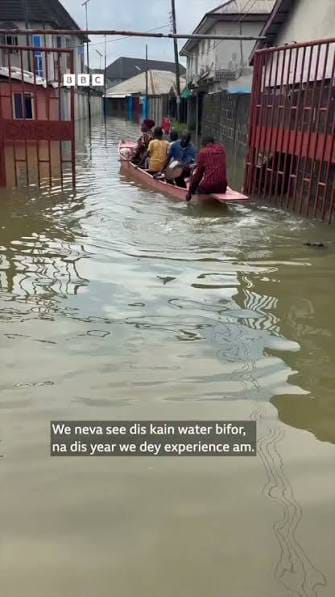
The scenes emerging from Rivers State are difficult to ignore. In Port Harcourt and surrounding communities, people have spent weeks watching water creep steadily into their homes. Families have abandoned living rooms for bridges, vehicles and unfinished buildings. Roads that should connect communities have become channels for floodwater. Public infrastructure, homes and businesses have suffered extensive damage.
Yet many residents insist the disaster did not begin with the rain. They point instead to blocked drainage systems, unchecked development on natural waterways, indiscriminate sand-filling and poor enforcement of environmental regulations.
Their argument deserves attention.
Water always finds its path. When natural channels are blocked and floodplains are converted into residential estates, the water eventually returns to reclaim the space that once belonged to it. Unfortunately, it is often ordinary citizens who bear the consequences.
The death of a teenager in Oyigbo while attempting to retrieve belongings from his flooded home illustrates the human cost of the crisis. Beyond the statistics are real families whose lives have been permanently changed by decisions they played no role in making.
Even more troubling are reports of snakes and other dangerous reptiles finding their way into flooded communities. Floods do not merely destroy property; they create secondary emergencies involving disease outbreaks, wildlife encounters, contaminated water supplies and public health challenges that can linger long after the waters recede.
Across the South-East, similar stories are unfolding.
Children have reportedly been swept away by rushing floodwater. Buildings have collapsed. Communities have become isolated. Families have lost homes, farms and businesses built over decades.
In Bayelsa and Delta, many residents are experiencing a reality that has become almost routine. Once the water rises, movement becomes difficult, economic activity slows and entire communities are forced into survival mode.
The tragedy is that none of this is particularly surprising.
Nigeria has lived through major floods before. The devastating floods of 2012 displaced more than two million people and claimed hundreds of lives. The floods of 2022 were even more devastating in many respects, killing over 600 people and displacing more than 1.4 million residents across the country. The lesson from those disasters should have been clear: prevention is cheaper, smarter and far more humane than emergency response.
The question therefore is not whether Nigeria understands the causes of flooding. It does.
The question is whether there is sufficient political will to address them.
Whenever disasters occur, relief materials quickly become the focus of public discussion. Trucks of food items are dispatched. Emergency shelters are opened. Public officials visit affected communities. While these interventions are necessary, they often address the symptoms rather than the disease.
People do not want to live permanently on relief materials.
What residents from Rivers to Bauchi are demanding is prevention.
They want drainage channels that are regularly maintained instead of being cleared only after flooding begins. They want floodplains protected from illegal developments. They want environmental laws enforced fairly and consistently. They want ecological funds spent transparently and effectively.
Most importantly, they want governments at all levels to act on warnings before disasters occur rather than reacting after lives and livelihoods have already been lost.
The implications of the current flooding extend far beyond the immediate destruction of homes and property.
The first implication is food insecurity. Floodwaters have destroyed farms, submerged crops and washed away livestock in several states. As Nigeria grapples with rising food prices, further losses in agricultural production could worsen hunger and inflation.
The second implication is public health. Floodwater contaminates drinking water sources and encourages the spread of cholera, typhoid, diarrhoea, malaria and other diseases. In crowded displacement centres, disease outbreaks can spread rapidly if preventive measures are not taken.
The third implication is economic. Businesses have been disrupted, roads and bridges damaged, markets closed and livelihoods destroyed. Many victims will need years to recover financially from losses suffered in just a few days.
There is also the social implication.
Children miss school, families are displaced, mental health challenges increase and vulnerable groups such as women, children, the elderly and persons living with disabilities become exposed to even greater hardship.
Climate experts have repeatedly warned that extreme weather events are likely to become more frequent and severe. If those predictions prove accurate, Nigeria can no longer afford to treat floods as temporary seasonal emergencies. They must be approached as a major developmental, environmental and national security challenge.
The solutions are neither mysterious nor unattainable.
Federal, state and local governments must invest more heavily in drainage infrastructure and urban flood-control systems. Waterways, canals and drainages should be dredged and desilted regularly before the onset of the rainy season.
Building approvals must be subjected to strict environmental assessments, while structures erected on natural flood channels and wetlands should be removed in accordance with existing laws.
Waste management systems must be strengthened to stop the indiscriminate dumping of refuse into waterways. Communities must also be encouraged to participate actively in environmental sanitation and flood-prevention efforts.
Existing dams and water-control infrastructure should be inspected and maintained regularly to reduce risks associated with overflow and structural failures.
Investment in early-warning systems is equally important. Once NiMet, NIHSA and NEMA issue flood alerts, authorities must act immediately by identifying vulnerable communities, preparing evacuation centres and deploying emergency resources.
The healthcare system must also be strengthened, particularly in flood-prone states. Hospitals should be equipped with emergency medicines, portable water treatment supplies and adequate stocks of antivenom and other essential medical materials.
Finally, transparency must accompany every ecological intervention. Nigerians have a right to know how ecological and disaster-management funds are spent and whether they are producing measurable results.
The annual cycle of warning, flooding, destruction and regret should not be accepted as normal.
The painful truth is that Nigeria does not suffer from a shortage of flood warnings. It suffers from a shortage of action.
As the rains continue to fall from Rivers to Bauchi, the voices emerging from flooded communities are remarkably similar. They are not asking for sympathy. They are not asking for promises.
They are asking for leadership.
And until those responsible for managing Nigeria’s environment, infrastructure and urban development begin to act with urgency, the country will continue to watch the same tragedy repeat itself each rainy season, with new victims, familiar excuses and avoidable losses. What is today a seasonal emergency may become an even greater national crisis unless prevention finally takes precedence over reaction.
For comments, reflections and further conversation:
Email: samuelagogo4one@yahoo.com
Phone: +2348055847364