
General News
NIMS 2026: FG, ITF Target Jobs, Innovation Through Skills Development

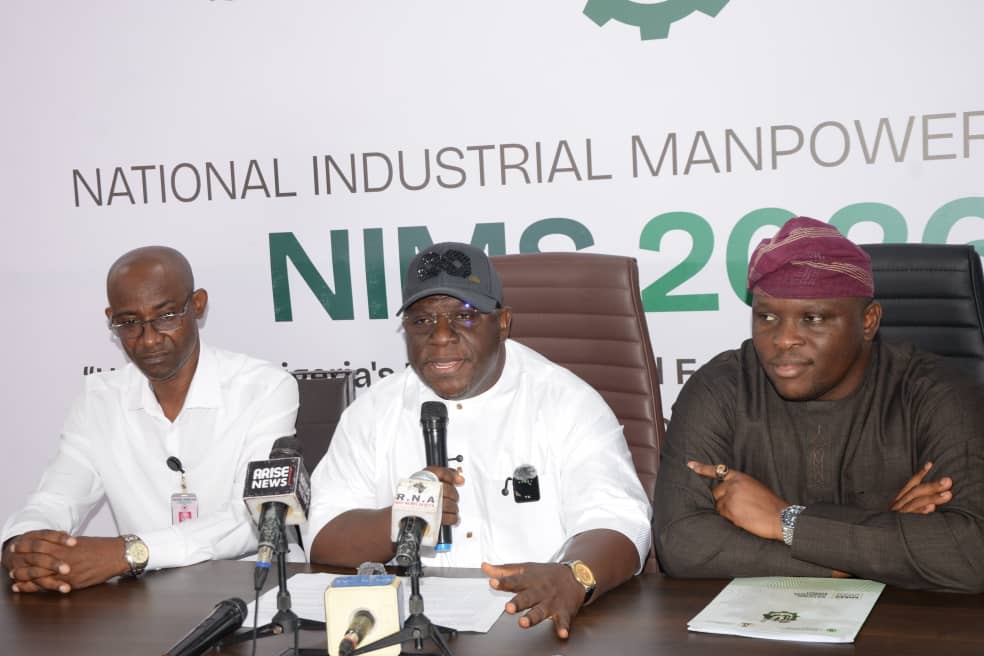
To unlock Nigeria’s human capital for industrial transformation, the Federal Government has reaffirmed its commitment to building skills and driving innovation that will create prosperity for the country.
The Senior Special Assistant to the President on Industrial Training and Manpower Development, Mr Adamson Oluwatosin Ayinde, made the commitment during a joint press conference with the Director General of the Industrial Training Fund (ITF), Dr Afiz Oluwatoyin-Ogun, on the forthcoming National Industrial Manpower Summit (NIMS) 2026 in Abuja.
Ayinde, who described skills development as key to job creation, poverty reduction and national economic development, said NIMS 2026 would build on the gains of the 2025 edition towards actualising the Renewed Hope Agenda of President Bola Tinubu’s administration in the area of skills development.

According to him, the summit is scheduled to hold on October 15 and 16, 2026, at the State House Banquet Hall, Presidential Villa, Abuja, with the theme: “Unlocking Nigeria’s Human Capital for Industrial Transformation: Building Skills, Driving Innovation and Creating Prosperity.”
“NIMS was established as a Presidential platform to address a fundamental question: How do we develop the skilled, productive and innovative workforce required to drive Nigeria’s industrial transformation?” he said.

He noted that the inaugural NIMS in 2025 brought together more than 2,500 delegates from over 10 countries, with about 120 speakers and resource persons, while more than five MOUs were signed.
He added that the communiqué and recommendations arising from the summit were transmitted to the Presidency and had continued to inform policy engagements and interventions.
“Today, I am pleased that NIMS is beginning to demonstrate that it is not merely another conference, but a platform capable of contributing to real policy and institutional outcomes.
“Among the issues raised at NIMS 2025 was the need for greater coordination and clarity in Nigeria’s skills-development ecosystem, including the responsibilities of institutions such as ITF and NBTE,” Ayinde said.
He expressed optimism over progress being made through the national skills architecture, particularly the National Council on Skills chaired by the Vice President, Senator Kashim Shettima, GCON.
“We are encouraged by the progress being made through the national skills architecture, particularly the National Council on Skills chaired by His Excellency, the Vice President, Senator Kashim Shettima, GCON, and we are equally pleased with the increased prominence given to manpower development within Nigeria’s National Industrial Policy launched this year,” the SSA stated.
Ayinde further explained that industrial development could not be separated from the development of the people who would operate, manage and innovate within industries.
He disclosed that more than 250,000 Nano, Micro and Small Businesses had benefited from free registration and training as directed by President Bola Ahmed Tinubu, through the Corporate Affairs Commission (CAC), ITF and SMEDAN, to help formalise enterprises and strengthen the capacity of Nigerians operating within the MSME and informal sectors.
He also disclosed that work had commenced on the creation of a National Industrial Manpower Competence Registry/Portal in partnership with the Industrial Training Fund and Bank of Industry.
According to him, the initiative is important because inadequate data on Nigeria’s available industrial skills and projected manpower requirements remains a significant challenge.
He added that, with the support of the ITF Director General, skills-development financial support was provided to about 50 participants following the last summit.
“We intend to substantially expand the number of beneficiaries this year and strengthen the pathway from skills acquisition to certification, employment, entrepreneurship and enterprise development,” he said.
Ayinde explained that NIMS 2026 would concentrate on four strategic areas: reforming workforce development for industrial growth; preparing Nigerian talent for emerging industries and future technologies; transforming skills into jobs, enterprises and manufacturing capacity; and positioning Nigeria as Africa’s hub for industrial talent and innovation.
He said the summit would also advance the development of a 10-year National Industrial Workforce Strategy, develop sector-specific workforce roadmaps, strengthen TVET and apprenticeship systems, deepen industry-academia collaboration and accelerate skills development in emerging areas such as Artificial Intelligence, robotics, automation, renewable energy and advanced manufacturing.
“Most importantly, we want every major outcome of NIMS 2026 to have clear ownership, timelines and accountability.
“Nigeria cannot industrialise without developing its people. Infrastructure is important. Capital is important.
Technology is important. But ultimately, it is skilled and productive people who will operate the machines, build the enterprises, develop the technologies and create the industries.
“NIMS 2026 is therefore not just another Summit. It is a call to government, industry, academia, development partners, professional bodies, organised labour and our young people to collectively build the workforce Nigeria needs for its industrial future,” he added.
Also speaking, the Director General of the Industrial Training Fund, ITF, Dr Afiz Oluwatoyin-Ogun, said the 2025 edition of NIMS had led to various laudable programmes and policies contributing to the expansion of Technical and Vocational Skills Training reforms and Standardised Skill Certification in the country.
Oluwatoyin-Ogun reiterated the commitment of the ITF towards empowering stakeholders in the nation’s informal sector, especially Nigerian artisans, towards reducing unemployment in the country.
“As Principal Partner and Co-Host of this Presidential initiative, the ITF expresses its gratitude to the Office of the Senior Special Assistant to the President on Industrial Training and Development, led by Hon. Adamson Oluwatosin Ayinde.
“Your visionary leadership as the convener of this summit reflects a commitment to transforming Nigeria’s industrial landscape through human capital development,” the ITF DG said.
According to him, the first summit established NIMS as Nigeria’s premier high-level platform for bridging the gap between education, vocational training and industry requirements.
He stressed that NIMS 2026 would serve as the central meeting point for policymakers, industrial leaders, educators and global development partners.
In his words, “As Co-Host and Principal Partner, the ITF brings over five decades of institutional training experience, national infrastructure, and industry relationships to deliver on key summit outcomes:
A 10-Year National Industrial Workforce Strategy Roadmap.
Expanded TVST Reforms and Standardised Skill Certifications.
Cross-Sector Partnerships to fund, scale, and integrate skilled local talent into key manufacturing, technology, and industrial sectors.”
The ITF DG also called for the support of the media and other stakeholders towards ensuring the success of NIMS 2026.
“To our partners in the media: you are essential to this national drive. We count on your reach to communicate the opportunities, vision, and deliverables of NIMS 2026 to industries, training institutions, and young Nigerians across the country,” he said.
He also urged private sector partners, investors and industry captains to participate in the summit, saying it was designed to address workforce challenges and shape the talent pipeline required to drive growth and improve Nigeria’s global industrial competitiveness.
He assured that, together with the Office of the SSA to the President on Industrial Training and Development, Hon. Adamson Oluwatosin Ayinde, the Industrial Training Fund remained dedicated to equipping the nation’s greatest asset—its people—for long-term economic prosperity.
While soliciting the support of all stakeholders and the media towards ensuring the success of NIMS 2026, Dr Oluwatoyin-Ogun expressed hope that the nation’s economy would receive a boost if adequate attention was given to skills development.