Business and Economy
Experts Urge Nigeria to Prioritise Local Gemstone Processing

Stakeholders in Nigeria’s gemstone industry have called for increased local processing, skills development and effective branding to boost the sector and create more jobs for Nigerians.
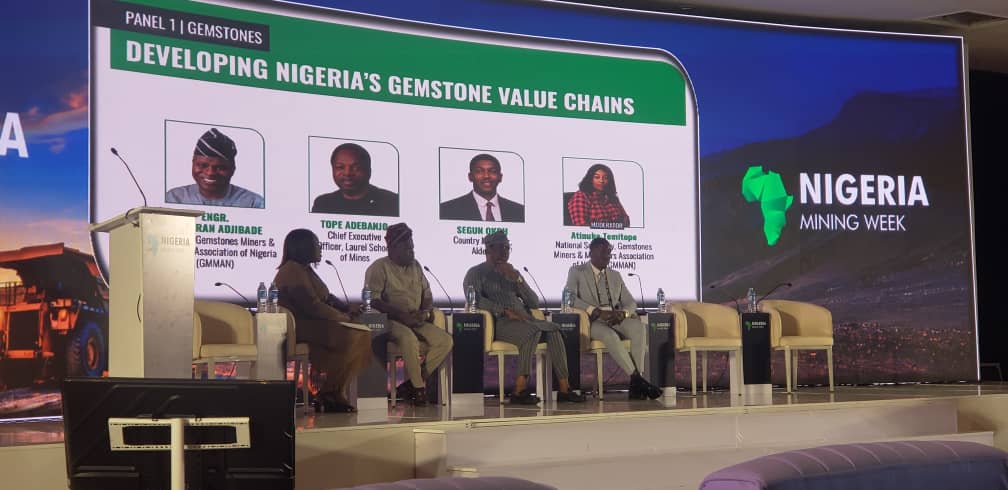
They made the call during a panel session on “Developing Nigeria’s Gemstone Value Chains” at the ongoing Nigeria Mining Week, in Abuja, where they highlighted the need to add value to gemstones before exporting them.
The President of the Gemstones Miners and Marketers Association of Nigeria, Mr. Adeniran Adjibade, said organising artisanal miners into cooperatives would improve their operations and help them comply with mining regulations.

He explained that supporting small-scale miners would help bring more artisanal miners into the formal sector, while improving environmental management, land reclamation and community development.
Adjibade stressed the need for continuous training in gemstone mining, cutting, polishing, jewellery making and marketing. He noted that proper mining techniques were necessary to prevent damage to valuable gemstones during extraction.
He also called for stronger branding of Nigerian gemstones to improve their recognition and value in international markets.

He cited Tanzania’s success in promoting Tanzanite as an example Nigeria could learn from.
The association president said Nigeria should also develop its domestic jewellery market, adding that the country had significant opportunities in the production and sale of beads, ornaments and other jewellery products.
He stated that the association was working towards establishing an international gemstone buying centre in Nigeria.
Similarly, the Chief Executive Officer of Laurel School of Mines, Mr. Tope Adebanjo, said Nigeria must focus on developing entrepreneurs who could transform raw gemstones into finished products.
Mr. Adebanjo, who said the school was established in 2013, explained that training in gemstone enhancement, treatment, evaluation and jewellery making would help retain more economic value in the country instead of exporting raw stones.
He cited Thailand as an example of a country that had developed a successful gemstone industry through skills development and entrepreneurship, stressing that Nigeria could achieve similar results with sustained investment in local expertise.
The Chief Executive Officer also emphasised the importance of collaboration among government agencies, training institutions and industry associations to develop the skills needed to grow the sector.
The Country Manager of Adelia, Mr. Segun Okoh, called for a structured training system that would continuously produce skilled workers and connect them with business and investment opportunities.
Mr. Okoh said gemstone entrepreneurs also needed financial literacy and business management skills to attract funding, establish viable businesses and create employment.
He advocated the establishment of gemstone industry clusters where mining, grading, processing and jewellery production could take place within the same areas. According to him, this would reduce costs and improve access to markets.
Mr. Okoh also stressed the need for quality control and a formal trading system that rewards miners and businesses that comply with regulations and invest in better production methods.
As the three day conference came to an end, the panellists agreed that stronger government-private sector collaboration, sustained training, local processing and effective branding would help Nigeria unlock the potential of its gemstone resources, create jobs and strengthen its position in the global market.