
Business and Economy
Taraku Mills Begins Test-Run, Takes Delivery of 300 Tonnes Soyabean

From Dooshima Terkura, Makurdi
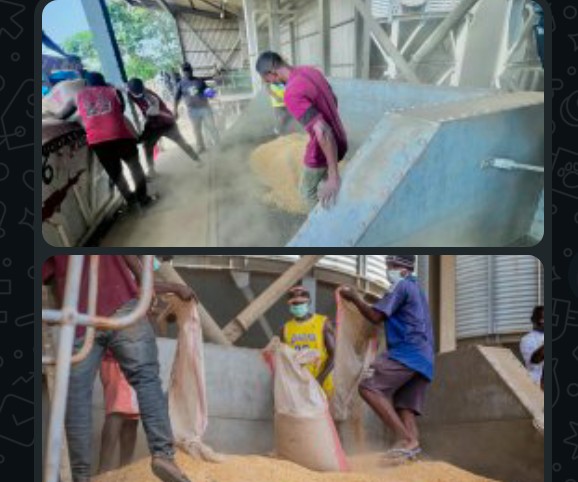
Taraku Mills Limited in Benue State has officially commenced test-run production after taking delivery of eight trucks containing 300 tonnes of soyabean.
Addressing newsmen shortly after monitoring the test-run production, the Group Managing Director of Benue Investment and Property Company Limited (BIPC), Raymond Asemakaha, stated that BIPC had deliberately revitalised the factory, which had been dormant for years, to commence production of Golden Soya Oil.

He said the development signified a major achievement in the state’s agro-industrial revival under Governor Hyacinth Alia.
He described the test-run production as a positive step towards boosting the state’s agro-industrial capacity and enhancing the livelihoods of farmers in the state.
Asemakaha, who lamented the high rate of unemployment and lack of access to markets by farmers, assured that the revitalisation of the moribund company would provide a ready market for local soybean and grain farmers, as well as create direct and indirect jobs for the teeming population of the state.

He pointed out that the state’s tertiary institutions had continued to produce graduates without jobs, disclosing that in 2024, tertiary institutions in the state graduated over 14,802 students and 16,200 in 2025, with many of them yet to secure jobs.
According to him, Benue Investment and Property Company had decided to do everything possible to ensure that the factory works, stating that most government assets are in private hands and that handing them over without commitment had become a burden to government.
He enjoined soybean farmers, producers and manufacturers of maize and other raw materials to engage in more production, as BIPC was ready to provide off-take opportunities that could guarantee them a value proposition.
The GMD noted that the administration of Governor Hyacinth Alia was deliberately bringing industries and businesses to the people, insisting that every government company, both the old and the new ones being introduced, must become operational.
He said this was why the government was bringing in professionals to run the factories deliberately and deliver results.
“Those factories must work deliberately for the benefit of our people. A lot of people have asked why government is involved in these businesses. In China, there are hundreds of state-owned enterprises. Every province has state-owned enterprises operating on a model similar to BIPC. That is the model we are adopting.
“A state-owned enterprise is not just about sitting down and collecting salaries. It is about working and delivering results. That is why we are working the talk and bringing results. We have told our people to hold us to our word because we understand the business,” Asemakaha stated.
Speaking on the production process, the Plant Manager, Engr. James Tergu Ikuve, said the facility has an installed capacity of 200 tonnes per day but decided to commence production at a rate of 50 tonnes per day because the equipment had been out of use for many years.
He said they had commenced the purification process after taking delivery of the 300 tonnes of soyabean, adding that in the next two days, crushing would commence.
According to him, once the crushing is completed and a reasonable quantity of oil is found, they would begin the refining process to make the Golden Oil available for use.
He assured that the oil would be in the market before the end of October, saying that the facility had adequate manpower to drive the production process.
On his part, the youth leader of Taraku community, Comrade Iortuhwa Richard, commended Governor Hyacinth Alia for resuscitating the moribund company and bringing the dividends of democracy to their community.
He explained that protecting the entire factory from being vandalised was not easy, but said the community was not too myopic to vandalise the equipment because they were looking at the benefits they would derive, just as they were benefiting now.
“We encountered some challenges but we tried our best to overcome them and today, the factory has commenced production,” Iortuhwa said.