
Opinion
WHY THE APC SHOULD CONSIDER BRINGING AMINU DABO BACK INTO ITS FOLD

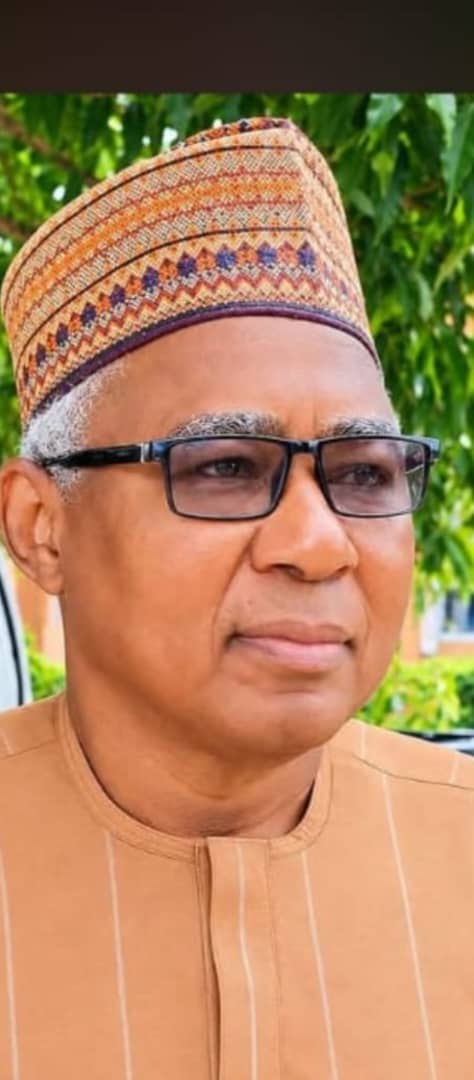
I read in the online media about the resignation of Architect Aminu Dabo from the ruling All Progressives Congress (APC). So far, no reason has been publicly offered for his decision.
Aminu Dabo, wherever he finds himself, is a political force to reckon with—a reliable ally and a dogged fighter who is willing to commit his time, energy, resources and personal interests to a cause he believes in.
My first formal encounter with him was in 1999, shortly after the election that brought the Peoples Democratic Party (PDP) to power in Kano State and ushered in Engineer Rabiu Musa Kwankwaso as governor.

The occasion was the work of the Transition Committee, specifically its Subcommittee on Abandoned Projects. One of the projects under consideration was the Murtala Muhammad Library Complex. I represented the Kano State Library Board on that subcommittee.
However, it was during the 2003 general elections that Aminu Dabo truly demonstrated the depth of his political commitment. He put almost everything he had at stake—his wealth, energy, time and resources—to ensure that the PDP retained Kano State, particularly the governorship. Unfortunately, that effort did not succeed.
The government deployed its resources extensively in the contest. From my observation, Dabo gave everything he could, putting his personal well-being, resources and, to a considerable extent, his integrity on the line. One could argue that he did all this in an attempt to rescue a political ally whose political fortunes were under threat.
My second encounter with him was in 2006, when he aspired to contest in the 2007 general elections. He and several other aspirants were disqualified by the party’s Northwest Zonal Screening Committee in Kaduna. The alleged reason for their disqualification was the failure to present tax clearance certificates.
Those cleared to participate included Alhaji Rabiu Musa Kwankwaso and Honourable Yusuf Ado Kibiya. Among those disqualified were Architect Aminu Dabo, Senator Isa Yahaya Zarewa, Abdullahi Umar Ganduje, Yusuf Shehu Kura, Ibrahim Al-Amin (Little), Rabiu Suleiman Bichi and a few others whose names I cannot readily recall.
The disqualifications triggered the emergence of what could be described as a splinter or protest group determined to challenge the political ambitions of Engineer Rabiu Musa Kwankwaso and the party’s direction. The group became popularly known as the Yan Goma, or the Ten Musketeers.
Following their disqualification by the party’s screening committee in Kaduna, the affected aspirants petitioned the party’s national headquarters in Abuja. Eventually, they were all cleared to participate in the party’s governorship primary election, in which Aminu Dabo emerged as the second runner-up.
Dabo played a prominent role in persuading the party’s national leadership to listen to their grievances and in mobilising the other disqualified aspirants to challenge what they perceived as Kwankwaso’s overbearing influence within the party.
In the subsequent political developments, Kwankwaso did not secure the party’s governorship ticket for the 2007 general elections, which went to Ahmed Garba Bichi. These events demonstrated how internal party disagreements, when left unresolved, can reshape political calculations and outcomes.
Aminu Dabo is, by all accounts of my encounters with him, a fighter—and a dogged one at that. He has demonstrated a willingness to stand his ground, mobilise like-minded individuals and pursue his political convictions even when the odds appear unfavourable.
If the APC leadership in Kano State is unable to resolve its differences with a political figure of Dabo’s stature, it is not too late for the party’s national leadership to intervene. A timely intervention could provide an opportunity to understand the circumstances surrounding his resignation, address any legitimate grievances and explore the possibility of reconciliation.
The ruling party is already navigating complex political dynamics at the national and international levels. Allowing an avoidable internal disagreement to result in the loss of a longstanding political figure could further complicate its internal affairs.
Political parties thrive not only on the strength of their leadership but also on their ability to accommodate differing interests, manage disagreements and retain experienced political actors. No political organisation should underestimate the value of individuals who have demonstrated their capacity to mobilise support, build alliances and remain committed to causes they believe in.
The APC should, therefore, consider engaging Aminu Dabo in a constructive dialogue to determine the circumstances that led to his resignation and whether there is room for reconciliation. Such an approach would not only offer an opportunity to resolve the immediate disagreement but also demonstrate the party’s willingness to listen to its members and address internal concerns.
As the popular saying goes, a stitch in time saves nine.