
Opinion
From Environmental Minister to UN Deputy Secretary-General: The Story of Amina Mohammed

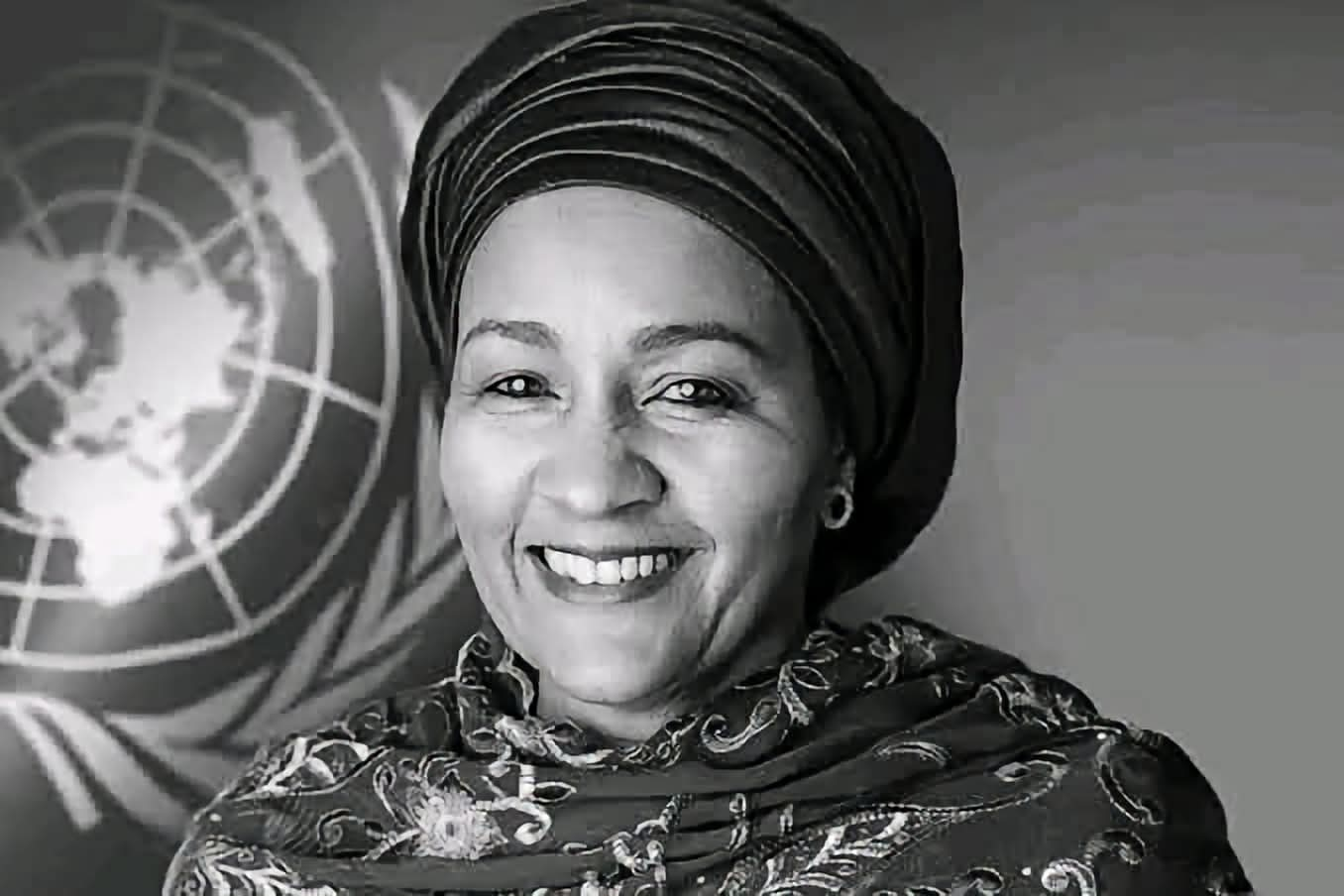
Amina Jane Mohammed was born on June 27, 1961, in Liverpool, England, to a Nigerian father of Fulani origin and a British mother.

As the eldest of five daughters, she grew up in a multicultural family that combined the values and traditions of two continents.
Although she was born in the United Kingdom, Amina spent much of her childhood in Nigeria.


After completing her education, her father encouraged her to return to Nigeria and contribute to the country’s development.
Amina began her professional career in 1981 when she joined Archcon Nigeria, an architectural design firm associated with Norman and Dawbarn in the United Kingdom. Her early experience in design and planning helped develop her interest in sustainable development.
In 1991, she established Afri-Projects Consortium, a multidisciplinary firm specialising in engineering and development management. Serving as the firm’s Executive Director for ten years, she acquired valuable experience in managing large-scale projects and addressing local infrastructure challenges.
Her transition into public service began in 2002 when she coordinated the Task Force on Gender and Education for the United Nations Millennium Project. Through this role, she championed gender equality and the expansion of educational opportunities across developing countries.
In 2005, her expertise earned her an appointment as Senior Special Assistant to the President of Nigeria on the Millennium Development Goals (MDGs).
In that position, she supervised Nigeria’s debt-relief funds, ensuring they were directed towards poverty reduction and sustainable development. She also developed a Virtual Poverty Fund and contributed to innovative approaches to budget coordination and public sector reform.
Amina’s contributions extended beyond Nigeria. She founded the Centre for Development Policy Solutions and became an Adjunct Professor in Columbia University’s Master’s in Development Practice programme.
Her academic and professional achievements also earned her positions on several international advisory boards, including the UNESCO Global Monitoring Report on Education and the UN Secretary-General’s High-Level Panel on the Post-2015 Development Agenda.
She also served on the Independent Expert Advisory Group on the Data Revolution for Sustainable Development, further demonstrating her involvement in shaping global development policies and frameworks.
In 2012, Amina Mohammed was appointed Special Adviser to United Nations Secretary-General Ban Ki-moon on Post-2015 Development Planning. In this capacity, she played a central role in shaping the 2030 Agenda for Sustainable Development, which introduced the Sustainable Development Goals (SDGs).
She served as a link between the Secretary-General, member states and major international stakeholders, helping to ensure that the SDGs were inclusive and received global acceptance.
Amina returned to Nigeria in 2015 after President Muhammadu Buhari appointed her Minister of Environment. During her tenure, she led national initiatives on climate action, environmental sustainability and reforestation.
She also represented Nigeria on the African Union Reform Steering Committee, chaired by Paul Kagame, demonstrating her influence in continental environmental policy.
However, her tenure was not without controversy. Some advocacy groups accused her of granting illegal permits for the export of endangered timber to China. The Nigerian government denied the allegations, maintaining that she was committed to sustainable environmental governance.
In early 2017, Amina J. Mohammed was appointed Deputy Secretary-General of the United Nations, becoming the fifth person and second woman to occupy the position.
In this capacity, she has worked closely with the UN Secretary-General to coordinate international efforts towards achieving the Sustainable Development Goals. Her responsibilities also include overseeing global development strategies, addressing humanitarian crises and promoting gender equality.
Throughout her career, Amina Mohammed has received numerous honours and recognitions for her leadership and commitment to development. She is a recipient of Nigeria’s national honour, the Order of the Federal Republic, and has been recognised by various international media organisations as one of the world’s most influential women.
Beyond her professional achievements, she is a mother of six children and a grandmother, balancing her family responsibilities with her international commitments.
Amina J. Mohammed’s journey from a young girl raised between Nigeria and the United Kingdom to one of the most influential women in the United Nations reflects her determination, intelligence and commitment to humanity.
Her contributions continue to inspire millions, as she remains one of the leading voices advocating for social justice, gender equality and sustainable development in the 21st century.
— North Book