
Arts and Life
BOOK REVIEW: Democracy in Nigeria: When an Insider Holds Up the Mirror to the Nation

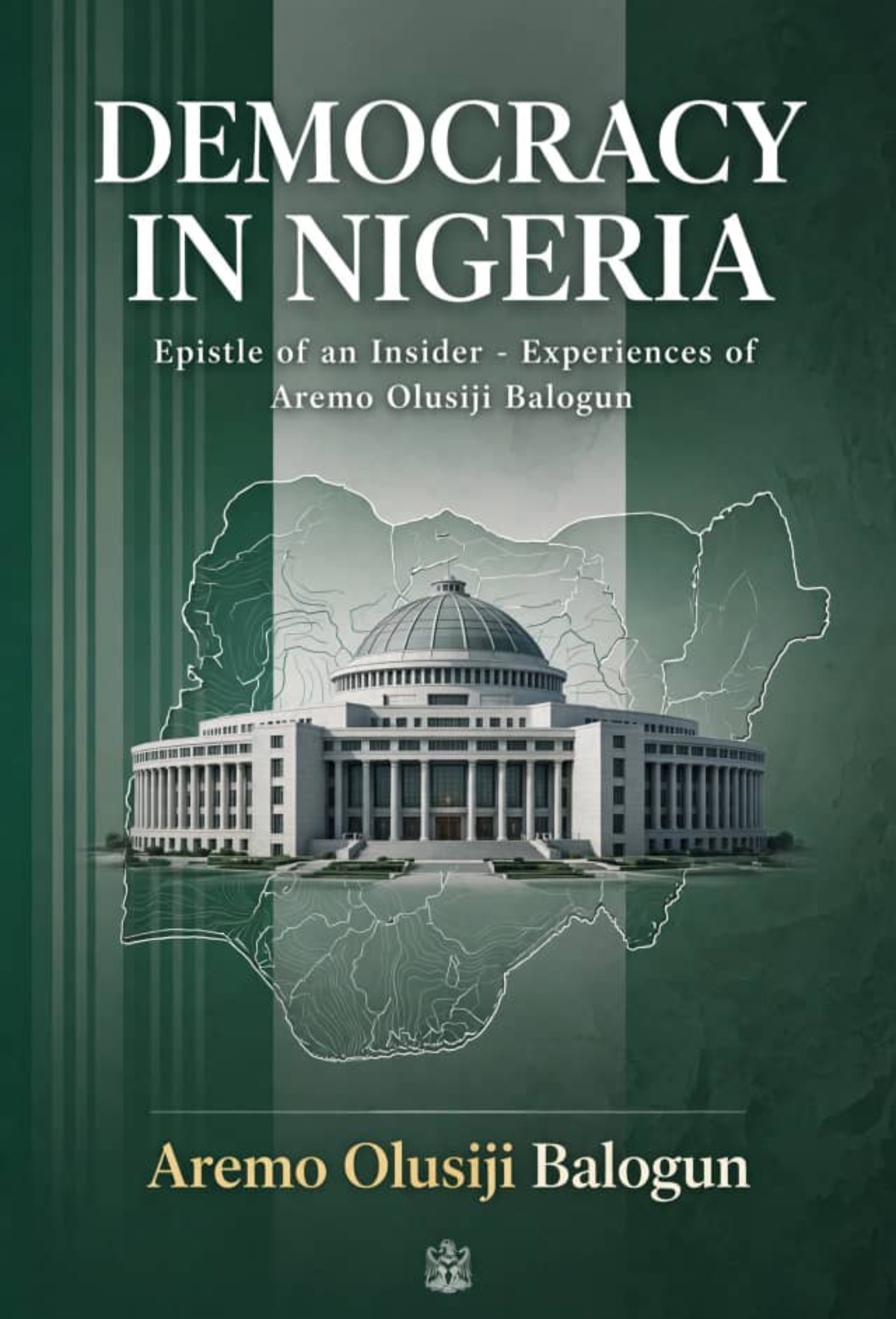
Book Title: Democracy in Nigeria: Epistle of an Insider – Experiences of Aremo Olusiji Balogun
Author: Aremo Olusiji Balogun
Year of Publication: 2026o
Nigerian democracy has attracted decades of scholarly debates, political commentaries and public criticism.




It is this perspective that Aremo Olusiji Balogun brings to the fore in his 2026 publication, Democracy in Nigeria: Epistle of an Insider – Experiences of Aremo Olusiji Balogun.
Rather than presenting democracy as an abstract political concept, Balogun examines it through personal experiences, grassroots political participation and encounters with the structures of power. The result is a reflective account of Nigerian politics, particularly its challenges at the local government level, and a call for a more principled approach to leadership and political participation.
The book is not structured as a conventional political science textbook. Its epistolary approach gives it the character of a personal correspondence with the Nigerian nation, allowing the author to combine political observations with experiences, lessons and recommendations.
Balogun draws from his involvement in grassroots politics, including his service as a member of the Transition Committee of Irun/Ogbagi Local Council Development Area. His account also reflects his political experiences in Erusu/Ibaram Ward 10, Akoko North-West, Ondo State.
This background provides the foundation for his examination of how democracy operates beyond the corridors of political power.
Democracy Beyond the Ballot Box
One of the central questions raised in the opening chapter is what democracy means to the ordinary Nigerian at the grassroots.
For Balogun, democracy must be measured beyond elections, political speeches and the periodic transfer of power. Its relevance should be reflected in the everyday experiences of citizens, including access to good roads, quality education, healthcare, economic opportunities and responsive leadership.
This perspective shifts the conversation from the institutional definition of democracy to its practical impact on citizens.
For a market woman in Ikaram, for instance, democratic governance may mean access to better roads that make it easier to transport her goods. For a parent, it may mean an affordable and functional school for the children.
By using familiar community experiences, the author makes a case for a democracy that delivers tangible benefits rather than one defined largely by political competition.
The Politics of Godfatherism and Broken Loyalties
A significant portion of the book examines the internal dynamics of Nigerian politics, particularly the influence of political godfathers, the absence of ideological consistency and the challenges associated with political loyalty.
Balogun identifies godfatherism without ideology, politics without principles and loyalty without reward as some of the factors undermining ethical political participation.
His observations draw attention to a political culture in which personal relationships and patronage can sometimes take precedence over ideology, competence and public interest.
His reflections on his experience with the local government transition committee are particularly relevant to the discussion of grassroots governance.
Local governments are constitutionally recognised as a tier of government closest to the people. However, the author questions the extent to which this proximity translates into effective service delivery and meaningful democratic participation.
His account raises important questions about local government administration, political influence and the difficulties of translating democratic promises into practical development.
A Case for Youth Participation and Ideological Politics
Beyond identifying the problems, Balogun attempts to provide a pathway towards a more accountable political system.
He argues that young Nigerians should not abandon politics on the grounds that it is inherently dirty or irredeemable. Instead, they should become active participants in efforts to improve political culture and strengthen democratic institutions.
The author advocates ideological politics, youth inclusion and leadership anchored on principles rather than personal interests.
He also acknowledges the influence of mentors, including Peretei Ikantu Kennedy, whose contributions to his political outlook are presented as examples of how mentorship can shape political values and conduct.
This emphasis on mentorship is important in a political environment where the relationship between established politicians and younger aspirants often revolves around political patronage rather than the transfer of knowledge, values and institutional experience.
Balogun’s argument is that political renewal requires more than complaints about the existing system. It demands citizens who are prepared to participate, question established practices and promote accountability.
The Strength of Personal Experience
One of the book’s notable strengths is its accessible writing style.
Balogun avoids excessive academic language, relying instead on straightforward expressions, familiar illustrations and personal reflections to communicate his arguments.
His narrative draws strength from the combination of political experience and personal introspection. He does not present himself as someone without shortcomings but reflects on mistakes, lessons and expectations for the future.
This gives the book a conversational quality that could appeal to readers beyond the traditional audience of political science and governance literature.
His previous memoir, Drag On, also forms part of his literary background, while this new publication provides an opportunity to examine his political experiences within the broader context of Nigeria’s democratic development.
Where the Book Could Go Further
Although the book offers valuable reflections, its largely experiential approach leaves room for deeper engagement with some of the issues it raises.
The discussions on godfatherism, local government administration and political loyalty could benefit from more extensive documentary evidence, comparative experiences and policy analysis.
Similarly, readers interested in the institutional dimensions of Nigerian democracy may desire more detailed examination of constitutional provisions, electoral reforms and the structures responsible for ensuring accountability at the grassroots.
These are not necessarily weaknesses that diminish the book’s central contribution. Rather, they point to opportunities for further exploration, particularly in a subsequent volume.
Indeed, some of the experiences and questions raised in the publication could sustain a more extensive examination of the relationship between political actors, democratic institutions and the Nigerian electorate.
Who Should Read the Book?
Democracy in Nigeria: Epistle of an Insider has relevance for a broad readership.
Young Nigerians interested in understanding the realities of political participation will find its reflections useful. Politicians and aspiring public office holders may also benefit from its emphasis on ideological consistency, loyalty, mentorship and principled leadership.
Students and researchers of political science, public administration and governance may find the grassroots perspective useful in understanding the gap between democratic theory and political practice.
For readers from Akoko North-West and Ondo State, the author’s experiences also provide a local political perspective that connects community-level participation with the wider Nigerian democratic experience.
A Conversation Nigeria Must Have
Ultimately, Democracy in Nigeria: Epistle of an Insider is an attempt to bring personal political experience into a national conversation about democratic values, leadership and accountability.
Its central message is that democracy should not be reduced to the struggle for political positions or the periodic exercise of voting. It must also be about the quality of leadership, the participation of citizens and the delivery of public goods.
By drawing from his experiences, Aremo Olusiji Balogun invites readers to reconsider their relationship with politics and the responsibilities that come with democratic citizenship.
The book may not answer every question about Nigeria’s democratic challenges, but it raises issues that deserve sustained attention.
Its most significant contribution lies in its insistence that political reform cannot be left exclusively to those already occupying positions of power. Citizens, particularly young people, also have a role to play in shaping the political future of the country.
For a nation still negotiating the promises and contradictions of democratic governance, that conversation is worth having.