
Arts and Life
Nigerian Languages Need Tech Investment, LAN Says

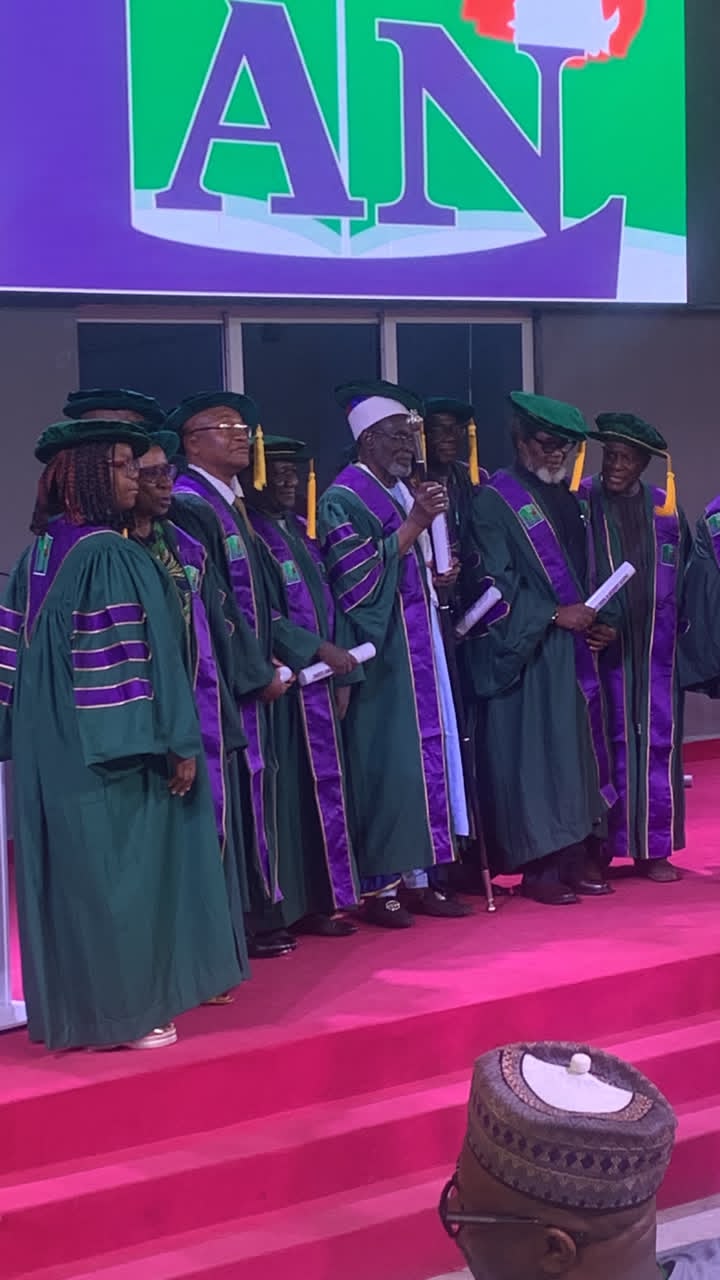
The Linguistic Association of Nigeria (LAN) has called for increased investment in Nigerian languages to strengthen their use in education, research, technology and knowledge production.
The keynote speaker at the association’s 37th annual conference in Abuja, Professor Gbenga Ibileye, said Nigeria must move beyond policy declarations and develop practical structures to support its multilingual environment.
Professor Ibileye proposed the development of text and speech corpora, digital dictionaries, lexical databases and other language resources, with priority given to under-resourced and endangered Nigerian languages.

He also called for the establishment of a Nigerian Language Technology Network to bring together linguists, computer scientists, artificial intelligence researchers, software developers, educators and communities to develop technologies for Nigerian languages.
The keynote speaker further advocated a national multilingual education research programme to generate Nigerian evidence on literacy, numeracy, bilingual education, teacher preparedness and learning outcomes.
Professor Ibileye proposed a dedicated Language Resource and Technology Fund, supported by government, universities, international organisations, private companies and philanthropic bodies, to finance language documentation, digitisation, teacher training and language technologies.
He said the debate should move away from English versus mother tongue, stressing the need for an education system that develops proficiency in English while preserving and expanding the functional use of Nigerian languages.

Earlier, the National President of LAN, Professor Gideon Omachonu, said the association would continue to provide an authoritative scholarly voice on Nigerian languages and contribute evidence-based perspectives to national language and education policies.
Professor Omachonu said LAN had recorded key institutional developments, including its formal registration, introduction of life and corporate membership, and strengthening of its fellowship programme.
Also speaking, the Vice-Chancellor of the National Open University of Nigeria (NOUN) said Nigeria’s linguistic diversity represents an important repository of history, philosophy, traditional knowledge and collective memory that must be preserved and developed.
He challenged scholars to explore the capacity of African languages to communicate advanced knowledge in areas such as artificial intelligence, medicine, law, mathematics, engineering and technology.
The event also featured the investiture of new fellows and honorary fellows of the Linguistic Association of Nigeria, as well as the presentation of awards in recognition of outstanding contributions to linguistic scholarship and the association’s development.