
General News
African Creators Deserve Fair Earnings, Stronger Copyright Protection – Adesugba

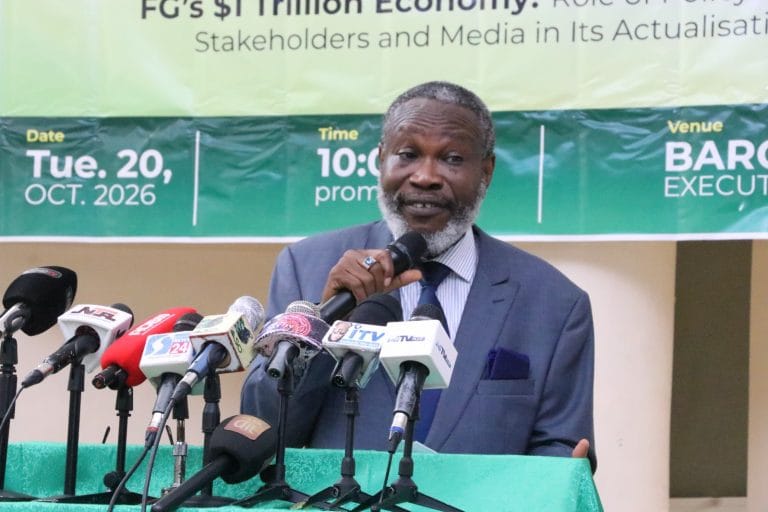
Professor Adesoji Adesugba has called for the establishment of dedicated creative economic zones, intellectual property-backed financing and stronger copyright enforcement to enable African creators to build sustainable businesses and retain a greater share of the wealth generated by their work.
Adesugba, Founder and Chairman of the Abuja Chamber of Commerce and Industry’s Business Entrepreneurship, Skills and Technology (BEST) Centre, made the call while delivering the keynote address at the Africa Creators Conference (ACC 2.0), held at the Abuja International Trade and Convention Centre on Friday, 30 October 2026.
Speaking on the theme, “The Powered Africa: Creativity, Innovation and Transformation,” he said Africa’s growing cultural influence must translate into greater ownership, employment opportunities and fair earnings for creators.
“Africa is not short of creativity. Africa is short of share,” he said.
Adesugba proposed the establishment of creative economic zones and hubs in Abuja, Lagos, Kano, Enugu, Port Harcourt and other centres.
He said the facilities should have reliable electricity, fibre connectivity, studios, post-production facilities and rendering capacity, supported by a simple and competitive fiscal regime.
“Let the editing, the animation, the mastering, the licensing and the data hosting happen here, so that the value-added stays here,” he said.

He urged banks, development finance institutions and capital market operators to recognise creative catalogues, film libraries, design portfolios and verified royalty streams as assets that could be used to finance creative businesses.
He also called for swift and adequately funded measures against digital piracy, alongside greater transparency among collective management organisations, to ensure that royalties generated from broadcasts, streaming and public performances reach their rightful beneficiaries.
On artificial intelligence, Adesugba encouraged creators to embrace emerging tools while ensuring that their works, voices and likenesses are adequately protected. He stressed that consent, ownership and compensation must guide the use of African creative works in AI systems.
“Talent is natural; professionalism is learned,” he said, emphasising the importance of training in contracts, taxation, branding, financial management and artificial intelligence, alongside technical skills.
He disclosed that the BEST Centre was open to partnerships with the conference organisers, AfriLabs, UNESCO and the relevant ministry to provide business clinics, mentorship and market connections for creative enterprises.
Adesugba also urged universities to link research and teaching with commercial opportunities.
He called for stronger African distribution networks, easier cross-border payments and co-production agreements to expand opportunities under the African Continental Free Trade Area.
The BEST Centre chairman further encouraged creators to register their businesses, protect their intellectual property, maintain proper records and join professional associations and chambers of commerce to improve their access to investors and markets.
“Our task now is to make sure that Africa is also paid, fully and fairly, for what the world enjoys,” he said.