
General News
Akpabio Tasks Petroleum Stakeholders on PIA Implementation, Economic Gains

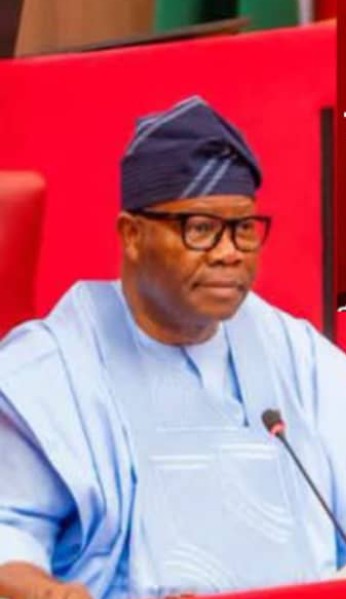
The President of the Senate, Senator Godswill Obot Akpabio, has challenged stakeholders in Nigeria’s petroleum industry to translate the Petroleum Industry Act (PIA) into measurable economic gains, insisting that the success of the landmark legislation must be assessed by results rather than promises.
Akpabio, who spoke at a stakeholders’ engagement programme on the implementation of the PIA at the Transcorp Hilton, Abuja, said Nigerians deserved tangible evidence of improved governance, increased investment, efficient regulation and meaningful development of oil-producing communities, five years after the enactment of the law.
He declared that the passage of legislation was only the beginning of the responsibility to deliver its intended benefits, stressing that the effectiveness of the PIA must be measured by its impact on the industry and the wider economy.
“We have enacted the law. We have established the institutions. We have declared the promise of reform. Now we must deliver the results,” the Senate President said.
Akpabio commended NNPC Limited, Neo Mundo Limited and other institutions involved in organising the engagement, describing the gathering as an opportunity to evaluate implementation, consolidate achievements, address shortcomings and chart a practical path towards achieving the Act’s objectives.
He identified regulatory efficiency, investor confidence, the commercial performance of the national oil company, petroleum production, energy infrastructure and host-community development as critical measures of the law’s success.
According to him, implementation challenges must be addressed through evidence-based assessments and appropriate institutional action rather than rhetoric or the apportionment of blame.
“Cooperation must never become an excuse for avoiding accountability,” he cautioned.
The Senate President reaffirmed the National Assembly’s commitment to legislative oversight, noting that the legislature’s responsibility does not end with presidential assent to a bill.
He explained that while some implementation challenges might require legislative intervention, others would need regulatory improvements, administrative efficiency and stronger coordination among relevant institutions.
Akpabio warned that Nigeria could not afford to squander the economic opportunities offered by its petroleum resources, noting that investment uncertainty, crude oil theft and avoidable regulatory delays imposed significant costs on national development.
He called for a petroleum industry where regulation remained firm and predictable, investment was profitable and responsible, institutions were accountable, and national interests were protected without discouraging legitimate enterprise.
He also urged Nigeria to respond decisively to changes in the global energy landscape by improving the competitiveness of the petroleum sector, unlocking the potential of natural gas, strengthening domestic energy security and preparing the economy for emerging opportunities.
On host-community development, Akpabio stressed that the PIA must deliver benefits beyond statutory provisions and corporate financial statements.
He said the success of host-community development trusts should be reflected in improved infrastructure, environmental responsibility, sustainable livelihoods and better living conditions for communities whose lands and waters sustain petroleum operations.
“The true wealth of a nation is measured not merely by the crude oil it exports or the revenue it earns, but by the opportunities it creates, the industries it builds, the jobs it generates and the dignity it brings to its people,” he said.
Akpabio urged regulators, operators and host-community representatives to use the engagement to identify operational constraints, investment challenges and development priorities. He insisted that deliberations must produce practical recommendations, clearly assigned institutional responsibilities and realistic implementation timelines.
He said the outcome should go beyond a communiqué to establish a credible framework for sustained engagement, legislative oversight and appropriate executive and regulatory action.
Reaffirming the National Assembly’s commitment to supporting the economic reform agenda of President Bola Ahmed Tinubu, Akpabio said responsible legislative support must be matched by rigorous oversight to ensure that reforms generate lasting national benefits.
He maintained that Nigeria’s petroleum resources constituted a national inheritance held in trust for present and future generations, requiring integrity, discipline and responsible management.
Akpabio said history would judge the stewardship of the country’s petroleum wealth not merely by the laws enacted, institutions established or revenues collected, but by the prosperity created, opportunities opened, communities transformed and future secured.
He formally declared open the stakeholders’ engagement programme, expressing confidence that the expertise assembled would produce outcomes capable of advancing the petroleum industry and Nigeria’s economic transformation.
Rt Hon Eseme Eyiboh, MNIPR
Special Adviser, Media and Publicity
Office of the President of the Senate
21-10-2026