Governance
FEC Approves Revised ₦58.47trn 2026 Budget

By Iyojo Ameh
The Federal Executive Council (FEC) has approved an upward revision of the 2026 Appropriation Bill, raising the proposed national budget from ₦54.5 trillion to ₦58.47 trillion.
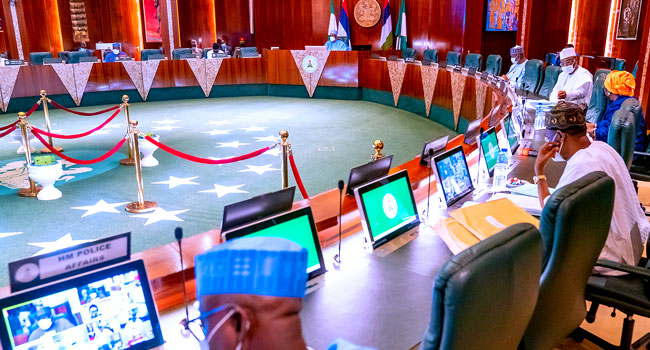
The decision was taken at an emergency meeting of the council held on Friday at the State House, Abuja, and chaired by Vice President Kashim Shettima.
Addressing State House correspondents after the meeting, the Director-General of the Budget Office of the Federation, Mr. Tanimu Yakubu, said the revised proposal represents a six per cent increase over the 2025 budget estimate.
He explained that the 2026 expenditure framework includes ₦4.98 trillion in projected spending by government-owned enterprises and ₦1.37 trillion allocated to grants and donor-funded projects.
According to Yakubu, statutory transfers in the proposed budget are estimated at ₦4.1 trillion, while debt servicing is projected at ₦15.52 trillion. The debt service provision includes ₦388.54 billion for a sinking fund aimed at retiring maturing bonds owed to local contractors and creditors.
Personnel costs, including pensions, are estimated at ₦10.75 trillion, marking a seven per cent increase over the 2025 provision. This figure includes ₦1.02 trillion for government-owned enterprises.
Yakubu said overhead costs are projected at ₦2.22 trillion, while capital expenditure stands at ₦25.68 trillion, representing a 1.8 per cent reduction compared to the 2025 capital allocation. He noted that the reduction reflects a more cautious capital spending strategy focused on completing ongoing projects.
He further disclosed that capital allocation priorities include ₦11.3 trillion for ministries, departments and agencies, ₦2.052 trillion for multilateral and bilateral loan-funded projects, and ₦1.8 trillion for the capital component of the development levy.
The budget, Yakubu said, seeks to balance macroeconomic stabilisation with development objectives under the Medium-Term Fiscal Framework.
He noted that although projected revenues decline year-on-year, non-oil revenues now contribute about two-thirds of total government income, underscoring a shift away from oil dependence. Corporate taxes, value-added tax, customs duties and independent revenues remain key revenue sources.
“Growth in expenditure is driven mainly by debt service, wages and pensions, rather than discretionary expansion. Capital spending has been marginally reduced to ensure value for money and the completion of ongoing projects,” Yakubu said.
He added that the projected fiscal deficit reflects prevailing economic conditions rather than policy relaxation, with financing expected to rely largely on domestic borrowing, supported by concessional multilateral loans.
Earlier, the Minister of Budget and Economic Planning, Senator Atiku Bagudu, said FEC also approved amendments to the Medium-Term Expenditure Framework. He added that the council considered a downward revision of the exchange rate assumption from ₦1,512 to ₦1,400 for the 2026 fiscal year.
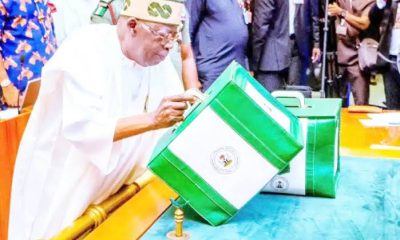
President Bola Ahmed Tinubu is expected to formally present the 2026 budget to the National Assembly in the coming days.