General News
FG Declares Drug Abuse a National Emergency as Nigeria Marks 2025 World Drug Day

By Iyojo Ameh
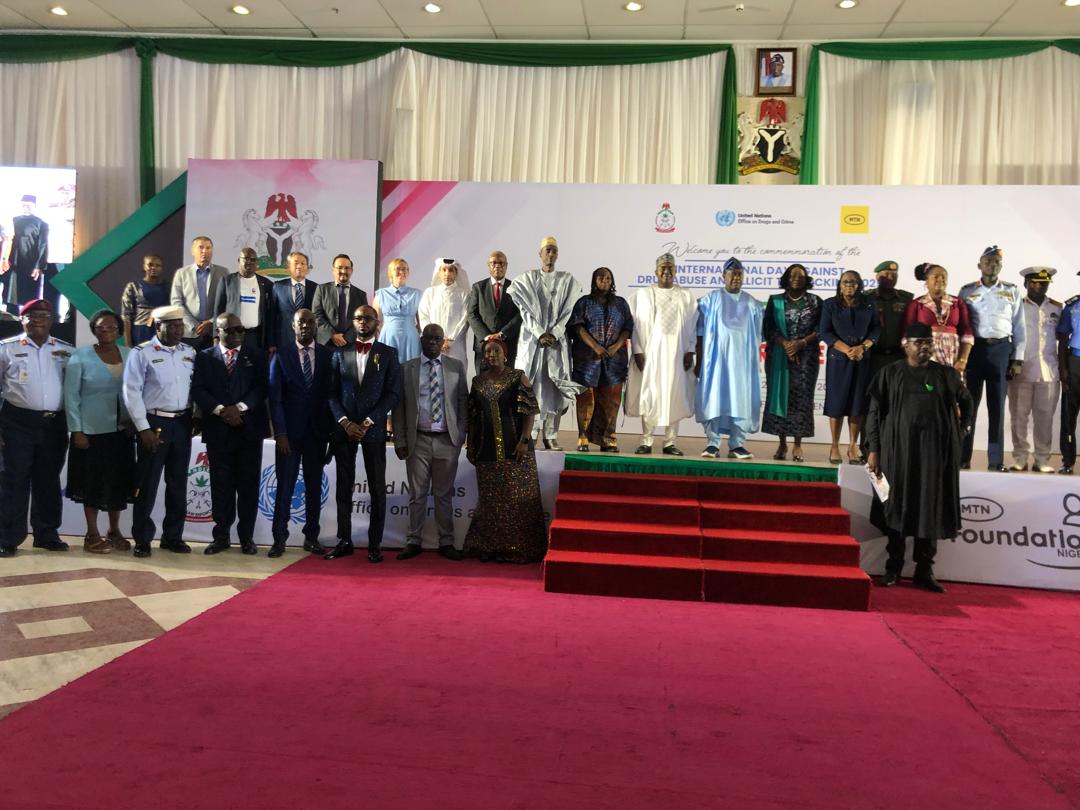
The Federal Government has declared drug abuse a national emergency, calling for a united, evidence-based response to the growing menace as Nigeria joined the global community in commemorating the 2025 International Day Against Drug Abuse and Illicit Trafficking.
Speaking on behalf of President Bola Ahmed Tinubu at a high-level event in Abuja, the Secretary to the Government of the Federation (SGF), Senator George Akume, described the drug crisis as a major threat to national development, public health, and security.
“This year’s theme, ‘The Evidence is Clear: Invest in Prevention’ is a wake-up call,” Akume said. “Drug abuse is destroying lives, dismantling families, and undermining our national development. We must act with urgency and unity.”
He emphasized that drug addiction should be treated as a public health issue and not a moral failure. Akume urged increased investment in preventive education, youth engagement, and accessible treatment and rehabilitation services.
“Prevention saves lives. But we must also ensure safe treatment and reintegration for those already caught in addiction’s grip,” he added.
The declaration came as Brig. Gen. Mohamed Buba Marwa (Retd.), Chairman of the National Drug Law Enforcement Agency (NDLEA), painted a grim picture of the nation’s drug landscape. According to Marwa, more than 14.3 million Nigerians currently use drugs — nearly three times the global average — with cannabis being the most abused substance.
>“More than 90% of violent criminals, including terrorists and kidnappers, are under the influence of drugs,” Marwa warned. “Drug abuse is not just a health problem it’s a threat to national security.”
He outlined the NDLEA’s comprehensive strategy focused on prevention, treatment, and enforcement, and revealed that over 26,000 drug users had been treated across 30 rehabilitation centers in the last 18 months. He also noted that seven additional centers have been approved in the 2025 federal budget.
“Prevention is no longer optional; it is a national imperative,” he declared.
Representing Senate President Godswill Akpabio, Senator Ibrahim Dankwambo also spoke at the event, reinforcing the call for urgent, prevention-focused interventions. Akpabio, in his message, applauded the NDLEA’s achievements but emphasized that enforcement alone cannot win the war.
“This war begins in the shadows where schools are abandoned, families are broken, and youth are neglected,” Akpabio’s message read. “It is a war for the soul of our nation, and it must be fought with compassion, leadership, and vision.”
He called for massive government investment in education, public enlightenment, and youth empowerment, describing them as strategic priorities in the national fight against drug abuse.
“The real battle is in our classrooms, clinics, and communities,” he stressed.
In a powerful private sector intervention, Dr. (Mrs.) Mosun Belo-Olusoga, Chairman of the MTN Foundation, pledged continued partnership with NDLEA, the United Nations Office on Drugs and Crime (UNODC), and other stakeholders.
“The scale of Nigeria’s drug crisis demands all-hands-on-deck,” she said. “Prevention and recovery must not be the burden of government alone. The private sector must stand up, scale up, and sustain support.”
She stressed the importance of investing in youth through education, mental health support, digital tools, and life skills training.
“We believe in the power of partnerships and in the potential of every Nigerian youth to rise above addiction and lead a life of purpose,” she added.
The 2025 World Drug Day event ended on a note of collective resolve, with stakeholders across sectors pledging deeper collaboration. The overarching message was clear: drug abuse poses a clear and present danger to Nigeria’s future, and only a united, sustained national response can reverse the trend.