Features
Flooding in Nigeria: Palliatives Over Preparedness – A Cycle of Failure …FG Prioritizes Short-Term Relief While Ignoring Systemic Solutions

By Caroline Ameh
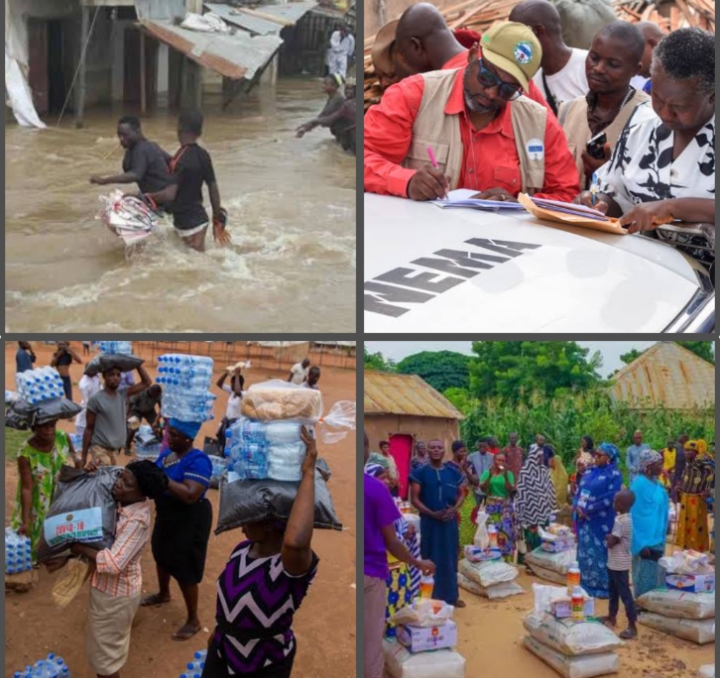
Every rainy season, communities across Nigeria brace themselves for the floods. From the banks of the River Niger in Lokoja to the creeks of Bayelsa, and across the lowlands of Jigawa, the story is the same—swollen rivers, submerged homes, and displaced families. Yet, the federal government continues to prioritise short-term palliatives over permanent solutions, experts say.

In 2022 alone, floods claimed over 600 lives, displaced 1.4 million people, and destroyed over 200,000 homes, according to the National Emergency Management Agency (NEMA) and the United Nations Office for the Coordination of Humanitarian Affairs (UNOCHA). With heavy rainfall and the release of water from Cameroon’s Lagdo Dam cited as contributing factors, the disaster was Nigeria’s worst in a decade.
But this was not the first time. Between 2020 and 2025, floods have repeatedly ravaged the country, with 2023 and 2024 recording severe incidents in Lagos, Ogun, Kogi, and Niger states. In May 2025, flash floods in Mokwa, Niger State, killed over 150 people and displaced thousands. In all instances, the government’s response has largely consisted of distributing food, cash, and emergency shelter.
“We’re patching symptoms, not fixing the disease,” says Dr Dominic Alancha, a social analyst. “The funds used on palliatives could deliver permanent flood control infrastructure.”
Could this be a case of recurring disasters, recurring palliatives?
In 2020 alone, flood affected 27 states, including Kebbi, Niger, Kwara, Anambra, and Bayelsa with over 2 million people affected, 69 fatalities, and over 50,000 displaced persons this is according to NEMA annual report and Relief Web. The cause of the flooding is as a result of heavy rainfall and release of water from Lagdo Dam (Cameroon).
To cushion the effects of the flooding, the federal government through the National Emergency Management Agency (NEMA) and State Emergency Management Agency (SEMA) distributed various types of palliatives to the affected victims. Items distributed include: Food (rice, maize, garri, beans), Mats, blankets, and mosquito nets and Cash transfers by states as stated by NEMA 2020 Annual Report.
With the level and severity of the floodings in 2020, it is expected that the federal government through relevant agencies will find a lasting solutions to the issue of flooding. The number of monies wasted on palliative according to Dr. Dominic Alancha, a social and political analyst can be used to proffer sustainable solutions to combat this challenge.
By 2022, the inadequacies of Nigeria’s flood response were exposed. According to ReliefWeb, nearly 3.2 million people were affected. In Bayelsa State alone, over 1.3 million residents were impacted and 96 people lost their lives. Over 332,000 hectares of farmland were submerged, crippling food production and causing inflation to spike.
Cameroon’s release of water from the Lagdo Dam played a major role. In response, NEMA distributed 12,000 metric tons of food.
Nigeria’s annual flooding crisis has become a tragic paradox a predictable emergency that continues to catch the nation unprepared. Yet each year, the government’s response follows the same pattern: emergency declarations, palliative distributions, and forgotten promises of long-term solutions.
Nigeria’s flood management strategy has become trapped in a cycle of reactive measures rather than proactive prevention.
Through data analysis, it was observed that temporary relief continues to outweigh sustainable preparedness.
The floods of 2020 served as a wake-up call that went unheeded. According to NEMA’s annual report: 27 states was affected by flood including Kebbi, Niger, and Bayelsa with 69 confirmed deaths and 50,000 persons displaced. Similarly, over 200 communities was submerged.
The disaster was triggered by a combination of heavy rainfall and water release from Cameroon’s Lagdo Dam a recurring threat Nigeria had known about for decades.
Palliatives distributed during the period included: 5,000 metric tons of food (rice, maize, garri), 20,000 mosquito nets , 15,000 blankets and Cash transfers totaling ₦500 million.
Also in 2021 flood are about 18 states, with Jigawa, Kano, Rivers, and Delta as the worst hit. Death toll was above 100 and above 200,000 persons were displaced. The major cause of this according to the Nigeria Hydrological Services Agency is persistent rainfall and poor drainage systems in the affected states. Just as 2020, the federal government through relevant agencies like NEMA, and World Food Programme (WFP) distributed over 100,000 metric tons of food, Emergency shelter materials, Cash grants to affected households.
In 2022, Nigeria faced its worst flooding in a decade, resulting in over 600 deaths, displacement of approximately 1.4 million people, and destruction of over 200,000 homes. The flood affected 33 out of 36 states of the Federation, with Kogi, Benue, and Anambra hardest hit.
The cause of the flood was attributed to extreme rainfall, Lagdo Dam release, and climate change effects as reported by NEMA Situation Report. When this happened was there any attempts by the federal government to tackle the issue of the Lagdo dam? Yes, the federal government made some efforts to tackle the recurring issue of flooding caused by the release of water from the Lagdo Dam in Cameroon, but these efforts have been inconsistent and largely inadequate over the years.
Some of the efforts Made by the Nigerian Government include the proposed Construction of a Buffer Dam, the Dasin Hausa Dam. This was part of a bilateral agreement between Nigeria and Cameroon, in the 1980s where Nigeria is expected to build the Dasin Hausa Dam in Adamawa State to buffer water released from Lagdo Dam.
Sadly to know, the dam has not been built. Successive governments have failed to follow through, mainly due to funding issues, poor political will, and bureaucratic delays. The National Emergency Management Agency (NEMA) has routinely issued warnings and carried out relief operations in flood-prone areas during dam releases.
State governments are usually alerted to prepare for possible evacuations and flooding. These efforts, however, tend to be reactive, not preventive.
Was there relief materials or palliatives?
Both the FG, NEMA, State Governments, and International Donors like the UN, Red Cross distributed different items ranging from food items, canoes, with the federal government allocating ₦5 billion for affected victims.
Nigeria has engaged in diplomatic discussions with Cameroon over better coordination and advance notification before releasing water from the dam. Cameroon typically gives notice, but the lack of adequate infrastructure in Nigeria to manage the influx of water makes these warnings less effective.
While there has been awareness and some emergency action, no long-term solution has been fully implemented. The failure to construct the Dasin Hausa Dam remains the central unfulfilled promise. Until Nigeria addresses this structurally and proactively, flooding from the Lagdo Dam overflow will continue to cause serious damage.
In 2023, presidential committees were set up to assess flood impacts and recommend mitigation strategies yet no alternative to Lagdo’s Overflow: The absence of Dasin Hausa Dam remains the biggest issue.
After the flood the FG, State Governments (Lagos, Ogun, Adamawa)as usual distributed Food packs (rice, noodles, oil), ₦50,000–₦100,000 cash transfers (select states) and Building materials for destroyed homes another palliative.
In 2024 collapse of the Alau Dam in September led to flooding that submerged 70% of communities in Maiduguri, Borno state affecting over one million people and resulting in at least 150 deaths and as usual, the Borno State Emergency Management Agency (SEMA), in collaboration with the National Emergency Management Agency (NEMA), deployed rapid response teams and distributed relief materials including food, water, and temporary shelter items.
Recent floods in central Nigeria, especially in Mokwa, Niger State, have resulted in at least 151 deaths and displaced over 3,000 individuals and the government swing into action by the provisions of palliatives, another temporary measure.
The palliative model was already showing cracks – many affected communities reported receiving rotten food items or nothing at all.”
Palliatives have become a political tool rather than humanitarian aid. The lack of transparency creates perverse incentives to maintain the status quo.
As Nigeria faces more extreme weather due to climate change, the choice is clear: continue spending billions on temporary relief while losses mount, or invest in prevention that protects lives and the economy.
The 2025 floods in Niger State – with 151 more deaths show time for decision is running out.
Moreover, scientists has tied rising rainfall intensity to climate change making penitent for Nigeria to transition from ad-hoc relief to structural resilience like the finishing of the Dasin Hausa Dam which is critical to buffer future Lagdo releases, upgrade drainage networks & embankments, particularly in urban areas like Lagos and reinforce dams like Alau, Jebba, Kainji, and Shiroro.
Also enforce laws that will make building in flood prone areas, retrofit floodplains punishable.
The choice is clear. Continue patching disasters with palliatives—or invest in a future where floods no longer claim lives, homes, and crops.