Features
Mandarin in Nigerian Classrooms: Gateway to Global Opportunities or Road to Neo-Colonialism?

By Caroline Ameh
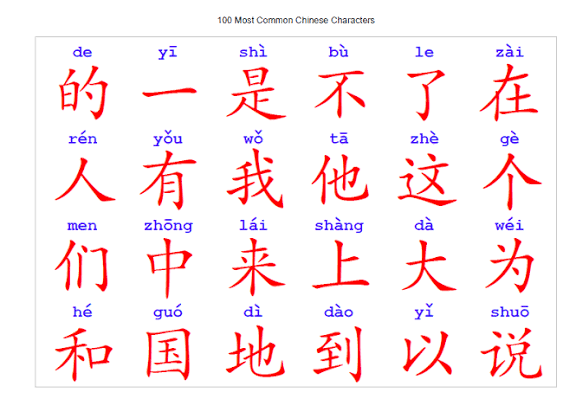
When the Federal Government announced that Mandarin the official language of China would be taught in Nigerian secondary schools, the news was met with both applause and suspicion. For some, it is a bold step into the future, preparing Nigerian youth for opportunities in trade, diplomacy, and technology. For others, it felt like déjà vu: yet another foreign language imposed on a country still struggling to preserve its own.
At the heart of this debate lies a simple but powerful question: is the introduction of Mandarin in Nigerian classrooms a pathway to empowerment, or a subtle form of neo-colonial entanglement?
China’s Deepening Footprint in Africa
There is little doubt about China’s growing presence across the continent. According to the China-Africa Business Council, trade between China and Africa surpassed $282 billion in 2023, making China the continent’s second-largest trading partner. Nigeria, Africa’s largest economy, has been a major beneficiary. From the Abuja-Kaduna railway to telecommunications infrastructure, Chinese firms are deeply embedded in the country’s development projects.
But partnerships have limits, and language has often been the invisible barrier. Engineers, contractors, and investors frequently rely on interpreters, slowing down negotiations and sometimes creating mistrust. For Nigeria, teaching Mandarin seems like a way to close that gap.

Xi Jinping’s Assurances
Critics have not been silent. For years, China has been accused of practicing “debt-trap diplomacy” in Africa using loans and investments to entrench dependency. President Xi Jinping, however, has repeatedly dismissed these claims, positioning China’s engagement as the opposite of colonialism.
“There will be no interference in African countries’ pursuit of development path that fits their national conditions; no imposition of our will on African countries; no attachment of political strings to assistance,” Xi said at the China-Africa Leaders’ Dialogue.
He often situates China-Africa cooperation in the shared memory of anti-colonial struggles, describing it as a “win-win” partnership based on equality and mutual respect.
The Promise for Nigerian Youth
Supporters of the policy see Mandarin as a pragmatic move in a changing world.
Dr. Madina Umar-Osuma, former Director of the Centre for Asian Studies at the University of Abuja, believes Nigeria is on the right path.
“Languages open barriers,” she says. “If our students can start studying Mandarin here at home, they can become translators, negotiators, and cultural bridges without first traveling abroad. It is a welcome idea.”
For her, however, the move must not come at the expense of local languages. “At the primary school level, we must strengthen Hausa, Yoruba, Igbo, and other Nigerian languages. Then at secondary school, it is fine to combine them with foreign languages like Mandarin.”
Seasoned diplomatic correspondent Raphael Oni echoes this optimism. “China is the future of the world. If Nigeria introduces Mandarin, it is not recolonization, it is preparation for shared prosperity.”
Not everyone is convinced. Dr. Aliyu Audu Adagu, of the African Renaissance Movement (ARM), calls the policy a dangerous step toward “self-assisted colonialism.”
“Language is never neutral,” he warns. “Colonialism succeeded not just with guns, but with language. By elevating Mandarin while neglecting our indigenous tongues, Nigeria risks deepening cultural subjugation.”
For him, the real priorities should be fixing broken classrooms, paying teachers, and investing in science and technology—not diverting scarce resources to train Mandarin instructors.
“Education must liberate, not enslave,” he says.
The Cultural Balance
Some journalists see a middle ground. Joyce Bala, reflecting on decades of Chinese engagement with Nigerian culture, points out that China has long embraced African languages.
“In Bayero University, Kano, and ABU Zaria, Chinese students have been studying Hausa for years. Beijing even runs Hausa radio and TV broadcasts. If they can learn our language, why shouldn’t we learn theirs?”
This argument reframes Mandarin not as an intrusion, but as part of an exchange—an acknowledgment that in a globalized world, languages flow both ways.
Lessons from Other African Countries
Nigeria is not the first African country to open its schools to Mandarin.
South Africa made it an optional subject in 2014. Despite controversy, students who embraced it gained access to scholarships and careers in trade and diplomacy.
Kenya introduced Mandarin in secondary schools in 2019, easing student exchanges and cooperation on projects such as the Standard Gauge Railway.
Tanzania has seen a boom in Mandarin training centers, producing local graduates who now work directly with Chinese firms reducing reliance on expatriates.
The lesson is clear: Mandarin can be more than an academic exercise; it can be an economic gateway.
The Road Ahead
The introduction of Mandarin in Nigerian classrooms is more than an educational policy, it is a mirror reflecting Nigeria’s struggle with identity, sovereignty, and globalization.
If properly implemented, it could equip the next generation with tools to compete in international trade, technology, and diplomacy. But without safeguards, it could also overshadow indigenous languages and reinforce dependency.
In the end, the real challenge is balance: investing in Mandarin without neglecting Hausa, Yoruba, Igbo, and dozens of other Nigerian tongues; embracing global opportunities without surrendering cultural sovereignty.
As one Nigerian parent put it during a school PTA meeting: “Let our children learn Mandarin, but let them not forget the language of their ancestors. That way, they can face the world without losing themselves.”