
General News
FRSC Upgrades Operations Centre as Road Crashes Drop by 13.8%

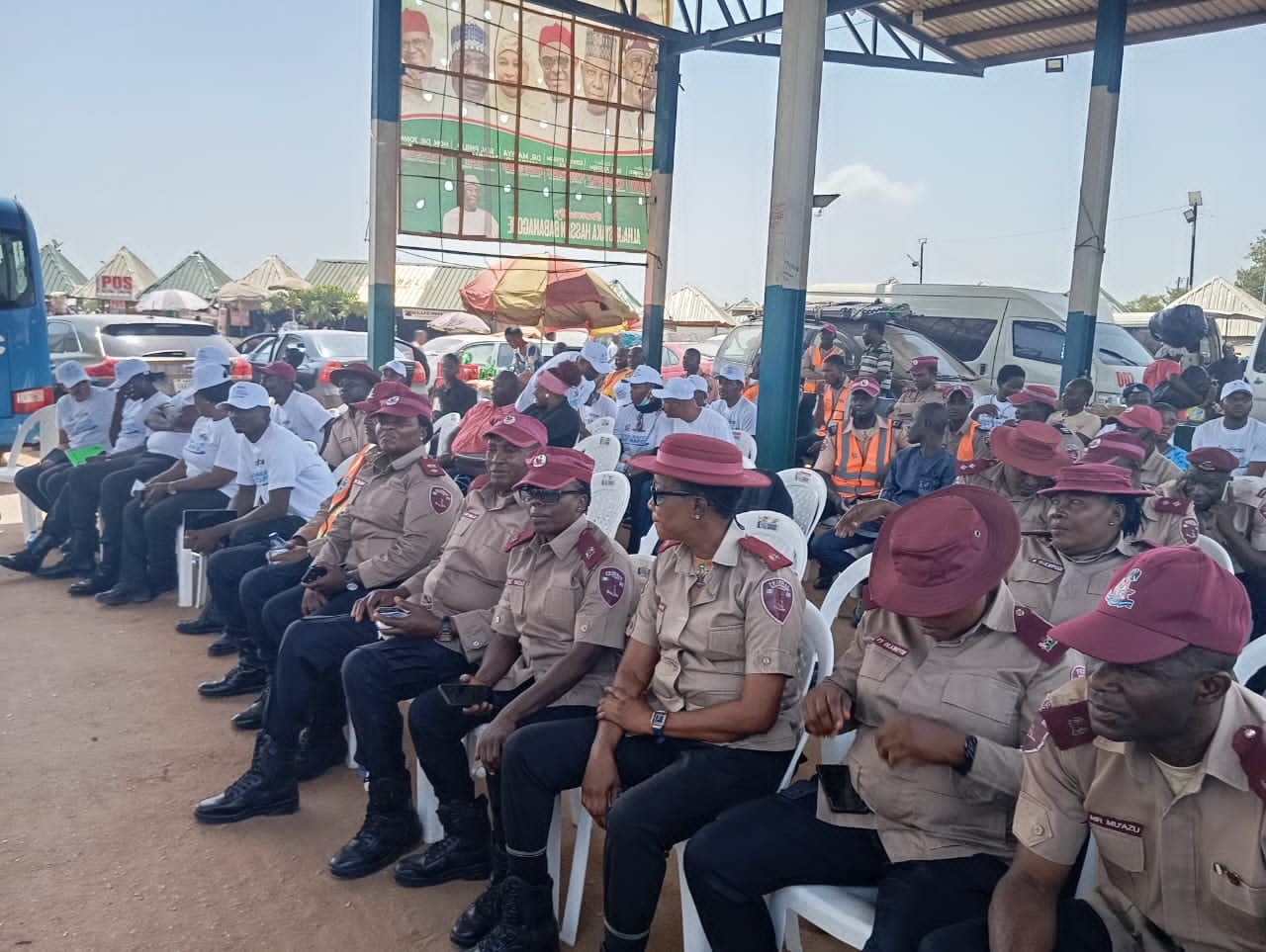
The Secretary to the Government of the Federation (SGF), Senator George Akume, has inaugurated an upgraded Operations Monitoring and Control Centre equipped with modern facilities to promote transparency and professionalism in traffic law enforcement and enhance emergency response operations.
Senator Akume, who performed the inauguration at the closing of the FRSC end-of-year meeting of management and senior officers in Abuja, commended the milestone achievement recorded by the Corps Marshal, Mallam Shehu Mohammed.

The SGF said the new Control Centre would strengthen evidence-based patrol operations, improve personnel safety and provide the capacity to obtain, securely store, preserve and retrieve quality contemporaneous evidence against traffic offenders.

According to the SGF, repositioning the Corps towards technology-driven and intelligence-led operations has contributed to a 13.8 per cent reduction in road traffic crashes in the third quarter of 2026 compared with the corresponding period in 2025.
“The FRSC has recorded significant improvements in Nigeria’s road safety performance, achieving a 13.8 per cent reduction in road traffic crashes, 14.5 per cent decline in road traffic injuries and 12.6 per cent reduction in road traffic fatalities in the third quarter of 2026, compared with the corresponding period of 2025.”
“A comparative assessment of the two periods shows that road traffic crashes declined from 2,434 in Q3 2025 to 2,098 in Q3 2026, representing 336 fewer crashes.
Road traffic injuries also dropped significantly from 6,856 to 5,864, a reduction of 992, while recorded fatalities decreased from 1,077 to 941, representing 136 fewer deaths.”
“Remarkable is the fact that the 13.8 per cent reduction in crashes exceeded the Corps’ established 10 per cent reduction target, reflecting improved performance against its strategic commitments.”
The Secretary to the Government of the Federation maintained that these results provided measurable evidence of the progress being made under the present administration, whose reform agenda has continued to reposition the Corps towards a more technology-driven, intelligence-led, performance-oriented and responsive road safety institution.
He explained that the achievements also reinforced the Federal Government’s commitment to national development under President Bola Tinubu’s Renewed Hope Agenda, which recognises institutional efficiency, national security, economic productivity and the protection of lives and property as critical pillars of national transformation.
“Road safety remains an indispensable component of this vision, considering the strategic importance of safe and efficient road transportation to commerce, mobility, national integration and economic growth.”
In his remarks, the Corps Marshal, Mallam Shehu Mohammed, acknowledged the invaluable support and institutional guidance of the Secretary to the Government of the Federation, Senator George Akume, whose strategic coordination of government business provided an enabling environment for the Corps to discharge its statutory responsibilities effectively.
“The Corps continues to strengthen the complementary roles of public education, persuasion, technology, intelligence gathering, stakeholder collaboration and appropriate enforcement in addressing the persistent challenges of dangerous driving and road traffic violations.”
The Corps Marshal therefore directed Commanding Officers across the country to translate the gains recorded into more effective highway operations, with particular attention to strategic patrol deployment along high-risk corridors, improved traffic management, stronger collaboration with sister agencies, strategic positioning of ambulances, rescue teams and tow trucks, as well as sustained public enlightenment.
“The ultimate measure of its success is not merely the volume of enforcement activities or personnel deployed, but the number of crashes prevented, injuries avoided, lives preserved, traffic gridlocks minimised and the confidence of Nigerians strengthened in the nation’s road transport system.”