
International
Gulf States Urge U.S. to Go Further as Iran Expands Attacks Across the Region

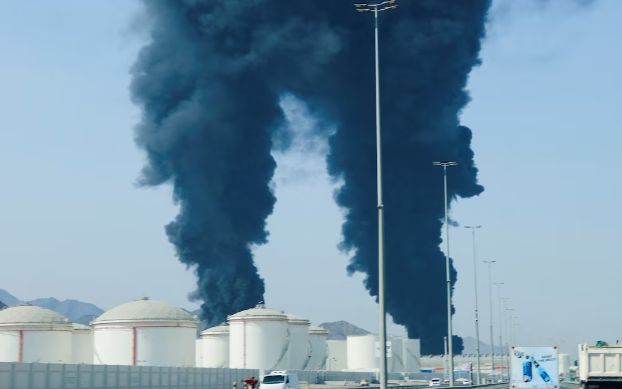
Gulf Arab states did not initially call on the United States to wage war against Iran, but many are now urging Washington not to halt its campaign prematurely, warning that leaving the Islamic Republic capable of threatening the region’s oil lifeline could have severe economic consequences, according to Gulf sources who spoke to Reuters.

This comes as U.S. officials are reportedly pressing Gulf nations to take a more active role in the ongoing U.S.-Israeli conflict with Iran. Sources say President Donald Trump is seeking visible regional backing to strengthen both international legitimacy and domestic support for the campaign.
“There is a growing sentiment across the Gulf that Iran has crossed every red line,” said Abdulaziz Sager, chairman of the Saudi-based Gulf Research Center. “Initially, we opposed the war and sought restraint, but direct attacks have changed that perception. Iran is now viewed as an enemy.”
Iran Targets Gulf Infrastructure
Iran has demonstrated its reach by launching missile and drone strikes on key infrastructure across the six Gulf states, including airports, ports, oil facilities, and commercial centers. It has also disrupted shipping in the Strait of Hormuz, a critical route responsible for about one-fifth of global oil supply.
These actions have heightened fears among Gulf nations that allowing Iran to retain significant military capabilities could enable it to repeatedly threaten the region’s energy security.
As the conflict enters its third week, with escalating U.S. and Israeli airstrikes and Iranian retaliation against military bases and civilian targets, Gulf leaders are increasingly aligned on the need to significantly weaken Iran’s military power. According to one source, failing to do so would leave the region under constant threat.
Iran, a predominantly Shi’ite nation, has long had strained relations with its Sunni Arab neighbors, many of whom are close U.S. allies and host American military bases. Although ties with countries like Qatar and Oman have been relatively stable, tensions persist.
Past incidents, including the 2019 attacks on Saudi oil facilities at Abqaiq and Khurais—an event Iran denied responsibility for—have reinforced concerns about the vulnerability of Gulf energy infrastructure.
Balancing Risk and Escalation
Despite rising tensions, Gulf nations remain cautious about direct military involvement. The United Arab Emirates stated it does not seek escalation but reserves the right to defend its sovereignty and ensure the safety of its residents.
Regional sources indicate that unilateral action by any Gulf state is unlikely, as it could expose individual countries to Iranian retaliation. So far, coordination among Gulf Cooperation Council members—Bahrain, Kuwait, Qatar, Saudi Arabia, Oman, and the UAE—has been limited, with only one virtual meeting held and no broader Arab summit convened.
U.S. Defense Secretary Pete Hegseth noted that Gulf partners are increasing cooperation, particularly in air defense, though specifics remain unclear.
Meanwhile, Saudi Arabia could be compelled to respond if Iran crosses certain thresholds, such as targeting major oil facilities or causing significant civilian casualties. However, any response would likely be carefully measured to avoid further escalation.
A Strategic Dilemma
Analysts say Gulf states face a difficult balancing act: countering immediate Iranian threats while avoiding entanglement in a broader war led by the United States and Israel.
Fawaz Gerges of the London School of Economics noted that joining the conflict would offer limited military benefit while significantly increasing exposure to retaliation. As a result, Gulf nations are pursuing a strategy of calculated restraint—defending their interests without fully committing to the war.
Iran’s ability to disrupt maritime traffic in the Strait of Hormuz underscores its strategic leverage. Experts warn that if left unchecked, this capability could pose a long-term threat to global energy stability.
President Trump has called for an international coalition to secure the waterway, though initial responses have been limited. Analysts suggest that major Asian economies, which depend heavily on Gulf oil, may also need to play a role in ensuring the route remains open.
(Reuters)
Continue Reading