
International
China Passes Ethnic Unity Law Elevating Mandarin in Minority Regions

By Iyojo Ameh
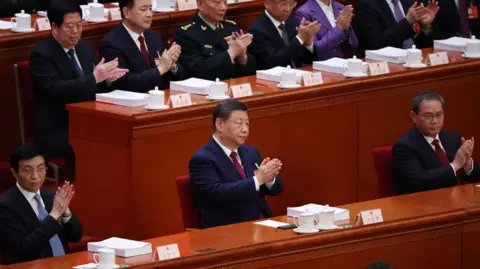
National People’s Congress has approved a new law aimed at strengthening ethnic unity across the country, with a major provision promoting the wider use of Mandarin in education, governance, and public life, particularly in areas dominated by ethnic minority groups.
The legislation is designed to reinforce what authorities describe as a shared national identity among China’s 56 officially recognised ethnic groups.

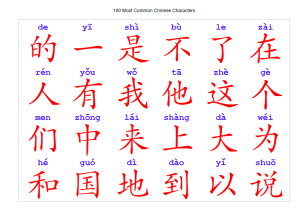
Under the law, Mandarin will become the primary language for schools, government communication, and public services, even in regions where local languages such as Tibetan, Uyghur, and Mongolian have traditionally been dominant.
According to the policy, Mandarin must take priority in public signage, educational instruction, and official activities whenever it appears alongside minority languages.
Chinese officials say the measure is intended to improve communication nationwide, deepen social integration, and support national development.

Government representatives have stressed that the law does not eliminate the use of minority languages. Instead, they say it aims to promote interaction among different ethnic groups while preserving cultural traditions and religious practices.
However, human rights advocates and critics warn that the policy could erode the linguistic and cultural rights of minority communities.
Some analysts link the move to Beijing’s broader “Sinicisation” policy, which seeks to integrate ethnic minorities more closely into the dominant Han Chinese cultural framework.
Observers say the new law could further accelerate the decline of minority languages and traditions, particularly in sensitive regions such as Xinjiang, Tibet, and Inner Mongolia, where Mandarin-language education has already expanded significantly in recent years.
While the Chinese government maintains the legislation is necessary for national unity and long-term stability, debate continues over whether the policy will strengthen cohesion or undermine the cultural autonomy of minority populations.