
General News
Human Rights Day: Rima Deck, Aqua Kanata, CSOs decry mob justice, witchcraft persecution, and other forms of GBV

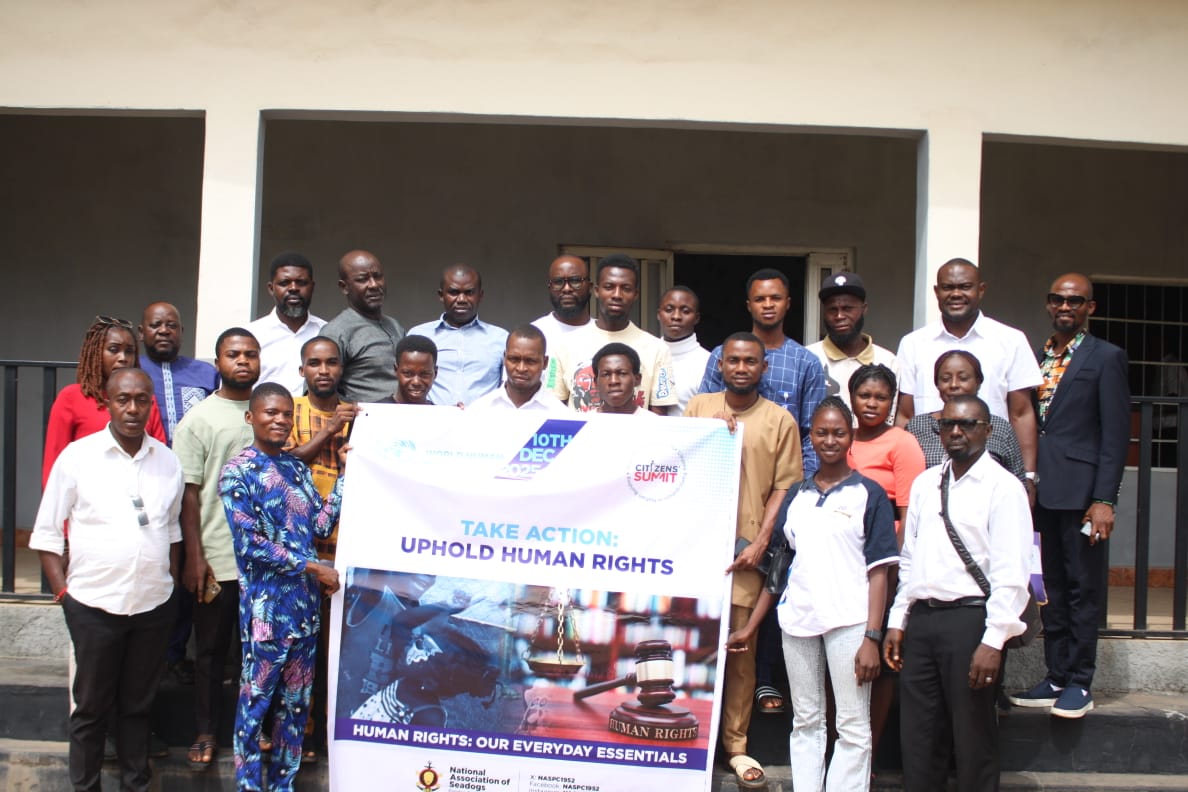
From Dooshima Terkura, Makurdi
As the world commemorates the 2025 Human Rights Day, Rima Deck and Aqua Kanata have expressed concern that abuses such as mob justice, witchcraft-related persecution, attacks on innocent citizens, violence against women, and other violations continue to affect vulnerable groups in Nigeria, particularly within the Benue Valley.
The Second Mate of Rima Deck, Dominic Ingye, made this known in Makurdi during an event held to mark the 2025 World Human Rights Day.
The event formed part of the National Association of Seadogs (NAS) Citizen Summit, a forum dedicated to addressing national issues affecting Nigerians.
Ingye noted that this year’s Summit focused on the theme, “Protecting Vulnerable Communities in the Benue Valley,” stressing that choosing Human Rights Day for the event was deliberate, aimed at drawing attention to persistent human rights challenges in the region.
He underscored the importance of public enlightenment and the contributions of civil society in tackling these problems, adding that students, political scientists, lawyers, and representatives of the National Human Rights Commission (NHRC) were invited to propose solutions and offer practical guidance on enhancing community protection.

NHRC representative, Jinge Desmond, outlined the mandate and responsibilities of the Commission, explaining that the NHRC safeguards citizens’ rights, investigates cases of abuse, and follows up on issues of injustice.
He said the Commission in Benue State has addressed cases involving mob justice, gender-based violence, unlawful detention, and communal conflict, noting the dangers faced by vulnerable groups such as women, children, the elderly, and persons accused of witchcraft. He encouraged the public to understand their rights and report violations.
During a panel session, political scientist and teacher, Oko Emmanuel, provided an analytical view on how governance and political structures influence human rights protection.
He explained that weak institutions, poor accountability, and low public trust often enable abuses like mob justice and gender-based violence. He called for stronger citizen participation, effective institutional oversight, and strategic collaboration between government and civil society.
Representing the International Federation of Women Lawyers (FIDA) and the Ministry of Justice, Awashima Addingi highlighted challenges affecting women in Benue communities.
She discussed issues such as gender-based violence, domestic abuse, discrimination, and witchcraft-related accusations. Addingi also outlined existing legal protections, support services, and advocacy efforts, stressing the importance of awareness, early reporting, and community solidarity for survivors.
Rima Deck’s Balance Mate, Mike Gbahabo, spoke on Nigeria’s legal framework for human rights protection, referencing constitutional provisions, the Violence Against Persons (Prohibition) Act, the Child Rights Act, and other key criminal and penal laws.
He explained accountability mechanisms through the police, NHRC, and civil courts, highlighted consequences for offenders, and provided guidance on safely documenting and reporting incidents.
A vibrant question-and-answer session followed, with active participation from students. One of the victims, Monica, also shared her experience.
She recounted how landlords at her previous residences violated her tenancy rights and evicted her, but through NHRC intervention, her rights were restored on both occasions—demonstrating the importance of institutional support.
The event was attended by representatives from the NHRC, Ministry of Justice, FIDA, Advocacy for Alleged Witches (AfAW), students, and Seadogs. Discussions emphasized the urgent need to protect vulnerable communities in the Benue Valley and reinforced the critical role of institutions and civil society in promoting justice and human rights.