
Opinion
Kalu’s legacy is taking shape in classrooms, not campaign slogans.

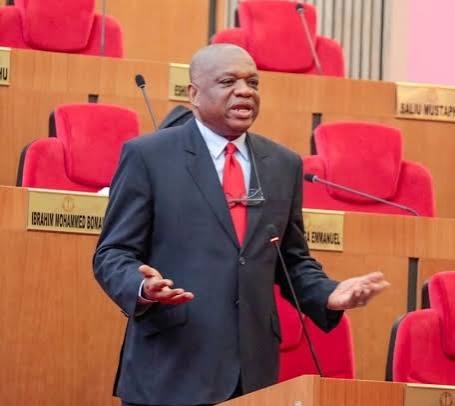
By Rubby Obinna
A tour across Abia North today reveals a common sight in many communities—school buildings associated with Senator Orji Uzor Kalu. Some are newly constructed, while others have been renovated and equipped with desks, textbooks, uniforms and other learning materials. For many residents, these projects have become a defining feature of his public service.
This was highlighted by university lecturer, Professor Kalu Eni, in an article published on Monday. According to him, Senator Kalu’s greatest contribution has not been the distribution of cash or material gifts but sustained investments in education, youth development and women’s empowerment. He described this approach as a lasting form of empowerment because it continues to benefit generations.
Professor Eni noted that former Governor Orji Uzor Kalu has school buildings bearing his name in nearly every ward across Abia North. He added that the senator has also distributed textbooks, school desks, office furniture, school uniforms and other educational materials, describing education-focused interventions as the most meaningful investment since the beneficiaries are the children who represent the future of the senatorial district and Abia State.
Residents across Bende, Ohafia, Arochukwu, Isuikwuato and Umunneochi frequently point to these educational projects. Since returning to public office as Senator representing Abia North in 2019, Kalu has facilitated numerous projects across the five local government areas, with a consistent emphasis on providing people with opportunities that have lasting value.
Several communities now have newly built or renovated classroom blocks, while students who once sat on bare floors now have desks and chairs. Scholarships have also been awarded to deserving students, while opportunities for overseas education and training have expanded.
Professor Eni stated that dozens of young people from Abia North are currently studying medicine, science, technology and business abroad through support linked to Senator Kalu. He further disclosed that more than 100 youths and women have travelled to China for specialised training.
According to the article, sustainable empowerment is not about temporary handouts but about equipping people with knowledge, practical skills and opportunities capable of transforming lives and communities.
This philosophy aligns with Senator Kalu’s long-standing position that reducing poverty and promoting economic growth require sustained investment in education, skills acquisition, healthcare and infrastructure rather than short-term financial assistance.
Beyond education, the senator has also facilitated road construction projects connecting rural communities, rural electrification, healthcare outreach programmes and support for small businesses. These initiatives are designed to improve access to education, healthcare and commerce, thereby enhancing the quality of life across the district.
Kalu’s engagements have also extended beyond Abia State. In Lagos, where a large population of Igbos reside and conduct business, he has continued efforts to strengthen relationships between the South-East community and the Lagos State Government.
At the Great Lekki Ikoyi Fitness Club, popularly known as Igboezue, Senator Kalu recently introduced members of the club to Lagos State Deputy Governor, Dr. Kadri Obafemi Hamzat. The club, largely made up of South-Eastern professionals and businesspeople living in Lagos, discussed issues relating to unity, commerce and inclusion. Kalu expressed optimism about building a stronger partnership between the club and the Lagos State Government based on mutual respect and shared progress.
Within the same period, leaders of the Alaba International Market, one of West Africa’s largest electronics markets, paid him a courtesy visit in Lagos. The delegation, led by the President-General of the International Market Association Electronics, High Chief Camilus Amajuoyi, discussed national development, political stability and the future of Lagos.
During the meeting, the market leaders expressed support for President Bola Ahmed Tinubu’s leadership and endorsed his re-election in 2027 to sustain ongoing reforms under the Renewed Hope Agenda. They also declared support for Dr. Kadri Obafemi Hamzat’s governorship ambition in Lagos in 2027, describing him as experienced and capable.
Senator Kalu appreciated the delegation for the visit and recalled the support Alaba traders gave President Tinubu during his 2003 re-election as Governor of Lagos. He encouraged the traders to remain law-abiding, continue growing their businesses and support peace and good governance.
He said, “Together, we remain optimistic about a stronger Nigeria and a greater Lagos built on visionary leadership, economic prosperity, and the collective aspirations of our people.”
These engagements represent another aspect of Kalu’s activities that often receives less public attention—the efforts to strengthen relationships between business communities and government while promoting economic cooperation.
Back in Abia North, however, many residents continue to focus on the direct impact of his constituency projects. They point to school desks, classroom blocks, scholarships, overseas training opportunities, improved roads and better access to electricity as visible outcomes of his interventions.
Professor Eni argued that this explains why many people consider Kalu’s development approach different. While it may not always attract widespread attention, he believes the projects have lasting value, with schools serving communities for decades and skills acquired through international training creating lifelong opportunities.
Senator Kalu has consistently maintained that investment in education and human capital remains one of the most effective ways to reduce poverty and stimulate sustainable economic growth, not only in Abia North but across Nigeria.
Although opinions on political performance will always differ, many residents of Abia North point to tangible projects such as classroom blocks, textbooks, scholarships, overseas training opportunities and improved infrastructure as evidence of the senator’s development efforts.
For Senator Kalu, the emphasis remains clear—investing resources in education, skills development and people to create benefits that endure for generations.