International
Nigeria, Ghana Highlight ECOWAS Cooperation, AfCFTA Opportunities at 69th Independence Celebration


By Iyojo Ameh


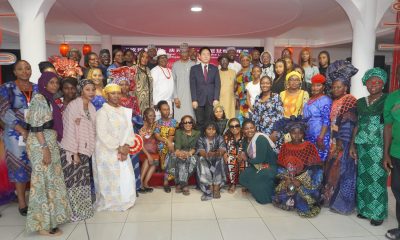
 Nigeria and Ghana have reaffirmed their longstanding diplomatic, economic, and cultural partnership as Ghana celebrated its 69th Independence Anniversary in Abuja.
Speaking at the event, Nigeria’s Minister of Foreign Affairs, Yusuf Tuggar, represented by the Chief of Protocol at the Ministry of Foreign Affairs, Wahab Akande, congratulated Ghana on behalf of the government and people of Nigeria.
He described Ghana as a “brotherly nation,” noting that relations between both countries extend beyond geographical proximity and are deeply rooted in shared history, cultural ties, and economic collaboration.
According to him, the relationship between Nigeria and Ghana has endured for decades, strengthened by commerce, migration, education, and family connections linking cities such as Lagos and Kano in Nigeria to Accra and Kumasi in Ghana.
The minister also highlighted the historical roles both nations played in Africa’s struggle for independence, particularly the leadership of Ghana’s founding President, Kwame Nkrumah, in advancing the decolonisation movement across the continent.
He noted that Nigeria and Ghana remain founding members of the Economic Community of West African States (ECOWAS) and continue to work closely to promote regional integration, peacekeeping, democratic governance, and economic development across West Africa.
The Nigerian government further emphasised the growing economic cooperation between both countries, driven largely by increased trade and private sector investment.
According to Tuggar, Nigerian businesses including banks, insurance firms, and telecommunications companies have established a strong presence in Ghana, contributing significantly to the country’s economic growth.
Bilateral investments between the two nations span several sectors, including aviation, oil and gas, banking and finance, telecommunications, and other areas of economic activity.
Beyond trade and investment, the minister also highlighted the strong socio-cultural and educational ties between the two countries.
He recalled Ghana’s participation in the historic Second World Black and African Festival of Arts and Culture (FESTAC ’77) hosted by Nigeria in 1977, as well as the cultural and educational cooperation agreement signed by both nations in 1989.
The long-standing educational relationship was also noted, with many Nigerian students studying in Ghanaian universities, while Ghanaian teachers historically contributed significantly to Nigeria’s education sector in earlier decades.
In her remarks, Ghana’s Acting High Commissioner to Nigeria, Dr. Mrs. Gladys M. Y. Feddy Akyea, described Nigeria as one of Ghana’s most important diplomatic partners.
She said relations between the two countries have remained strong since the establishment of diplomatic ties in 1960, supported by shared democratic values, economic cooperation, and strong people-to-people connections.
According to her, both countries continue to champion regional integration through ECOWAS while exploring new opportunities under the African Continental Free Trade Area (AfCFTA) framework.
She noted that Ghana hosts the AfCFTA Secretariat in Accra, describing the initiative as a major step toward boosting intra-African trade, promoting industrialisation, and creating new economic opportunities for African businesses.
The Acting High Commissioner also commended the Ghanaian diaspora and business communities in both countries for their contributions to innovation, investment, and cross-border trade.
She reaffirmed Ghana’s commitment to reforms aimed at improving transparency, strengthening regulatory systems, and boosting investor confidence.
“Ghana remains open for business,” she said, adding that the country is positioning itself competitively within Africa and the global economy.
The diplomat further highlighted Ghana’s growing continental engagement, noting that the country continues to advocate for global justice and equity, including discussions around reparations and fairer economic systems for African nations.
She also expressed appreciation to ECOWAS member states for endorsing Ghana as the bloc’s sole candidate for the Chairmanship of the African Union Commission in 2027, describing the endorsement as recognition of Ghana’s contributions to regional peace, diplomacy, and institutional leadership.