
Opinion
Nigeria Orders Break-Up of South African Firm’s Twelve-Year Grip on a ₦3 Trillion Digital Lending Market

_By Sam Agogo_
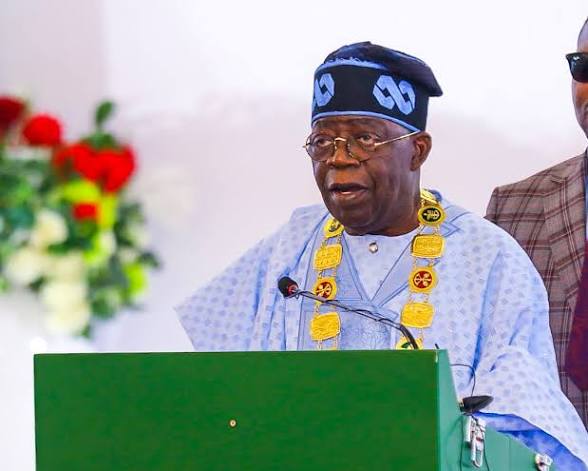
The Nigerian government has directed its federal consumer protection agency to dismantle the exclusive market position held by Optasia, a South African financial technology company, in the country’s airtime credit lending and data advance sector — a market conservatively valued at over ₦3 trillion annually. The directive, issued by President Bola Ahmed Tinubu following a high-level briefing by the Federal Competition and Consumer Protection Commission, comes after more than a decade during which Optasia operated across Nigeria’s three dominant mobile networks without a registered office in the country, without a single Nigerian employee on its payroll, and without sharing any consumer credit data with Nigerian financial institutions — while transferring an estimated ₦3 trillion every year out of Nigeria and into South Africa.
At ₦3 trillion per annum across twelve uninterrupted years, the cumulative value extracted from Nigeria amounts to an estimated ₦36 trillion — a figure that places this arrangement among the most consequential episodes of uninhibited capital outflow in the country’s post-independence economic history. It was generated not through oil exports or foreign direct investment, but through the daily financial vulnerability of millions of ordinary Nigerians borrowing small amounts of airtime simply to stay connected.
Optasia, formerly known as Channel VAS, is not a telecommunications operator. It provides the artificial intelligence-driven lending infrastructure that MTN, Airtel, and Glo deploy to power the airtime and data loans subscribers access when their credit runs out. The company’s presence in Nigeria was, by design, invisible to the consumer. Behind every emergency airtime transaction, it was Optasia’s systems assessing the credit risk, processing the loan, and collecting the fee. The mobile networks provided the customers. Optasia provided the infrastructure and collected a substantial share of the returns. Nigeria provided everything else and received virtually nothing back.
The FCCPC has established that Optasia maintained no administrative infrastructure in Nigeria, employed no Nigerian staff, and never shared consumer credit data with local credit bureaus or financial institutions. The absence of physical presence meant no contribution to commercial property markets, no local supply chains, and nothing to the economies of Lagos, Abuja, or any Nigerian city. No Nigerian employees meant no income tax remittances, no pension contributions, and no National Housing Fund deductions. The refusal to share credit data is perhaps the most damaging failure of all. For twelve years, Optasia processed millions of micro-lending transactions daily, accumulating detailed financial behaviour data on tens of millions of Nigerians, and shared none of it with institutions that could have expanded financial inclusion across the country. Twelve years of data generated entirely by Nigerian consumers left Nigeria with nothing to show for it institutionally.
The regulatory effort to address this was neither sudden nor unreasonable. The FCCPC granted Optasia an initial 90-day compliance window from July 2025 under the Digital, Electronic, Online and Non-Traditional Consumer Lending Regulations 2025, then extended the deadline all the way to January 2026. Six months of regulatory patience. The company still did not comply. When enforcement actions followed in April 2026, Optasia obtained an interim injunction from the Federal High Court in Lagos through its Nigerian subsidiary, Nairtime Nigeria Limited, restraining the FCCPC from proceeding. The company’s lawyers framed the move as a defence of Nigerian consumers who depend on airtime credit. That framing is difficult to sustain from a company that spent twelve years denying those same consumers the benefit of shared credit data, declining to employ a single one of them, and paying no meaningful taxes on their behalf.
The resistance extended beyond litigation. Sources disclosed that Optasia pursued high-level diplomatic interventions including reported attempts to enlist the support of a foreign head of state to persuade President Tinubu to preserve the status quo. The Presidency rejected the approach. Officials further alleged that the FCCPC, the Nigerian Communications Commission, and the Nigeria Data Protection Commission all came under sustained and coordinated pressure to derail the reform effort. The Tinubu administration proceeded regardless.
The presidential directive authorises the FCCPC to open the market to nine licensed indigenous Nigerian fintech companies, ending the exclusive arrangement that has defined the sector for over a decade. The reform is expected to stimulate competition, create employment, strengthen Nigeria’s credit data infrastructure, and retain a significantly larger share of sector revenues within the country — consistent with the administration’s Nigeria First economic policy.
A complicating dimension emerged when the FCCPC publicly distanced itself from the reports attributed to it, with its Director of Corporate Affairs stating that the commission was not aware of, and had not been involved in, the claims reported across multiple Nigerian publications. The denial sits uncomfortably alongside detailed accounts by several leading Nigerian newspapers, all of which cited sources within the commission directly. The contradiction raises legitimate questions about institutional coordination within Nigeria’s regulatory framework. The interim injunction remains in force, with the matter listed for further hearing at the Federal High Court on July 20, 2026.
The story’s reach extends into South African financial markets with considerable force. Optasia completed a listing on the Johannesburg Stock Exchange in 2025, described as the largest fintech listing on that exchange that year. FirstRand raised its shareholding to 26.1 percent through a R1.5 billion acquisition, while Standard Bank co-arranged a $330 million refinancing facility to support the company’s African expansion. Nigeria was not peripheral to that investment thesis. It was central to it. The loss of exclusivity in Africa’s most populous and largest economy represents a structural revision of the revenue projections on which that story was sold to JSE investors. Signals of vulnerability were already present — Optasia’s founder Bassim Haidar reduced his personal shareholding from 19 percent to just 1.5 percent within months of the listing, and the company disclosed to investors that airtime credit services through one of its Nigerian partners had been temporarily suspended.
Nigeria’s airtime credit market was built on the financial vulnerability of its citizens. Millions of Nigerians regularly find themselves without sufficient funds to purchase airtime outright, and communication — with employers, customers, families, and hospitals — is not optional. It is in the space between necessity and poverty that Optasia built its entire business model and generated its extraordinary returns, without a single office among the people it served, without one employee drawn from their communities, and without one naira of meaningful reinvestment in the country that made it all possible.
That arrangement has now been formally challenged at the highest level of the Nigerian state. The court will speak on July 20. But the determination to end twelve years of unchecked extraction has been clearly and irreversibly stated.
_For comments, reflections and further conversation: samuelagogo4one@yahoo.com | +2348055847364_